Go back
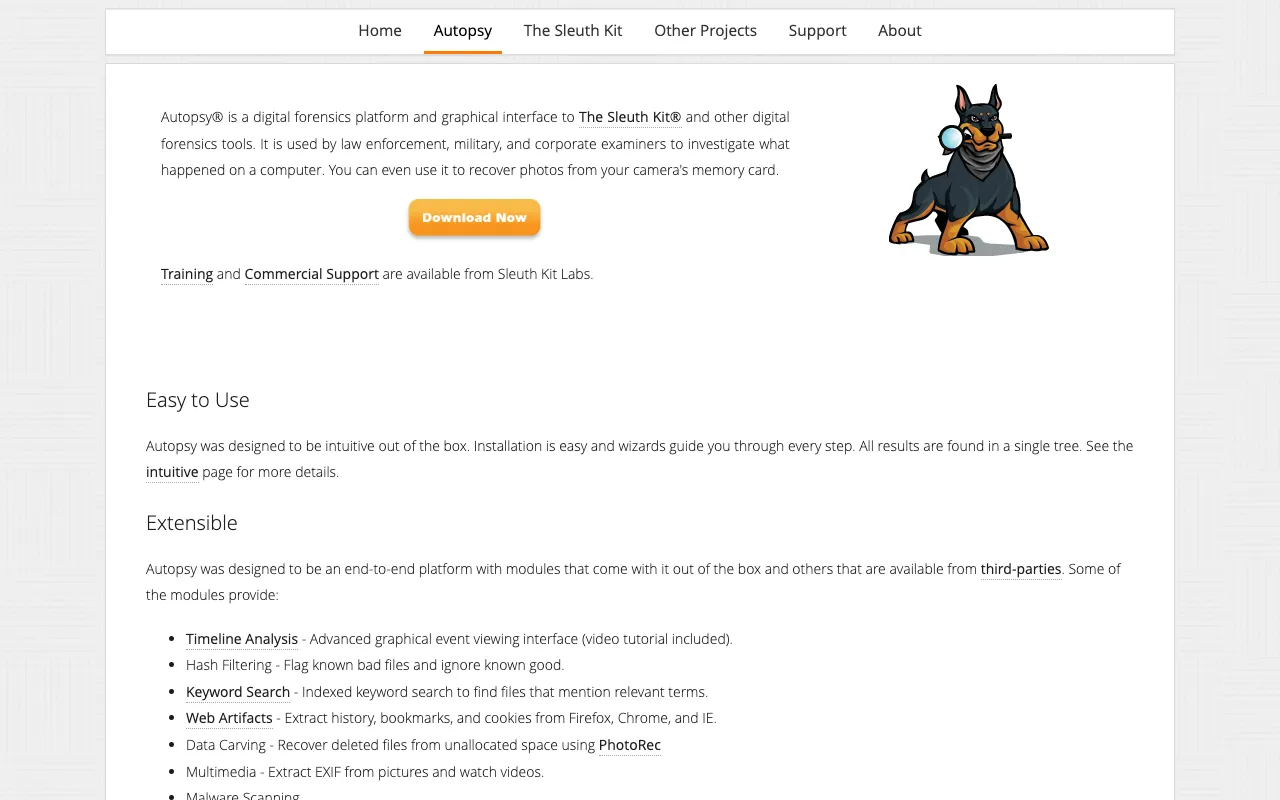
Image of Autopsy – The Premier Open-Source Digital Forensics Platform

Autopsy – The Premier Open-Source Digital Forensics Platform

Autopsy is the industry-leading open-source digital forensics application that provides cybersecurity experts, incident responders, and law enforcement with a powerful graphical interface for deep-dive investigations. Built on the robust foundation of The Sleuth Kit libraries, Autopsy transforms complex command-line forensic tasks into an intuitive, modular platform for analyzing disk images, mobile devices, and uncovering digital evidence critical to solving security breaches and criminal cases.

What is the Autopsy Digital Forensics Platform?

Autopsy is a comprehensive, extensible digital forensics platform that serves as a graphical user interface (GUI) to The Sleuth Kit and other forensic libraries. Its core purpose is to simplify and accelerate the process of forensic investigation for cybersecurity professionals, allowing them to examine computer systems, recover deleted files, analyze registry data, track user activity, and build timelines of events without needing deep command-line expertise. It is the go-to tool for incident response, data recovery, and criminal investigations involving digital media.

Key Features of Autopsy for Cybersecurity Forensics

Graphical Interface to The Sleuth Kit

Autopsy provides a user-friendly visual layer over the powerful but complex command-line tools of The Sleuth Kit (TSK). This allows investigators to perform deep file system analysis, data carving, and timeline generation through point-and-click actions, significantly reducing the learning curve and investigation time.

Multi-Format Disk Image Support

Ingest and analyze forensic images in all major formats, including raw (dd), E01 (EnCase), and AFF. Autopsy handles complex disk structures, partitions, and file systems (NTFS, FAT, exFAT, HFS+, Ext2/3/4) seamlessly, making it versatile for any investigation scenario.

Timeline Analysis and Visualization

Automatically construct a visual timeline of system activity based on file system metadata. This critical feature helps investigators quickly identify key events surrounding a security incident, such as file creation, modification, access, and deletion times, painting a clear picture of attacker behavior.

Keyword Search and Data Carving

Perform indexed and live searches across entire disk images using keyword lists and regular expressions. Autopsy's robust data carving engine can recover deleted files and fragments from unallocated disk space, a vital capability for evidence recovery.

Extensible Module Architecture

Enhance Autopsy's core functionality with community and commercial modules. Add capabilities for email analysis, EXIF metadata extraction, registry analysis, hash filtering, and malware detection to create a tailored forensic workstation.

Reporting and Case Management

Generate comprehensive, court-ready reports in HTML or plain text formats. Autopsy organizes all evidence, tags, notes, and results within a single case file, ensuring chain of custody and streamlining the documentation process for legal proceedings.

Who Should Use Autopsy?

Autopsy is designed for cybersecurity professionals engaged in digital investigations. Its primary users include Incident Response (IR) Teams analyzing security breaches, Digital Forensics Investigators in law enforcement and corporate security, Cybersecurity Consultants performing audits and assessments, and IT Professionals tasked with internal investigations. It is equally valuable for students and researchers learning forensic methodologies in an accessible, open-source environment.

Autopsy Pricing and Free Tier

Autopsy is completely free and open-source software released under the Apache License 2.0. There is no cost for downloading, using, or modifying the tool, making it an accessible entry point for all cybersecurity professionals and organizations. The core platform and its foundational modules are available at no charge. Some advanced, specialized modules developed by third parties may be commercially licensed, but the vast majority of forensic capabilities are included in the free version.

Common Use Cases

Key Benefits

Pros & Cons

Pros

  • Completely free and open-source with no usage limitations
  • Powerful graphical interface simplifies complex forensic workflows
  • Highly extensible through a wide range of community and commercial modules
  • Supports all major disk image formats and file systems
  • Excellent for education and building foundational forensics skills

Cons

  • Can have a steeper initial learning curve compared to more basic file viewers
  • Performance may slow with extremely large disk images on limited hardware
  • Lacks the integrated enterprise deployment features of some commercial suites

Frequently Asked Questions

Is Autopsy free to use?

Yes, Autopsy is completely free and open-source software. You can download, install, and use it for both personal and commercial investigations without any licensing fees. Its source code is publicly available under the Apache License 2.0.

Is Autopsy good for cybersecurity professionals?

Absolutely. Autopsy is a cornerstone tool for cybersecurity experts specializing in digital forensics and incident response. It provides the essential capabilities needed to analyze disk images post-breach, recover evidence, understand attacker timelines, and document findings, all within a robust, respected open-source platform.

What is the difference between Autopsy and The Sleuth Kit?

The Sleuth Kit (TSK) is a collection of command-line utilities and a C library for forensic analysis of disk images. Autopsy is a standalone application that provides a graphical user interface (GUI) on top of TSK, making its powerful functions accessible through a visual interface with additional features like case management, reporting, and modular extensions.

Can Autopsy analyze mobile devices?

While Autopsy's core strength is in traditional computer disk forensics, it can analyze logical and physical extractions from mobile devices through its modular architecture. Support for specific mobile file systems and app data often comes from community-developed modules that parse data from tools like Cellebrite or ADB backups.

Conclusion

For cybersecurity professionals seeking a powerful, cost-effective, and respected tool for digital forensics, Autopsy stands as a top-tier choice. It successfully bridges the gap between the raw power of command-line forensic libraries and the practical needs of investigators who require efficiency, clarity, and court-admissible results. Whether you're responding to a critical security incident, conducting a corporate investigation, or building your forensic skillset, Autopsy provides a comprehensive, open-source platform that can scale with your needs. Its status as the graphical face of The Sleuth Kit ensures it remains at the forefront of forensic technology, supported by a dedicated community of developers and users.