Go back
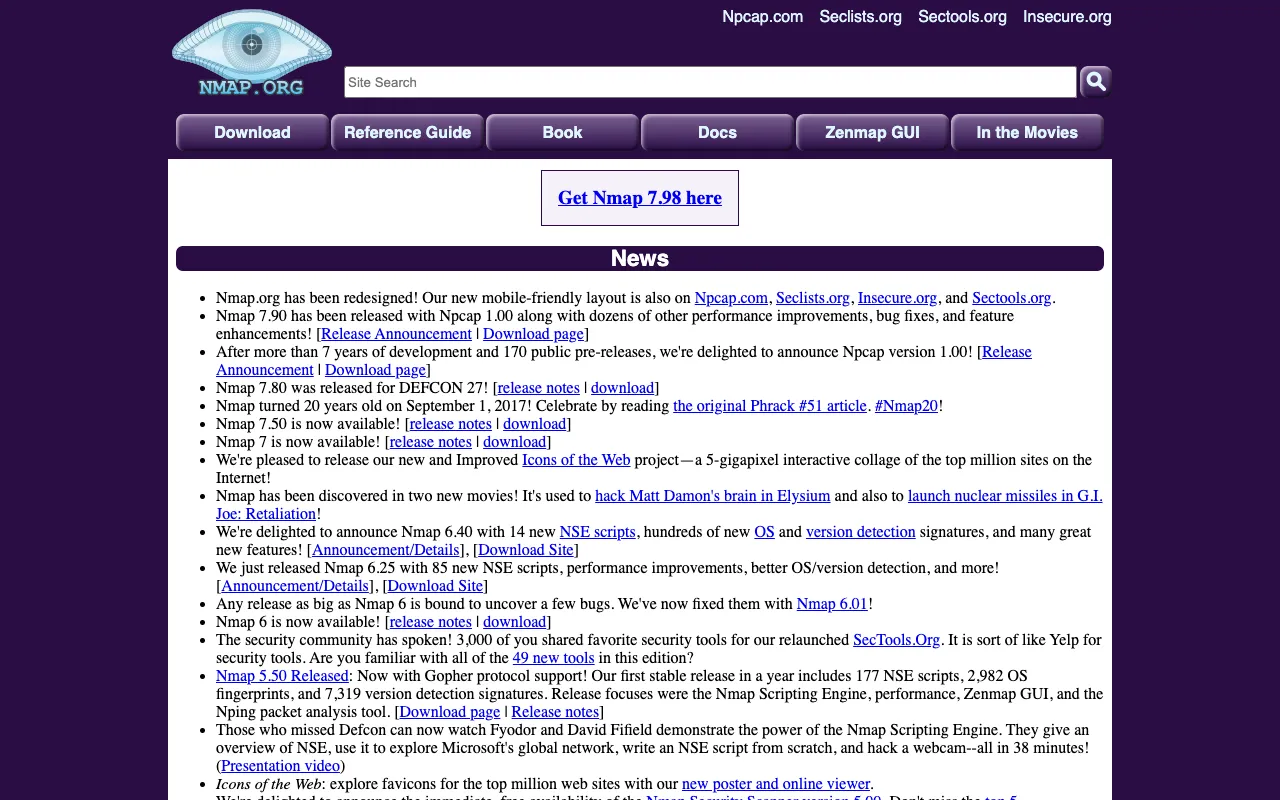
Image of Nmap – The Ultimate Network Security Scanner for Cybersecurity Experts

Nmap – The Ultimate Network Security Scanner for Cybersecurity Experts

Nmap (Network Mapper) is the definitive open-source tool for network discovery and security auditing. Trusted by cybersecurity professionals, penetration testers, and system administrators, Nmap sends specially crafted packets to network hosts and analyzes their responses to map network topology, identify running services, and detect potential security vulnerabilities. Its flexibility, scripting engine, and comprehensive feature set make it an indispensable asset for any security assessment.

What is Nmap?

Nmap is a powerful command-line network scanner designed to discover devices, identify open ports, determine service versions, and detect operating systems on a computer network. It works by probing target IP addresses with raw IP packets, analyzing the responses to build a detailed map of the network. Originally released in 1997, Nmap has become the de facto standard for network exploration and security auditing, essential for tasks ranging from basic network inventory to advanced penetration testing and vulnerability research.

Key Features of Nmap

Host Discovery

Nmap can rapidly identify which hosts are online on a network using various techniques like ICMP echo requests, TCP SYN scans, and ARP requests. This foundational feature is crucial for mapping an attack surface or conducting a network inventory.

Port Scanning

The core of Nmap's functionality. It supports over a dozen scan types (TCP SYN, Connect, UDP, NULL, FIN, Xmas) to determine which ports are open, closed, or filtered by a firewall, revealing potential entry points for security assessment.

Service and Version Detection

Nmap doesn't just find open ports; it can interrogate services to determine the application name and version number (e.g., Apache 2.4.41, OpenSSH 8.2). This information is critical for identifying outdated software with known vulnerabilities.

Operating System Detection

Using TCP/IP stack fingerprinting, Nmap analyzes subtle differences in network stack implementation to often accurately guess the host's operating system (e.g., Linux 3.x, Windows 10/11, macOS).

Nmap Scripting Engine (NSE)

This powerful feature allows users to write (or use hundreds of existing) scripts to automate a wide variety of networking tasks, including advanced vulnerability detection, backdoor discovery, and network exploitation.

Output Flexibility

Nmap supports multiple output formats: human-readable interactive output, XML for parsing by other tools, and grepable formats for easy filtering. This makes it easy to integrate into security workflows and reporting tools.

Who Should Use Nmap?

Nmap is an essential tool for cybersecurity professionals, including penetration testers, ethical hackers, red teamers, and security auditors who need to assess network security posture. It's equally vital for network administrators and system engineers performing infrastructure inventories, troubleshooting connectivity, and enforcing security policies. IT students and aspiring security professionals also use Nmap to learn fundamental networking and security concepts in a hands-on environment.

Nmap Pricing and Free Tier

Nmap is completely free and open-source software, released under the Nmap Public Source License. There is no paid tier, subscription, or enterprise version—the full power of the tool is available to everyone. This commitment to open access has been a cornerstone of its development and widespread adoption in the cybersecurity community for over two decades.

Common Use Cases

Key Benefits

Pros & Cons

Pros

  • Completely free and open-source with no feature limitations
  • Extremely powerful and flexible with a massive range of scanning techniques
  • Cross-platform support for Windows, Linux, and macOS
  • Active development and strong community with extensive documentation
  • The industry standard tool, making skills highly transferable

Cons

  • Primarily command-line based, which has a steeper learning curve for beginners
  • Advanced features and the NSE require significant study to master effectively
  • Aggressive scanning can disrupt network services or trigger intrusion detection systems if not used carefully

Frequently Asked Questions

Is Nmap free to use?

Yes, Nmap is 100% free and open-source software. There is no cost for personal, educational, or commercial use. The complete source code is available for inspection and modification.

Is Nmap legal to use?

Nmap is legal to use on networks you own or have explicit permission to scan. Using Nmap to probe networks without authorization is illegal in most jurisdictions and constitutes unauthorized access.

Is Nmap good for penetration testing?

Absolutely. Nmap is a cornerstone tool in any penetration tester's methodology. It is used in the initial reconnaissance and enumeration phases to map the target network, discover hosts, identify services, and find potential attack vectors, forming the basis for further exploitation.

What is the difference between Nmap and vulnerability scanners like Nessus?

Nmap excels at network discovery, port scanning, and service detection. While its scripting engine can detect some vulnerabilities, dedicated vulnerability scanners like Nessus go deeper, checking for thousands of specific CVEs and misconfigurations. They are often used together, with Nmap for initial mapping and a vuln scanner for in-depth analysis.

Conclusion

For any cybersecurity professional, network administrator, or IT student, mastering Nmap is not optional—it's fundamental. Its unparalleled capability for network discovery, combined with its powerful scripting engine and steadfast commitment to being free and open-source, solidifies its position as the most essential tool in the network security arsenal. Whether you're performing a routine audit, a full-scale penetration test, or learning the basics of TCP/IP, Nmap provides the depth, precision, and reliability needed to get the job done right.