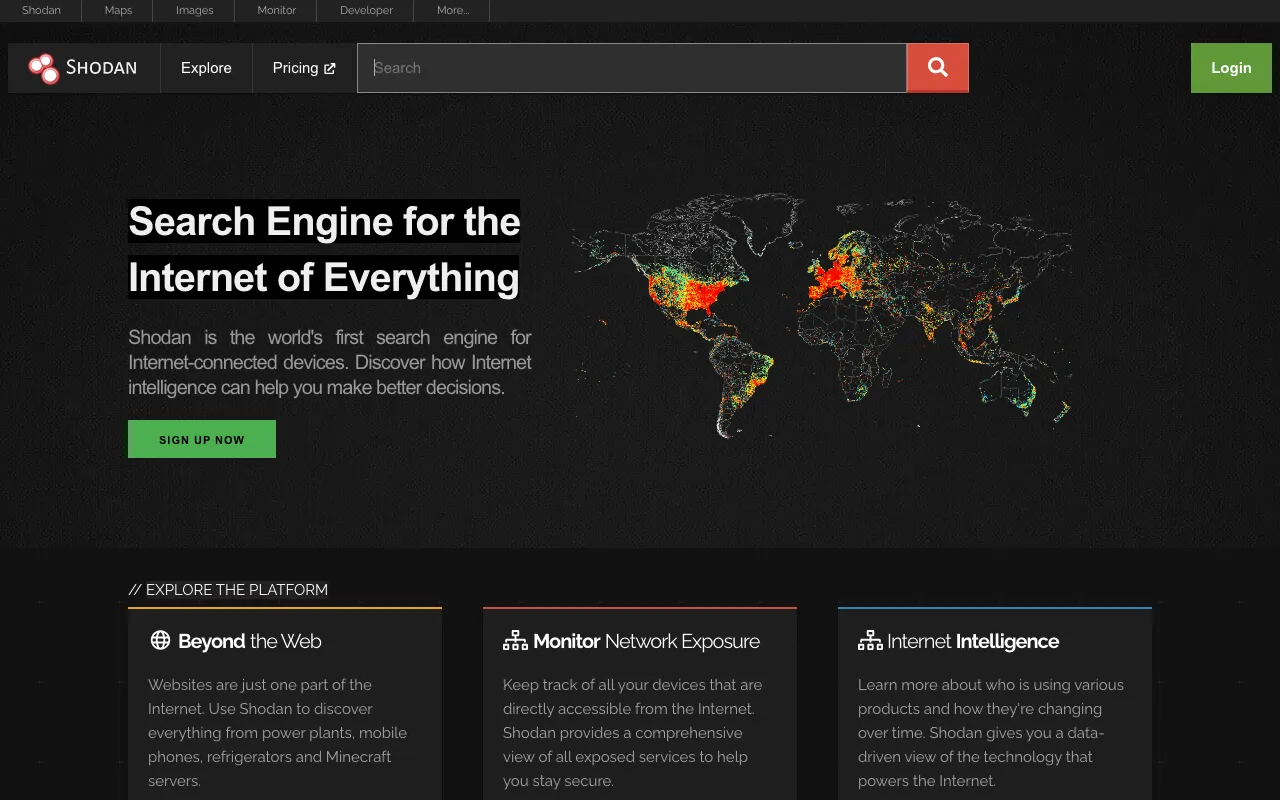
Shodan – The Essential Cybersecurity Tool for Internet Reconnaissance
Shodan is not a typical search engine—it's the premier cybersecurity platform for discovering, analyzing, and securing internet-connected devices. Unlike Google, which indexes web content, Shodan scans the internet for IoT devices, servers, webcams, routers, and industrial control systems, revealing their digital fingerprints. Used by penetration testers, vulnerability researchers, and blue team defenders, Shodan provides critical visibility into the global attack surface, making it an indispensable tool for modern cybersecurity operations.
What is Shodan?
Shodan is a specialized search engine designed for cybersecurity professionals. It continuously scans the entire internet, cataloging banners and service information from billions of connected devices. By querying specific ports, protocols, and services, users can identify everything from unsecured databases and exposed web interfaces to vulnerable industrial SCADA systems. It transforms passive internet data into actionable security intelligence, enabling experts to discover assets, identify misconfigurations, and uncover vulnerabilities before malicious actors do.
Key Features of Shodan
Comprehensive Device Discovery
Shodan's core strength is its ability to find any device with a public IP address. Search by IP, hostname, city, country, operating system, software version, or specific vulnerability. This granular discovery is crucial for attack surface mapping and asset inventory.
Real-Time Network Intelligence
Access live data on device banners, open ports, and service responses. Monitor specific networks or global trends to see how devices are configured and what software they are running, providing real-time situational awareness.
Powerful Search Filters & Queries
Utilize a sophisticated query language to filter results with precision. Combine terms like 'net:', 'city:', 'port:', 'os:', 'vuln:', and 'http.title:' to conduct highly targeted reconnaissance for penetration testing or threat hunting.
Vulnerability & Exposure Detection
Identify devices with known Common Vulnerabilities and Exposures (CVEs) or misconfigured services. Shodan helps prioritize patching efforts by showing which of your external assets are exposed and potentially exploitable.
IoT & Industrial Control System (ICS) Focus
Specialize in finding operational technology (OT) and Internet of Things (IoT) devices—from smart thermostats and cameras to programmable logic controllers (PLCs)—that are often overlooked in traditional security assessments.
Who Should Use Shodan?
Shodan is built for cybersecurity practitioners who need deep visibility into internet-facing assets. Penetration testers and ethical hackers use it for external reconnaissance and identifying entry points. Security analysts and SOC teams leverage it for attack surface management and monitoring their organization's digital footprint. IT administrators and network engineers utilize it to discover unknown or misconfigured devices on their perimeter. Researchers and threat intelligence professionals analyze global trends and track specific threat actor infrastructure. It's a fundamental tool for anyone responsible for understanding and defending against external threats.
Shodan Pricing and Free Tier
Shodan offers a flexible pricing model to suit different needs. A robust Free Tier is available, providing access to basic search with 50 query credits per month and limited results—perfect for occasional users and learning the platform. Paid plans start with the 'Membership' tier, offering more query credits, full result access, and data exports. Higher-tier 'Corporate' and 'Enterprise' plans include API access, advanced filters, historical data, monitoring alerts, and team features for professional security teams requiring comprehensive, scalable intelligence.
Common Use Cases
- Penetration testing external reconnaissance and footprinting
- Attack surface management and discovering unknown assets
- Identifying exposed databases and misconfigured cloud services
- Monitoring for vulnerable IoT devices and industrial control systems
- Threat intelligence and tracking adversary infrastructure
Key Benefits
- Proactively discover and secure internet-facing assets before attackers do
- Reduce organizational risk by identifying and patching exposed vulnerabilities
- Save countless hours of manual scanning with automated, global reconnaissance
- Gain a strategic advantage in red team exercises and security assessments
- Make data-driven security decisions with real-time internet intelligence
Pros & Cons
Pros
- Unparalleled visibility into the global internet of devices
- Powerful, granular search syntax for precise targeting
- Essential for modern external penetration testing and red teaming
- Offers a valuable free tier for basic exploration and learning
- Continuously updated with real-time scan data
Cons
- The learning curve for mastering advanced search queries can be steep
- The most powerful features and complete datasets require a paid subscription
- Primarily focuses on discovery; further vulnerability validation requires other tools
Frequently Asked Questions
Is Shodan legal to use?
Yes, Shodan is a legal tool for cybersecurity professionals. It only queries publicly available information from devices that respond to connection requests on the open internet. However, using the information gathered to access systems without authorization is illegal. Always ensure you have explicit permission to scan assets you do not own.
Is Shodan good for finding specific vulnerabilities?
Absolutely. Shodan is excellent for discovering devices with known vulnerabilities (CVEs). You can search for specific CVE identifiers or common misconfigurations. It helps security teams identify which of their external IPs are running vulnerable software versions, enabling rapid prioritization for patching and remediation efforts.
What's the difference between Shodan and traditional vulnerability scanners?
Shodan is a discovery and intelligence engine that scans the entire internet passively. Traditional vulnerability scanners (like Nessus, OpenVAS) are active tools that perform in-depth checks against a defined set of targets you own. Shodan tells you 'what's out there and exposed,' while a vuln scanner tells you 'what specific weaknesses exist on those targets.' They are highly complementary tools.
Can I use Shodan to monitor my own company's exposure?
Yes, this is a primary use case. Security teams use Shodan to continuously monitor their public IP ranges, domains, and netblocks. You can set up alerts to be notified if new devices or services appear on your network or if known vulnerabilities are detected on your assets, providing constant attack surface monitoring.
Conclusion
For cybersecurity experts, Shodan is more than a tool—it's a fundamental component of the modern security toolkit. Its unique ability to map the internet's connected devices provides intelligence that is simply unattainable through other means. Whether you're conducting a penetration test, managing your organization's attack surface, or researching global threat trends, Shodan delivers critical, actionable data. Starting with its free tier is an excellent way for any security professional to understand its power. For those serious about external defense and reconnaissance, investing in a paid Shodan plan is a strategic decision that directly enhances security posture and operational capability.