Go back
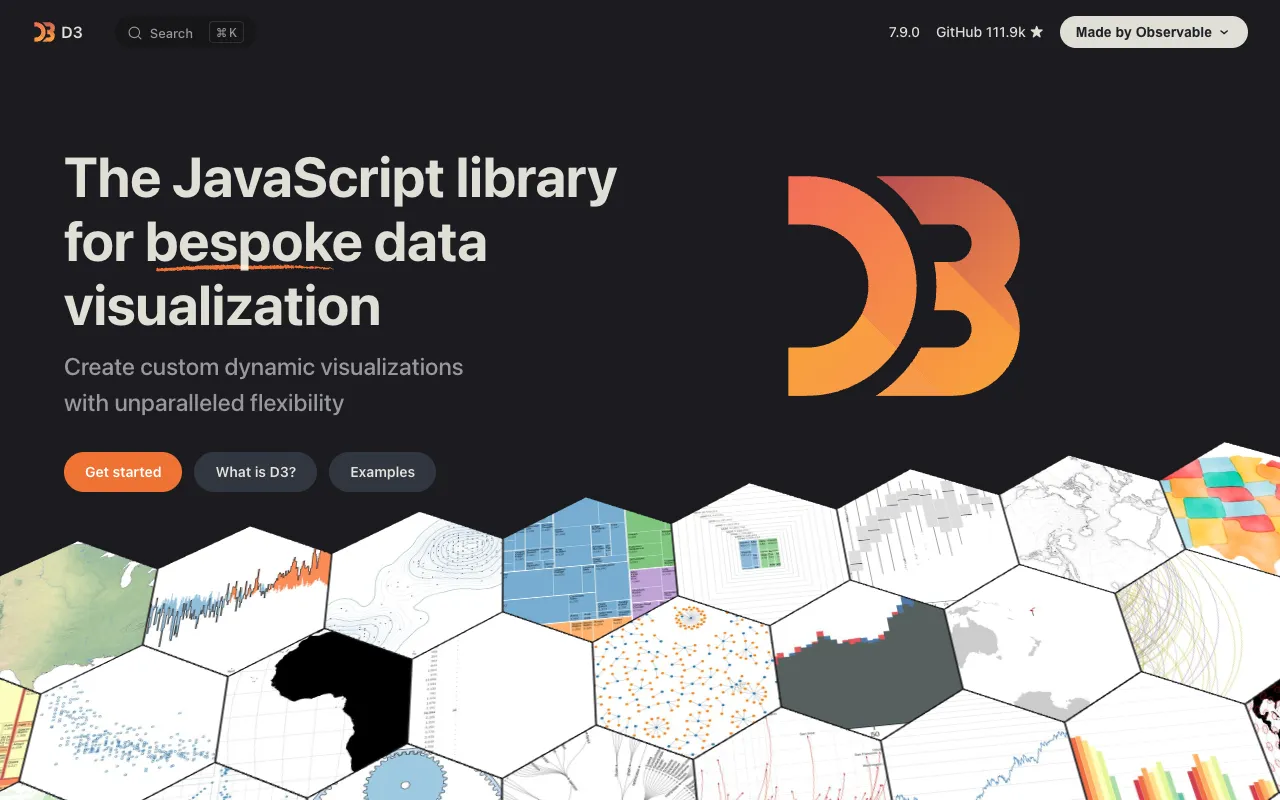
Image of D3.js – The Ultimate JavaScript Library for Custom Data Visualizations

D3.js – The Ultimate JavaScript Library for Custom Data Visualizations

D3.js (Data-Driven Documents) is the definitive JavaScript library for data scientists and developers who demand complete creative control over their data visualizations. Unlike rigid charting tools, D3.js binds data directly to the Document Object Model (DOM), enabling you to build dynamic, interactive, and publication-quality charts, graphs, and dashboards from the ground up. It transforms raw data into compelling visual stories using the full power of web standards like SVG, HTML, and CSS.

What is D3.js?

D3.js is an open-source visualization library that provides low-level primitives for manipulating web documents based on data. It stands for Data-Driven Documents. Instead of offering pre-built chart templates, D3 gives you the foundational tools to calculate layouts, map data to visual attributes (like position, color, and size), and animate transitions. This approach makes it exceptionally powerful for creating bespoke visualizations that precisely fit complex datasets and unique analytical narratives, from intricate network graphs to real-time streaming dashboards.

Key Features of D3.js

Full SVG & DOM Control

D3.js provides direct, granular control over Scalable Vector Graphics (SVG) and HTML elements. You can create any visual mark—circles, lines, paths, shapes—and bind data to their attributes, allowing for limitless customization beyond standard chart types.

Data-Driven Document Manipulation

The core philosophy of D3 is binding data to DOM elements. Using its powerful data join pattern (enter, update, exit), you can efficiently create, update, or remove elements based on changing datasets, making it ideal for dynamic, real-time visualizations.

Powerful Data Transformation & Layouts

D3 includes a vast array of helper modules for data processing (scales, axes, color schemes) and complex layouts (force-directed graphs, tree diagrams, chord diagrams, geographic projections). These modules handle the complex math, letting you focus on the visual design.

Smooth Animations & Interactivity

Create engaging user experiences with built-in transition methods. D3 makes it easy to animate changes in data, add interactive elements like tooltips, zooming, brushing, and event handling, turning static charts into exploratory data analysis tools.

Who Should Use D3.js?

D3.js is the tool of choice for data scientists, data visualization specialists, front-end developers, and analysts who need to build custom, web-embedded visualizations. It's perfect for creating unique dashboards for internal business intelligence, interactive reports for web publications, complex scientific visualizations, or any project where off-the-shelf charting libraries fall short. It requires JavaScript proficiency but rewards users with unparalleled flexibility.

D3.js Pricing and Free Tier

D3.js is completely free and open-source, released under the BSD 3-Clause license. There is no premium tier, subscription, or paid plan. The entire library, including all its modules and features, is available for use in commercial and non-commercial projects without cost, hosted on GitHub and npm.

Common Use Cases

Key Benefits

Pros & Cons

Pros

  • Unmatched flexibility and control for creating truly unique visualizations.
  • Vast, active community with extensive examples, tutorials, and plugins.
  • Free and open-source with no licensing fees or usage limits.
  • Excellent performance for complex, animated, and real-time data updates.

Cons

  • Has a steep learning curve, especially for developers new to SVG and data-binding concepts.
  • Requires more code to create basic charts compared to high-level charting libraries.
  • Project setup and integration can be more involved than dropping in a simple script.

Frequently Asked Questions

Is D3.js free to use?

Yes, D3.js is completely free and open-source. It is released under the BSD 3-Clause license, allowing unrestricted use in personal, academic, and commercial projects without any cost.

Is D3.js good for data science?

Absolutely. D3.js is a premier tool for data science communication. It allows data scientists to build custom, interactive visualizations for exploratory data analysis, to publish findings on the web, and to create sophisticated dashboards that tell compelling data stories with precision and clarity.

What is the main difference between D3.js and charting libraries like Chart.js?

Chart.js is a high-level library focused on quickly generating common chart types (line, bar, pie) with minimal code. D3.js is a low-level framework that provides the building blocks to create any visualization imaginable, offering total customization at the cost of greater initial complexity. Use Chart.js for standard charts; use D3.js when you need something custom or complex.

Do I need to know SVG to use D3.js?

A foundational understanding of SVG (Scalable Vector Graphics) is highly beneficial when working with D3.js, as it primarily manipulates SVG elements to create visuals. However, many tutorials and examples will help you learn the necessary SVG concepts alongside D3.

Conclusion

For data scientists and developers who view visualization as a core part of the analytical process, D3.js is an indispensable tool. Its philosophy of granting full control over the visual narrative empowers you to move beyond generic charts and build unique, interactive experiences that make data understandable and engaging. While its learning curve is notable, the payoff in expressive power and technical capability is unmatched in the web visualization landscape. For projects demanding custom, high-fidelity, and interactive data storytelling, D3.js remains the gold standard.