Go back
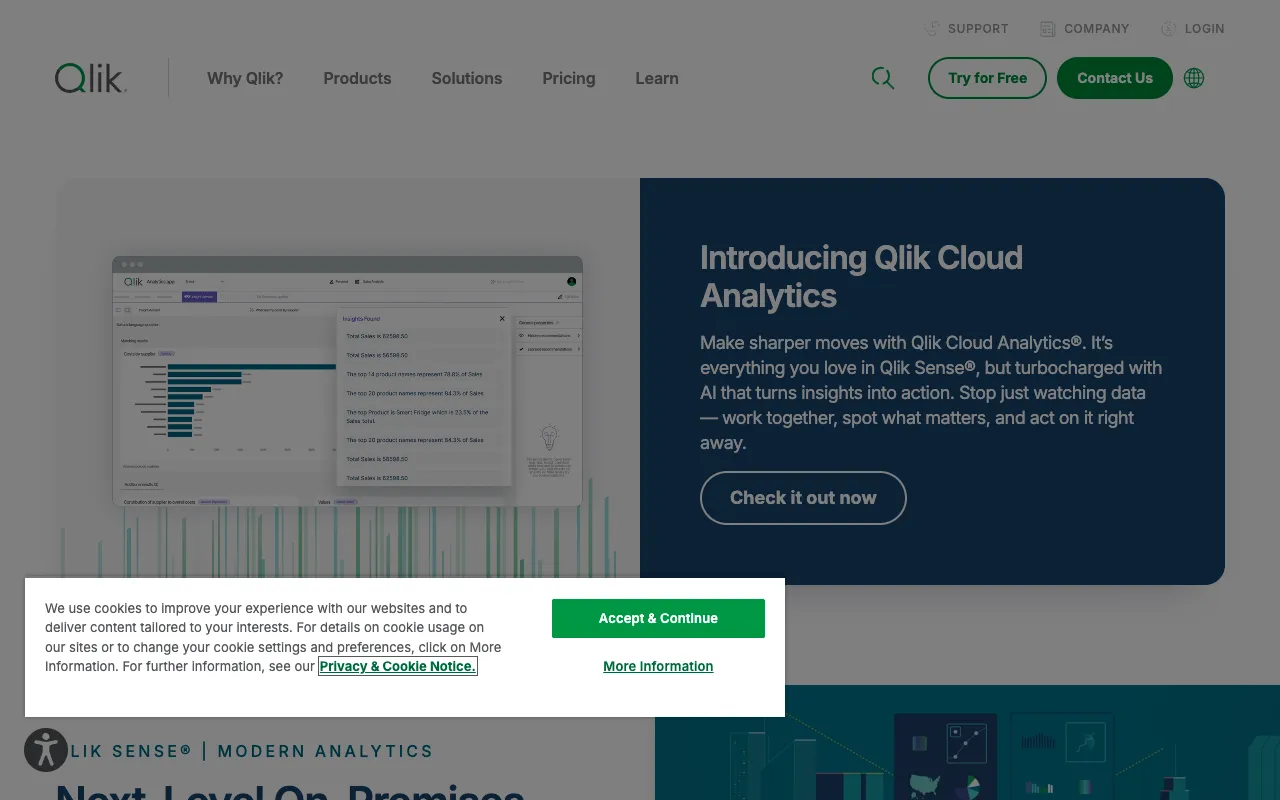
Image of Qlik Sense – The Premier Data Analytics Platform for Data Scientists

Qlik Sense – The Premier Data Analytics Platform for Data Scientists

Qlik Sense is a leading, associative data analytics platform built to empower data scientists and analysts. It moves beyond traditional BI tools by offering a full spectrum of capabilities—from intuitive self-service visualization for exploratory analysis to developing sophisticated, guided analytics applications and seamlessly embedding insights into other software. This makes Qlik Sense a versatile, enterprise-grade solution for turning complex data into actionable intelligence and driving data-driven decision-making across organizations.

What is Qlik Sense?

Qlik Sense is a next-generation data analytics and business intelligence platform renowned for its associative analytics engine. Unlike query-based tools, it allows users to explore data freely across all connections without predefined queries or a rigid dashboard structure. For data scientists, it serves as a powerful bridge between deep statistical analysis and business stakeholder communication. Its core purpose is to democratize data insights through self-service while providing the robust governance and scalability required for enterprise deployment, supporting the entire analytics lifecycle from data discovery to insight delivery.

Key Features of Qlik Sense

Associative Analytics Engine

The heart of Qlik Sense, this engine indexes every relationship within your data. It allows for intuitive, free-form exploration where selections in one visual instantly highlight related and unrelated data across all others. This feature is invaluable for data scientists performing root cause analysis, discovering hidden patterns, and validating hypotheses without being constrained by a linear query path.

Self-Service Data Visualization

Drag-and-drop functionality enables data scientists and business users alike to create compelling, interactive charts, graphs, and dashboards rapidly. This accelerates exploratory data analysis (EDA) and facilitates ad-hoc reporting, allowing teams to answer new business questions without relying on IT for every new view or report.

Guided Analytics Applications

For more structured analysis, data scientists can build sophisticated, app-like experiences. These guided applications lead users through a predefined analytical narrative or process, embedding complex logic, predictive insights, and statistical models into an accessible interface for business users, ensuring consistent and accurate interpretation of data.

Embedded Analytics

Qlik Sense APIs and SDKs allow you to integrate its full analytics experience—visualizations, dashboards, and self-service capabilities—directly into other web portals, applications, or processes. This is crucial for data science teams delivering analytical features as part of a larger product or internal system.

Centralized Data Management & Governance

Qlik's data catalog and preparation tools provide a governed, reusable library of data models and metrics. Data scientists can trust certified datasets, reduce repetitive preparation work, and ensure all stakeholders are analyzing data from a single source of truth, enhancing collaboration and reliability.

AI-Powered Insights & Augmentation

Built-in AI and machine learning capabilities, like Insight Advisor, automatically generate relevant visualizations, suggest associations, and highlight key trends. This augments the data scientist's workflow by providing automated insights and accelerating the initial stages of analysis.

Who Should Use Qlik Sense?

Qlik Sense is ideally suited for data scientists, BI analysts, and data-literate teams within mid-to-large enterprises that require a scalable, governed analytics platform. It's perfect for organizations where data scientists need to both conduct deep analysis and operationalize their findings by building analytical applications for business users. It serves industries like finance, healthcare, retail, and manufacturing where combining exploratory data science with governed business intelligence is critical.

Qlik Sense Pricing and Free Tier

Qlik Sense operates on a subscription-based SaaS model, with pricing typically scaled per user or based on deployment capacity (cloud, on-premise, or client-managed). While Qlik Sense does not offer a permanently free tier for full enterprise use, prospective users can access a fully-functional, time-limited free trial to evaluate the platform's capabilities. For small teams or individual exploration, Qlik offers Qlik Sense Desktop, a free version for personal use, though it lacks collaboration and server deployment features.

Common Use Cases

Key Benefits

Pros & Cons

Pros

  • Powerful associative engine enables unique, non-linear data discovery not found in most BI tools.
  • Strong governance features support enterprise-scale deployment with security and data lineage.
  • Versatile deployment supports self-service visualization, app development, and embedded analytics in one platform.

Cons

  • The learning curve can be steeper than simpler drag-and-drop visualization tools due to its advanced capabilities.
  • Pricing is enterprise-oriented, which may be a barrier for very small businesses or individual practitioners.
  • Advanced features and full collaboration require a paid subscription, as the free desktop version is limited.

Frequently Asked Questions

Is Qlik Sense free to use?

Qlik Sense is not free for commercial or team use. However, you can download Qlik Sense Desktop for free for personal learning and analysis. For full features, collaboration, and deployment, a paid subscription is required. A free trial of the full platform is also available.

Is Qlik Sense good for data science?

Yes, Qlik Sense is an excellent tool for data scientists, particularly for the communication and operationalization of insights. Its associative engine aids in exploratory data analysis, while its ability to build guided apps and embed analytics makes it powerful for deploying data science models and dashboards to business users, bridging the gap between analysis and action.

How does Qlik Sense differ from Tableau or Power BI?

While all are leading BI platforms, Qlik Sense's core differentiator is its associative analytics engine, which allows for free exploration without being limited by a pre-defined data model or query. It also places a stronger emphasis on creating governed, packaged analytical applications, making it a strong choice for data science teams looking to productize their insights.

Conclusion

For data scientists operating in an enterprise environment, Qlik Sense represents a top-tier choice that goes beyond simple dashboarding. Its unique associative engine fosters deeper data discovery, while its robust application development and embedding capabilities allow data science work to have a direct, scalable impact on the business. If your goal is to not only analyze data but also to build and deploy analytical products that drive decisions, Qlik Sense provides a comprehensive, governed platform to achieve it. Evaluate its free trial to experience how it can transform your data science workflow from insight to implementation.