Go back
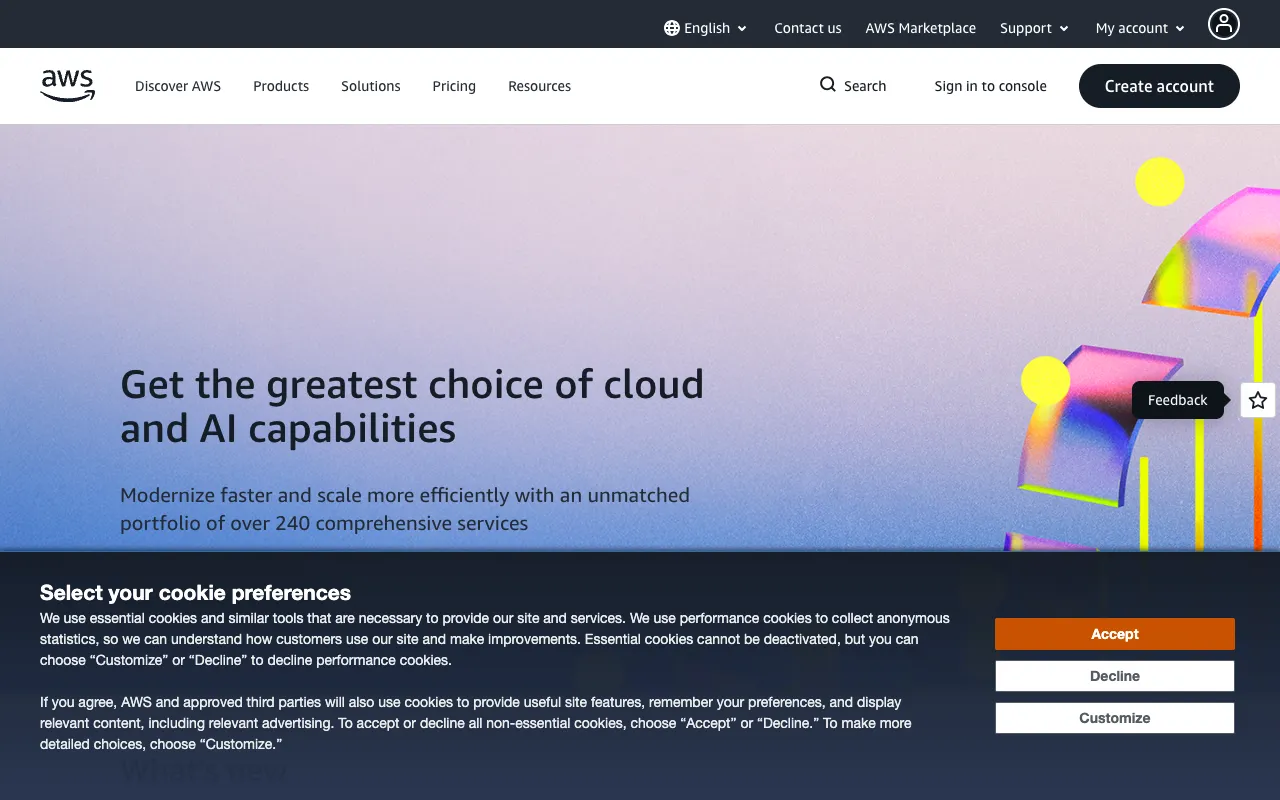
Image of AWS – The Premier Cloud Platform for DevOps Engineering

AWS – The Premier Cloud Platform for DevOps Engineering

Amazon Web Services (AWS) is the foundational cloud platform for modern DevOps practices. Offering an unparalleled breadth of services—from compute and storage to machine learning and IoT—AWS empowers engineering teams to build, deploy, and scale applications with unprecedented speed and reliability. For DevOps professionals, it provides the essential infrastructure, automation tools, and managed services to implement robust CI/CD pipelines, infrastructure as code (IaC), and comprehensive monitoring.

What is AWS for DevOps?

AWS is a comprehensive cloud computing platform that delivers on-demand computing resources, storage, databases, and application services. For DevOps engineers, it's more than just infrastructure; it's an ecosystem of tools designed to automate the software delivery lifecycle. From provisioning servers with EC2 and managing containers with ECS/EKS to orchestrating deployments with CodePipeline and monitoring with CloudWatch, AWS integrates every phase of development and operations into a cohesive, scalable environment.

Key AWS Features for DevOps Engineers

Elastic Compute Cloud (EC2) & Auto Scaling

Launch virtual servers on demand and automate capacity provisioning. Auto Scaling adjusts capacity to maintain steady, predictable performance at the lowest possible cost, a core principle for scalable DevOps architectures.

AWS Code Services (CodePipeline, CodeBuild, CodeDeploy)

Fully managed CI/CD services that automate your release pipelines. Build, test, and deploy your application code every time there's a code change, ensuring faster and more reliable releases.

Infrastructure as Code with AWS CloudFormation & CDK

Model and provision all your AWS resources using templates (CloudFormation) or familiar programming languages (CDK). This enables version-controlled, repeatable, and automated infrastructure deployment.

Container Services: ECS, EKS, and Fargate

Run and manage Docker containers at scale. Amazon ECS and EKS provide orchestration, while Fargate offers serverless compute for containers, removing the need to manage servers.

Comprehensive Monitoring with Amazon CloudWatch

Collect and track metrics, collect and monitor log files, and set alarms. CloudWatch provides a single pane of glass for the health and performance of your AWS resources and applications.

Identity & Access Management (IAM)

Securely control access to AWS services and resources. Define fine-grained permissions for users, groups, and roles, which is critical for implementing security best practices in a DevOps culture.

Who Should Use AWS?

AWS is essential for DevOps engineers, SREs (Site Reliability Engineers), cloud architects, and development teams building modern applications. It is ideal for startups needing agile infrastructure, enterprises migrating legacy systems, and any organization implementing microservices, serverless architectures, or robust data pipelines. Teams focused on automation, scalability, and reducing operational overhead will find AWS's service ecosystem indispensable.

AWS Pricing and Free Tier

AWS operates on a pay-as-you-go pricing model for over 200 cloud services. This means you only pay for the individual services you need, for as long as you use them, without long-term contracts or upfront expenses. Crucially, AWS offers a generous Free Tier, which includes offers that never expire and a 12-month free trial on popular services like EC2, S3, and Lambda. This allows DevOps teams to experiment, build proofs of concept, and run low-traffic applications at no cost.

Common Use Cases

Key Benefits

Pros & Cons

Pros

  • Largest ecosystem of services and deepest feature set among cloud providers
  • Global infrastructure with the most regions and availability zones for low-latency deployment
  • Strong enterprise adoption with extensive documentation, training, and community support
  • Continuous innovation with hundreds of new features and services launched annually

Cons

  • Pricing complexity can be challenging to navigate without proper cost management tools
  • The vast array of services has a steep learning curve for new users and teams
  • Vendor lock-in is a consideration when building deeply integrated, proprietary service architectures

Frequently Asked Questions

Is AWS free to use for DevOps projects?

Yes, AWS offers a substantial Free Tier that is excellent for DevOps learning and small projects. It includes always-free services like AWS Lambda (1 million requests/month) and a 12-month free trial on popular services like 750 hours of EC2 per month. This allows engineers to practice infrastructure as code, build CI/CD pipelines, and deploy applications without initial cost.

Is AWS good for DevOps and CI/CD?

Absolutely. AWS is a top-tier platform for DevOps due to its native CI/CD services (CodePipeline, CodeBuild, CodeDeploy) and its foundational support for automation. Its comprehensive API, infrastructure-as-code tools (CloudFormation, CDK), and integration with third-party tools like Jenkins and Terraform make it the standard for building robust, automated software delivery pipelines.

What is the best way to learn AWS for DevOps?

Start with the AWS Free Tier for hands-on practice. Focus on core services: IAM (security), EC2 & VPC (compute/networking), S3 (storage), Lambda (serverless), and the Code* services (CI/CD). Utilize official AWS Training, whitepapers like the 'Well-Architected Framework,' and pursue certifications like AWS Certified DevOps Engineer - Professional to validate and structure your learning.

Conclusion

For DevOps engineers, AWS is not just a cloud provider; it's the most complete platform for transforming application development and operations. Its unparalleled service breadth, global scale, and relentless pace of innovation provide the tools necessary to build resilient, scalable, and efficient systems. While the learning curve exists, the payoff in automation capability, operational excellence, and architectural flexibility is immense. For teams serious about implementing modern DevOps practices at scale, AWS remains the definitive cloud foundation.