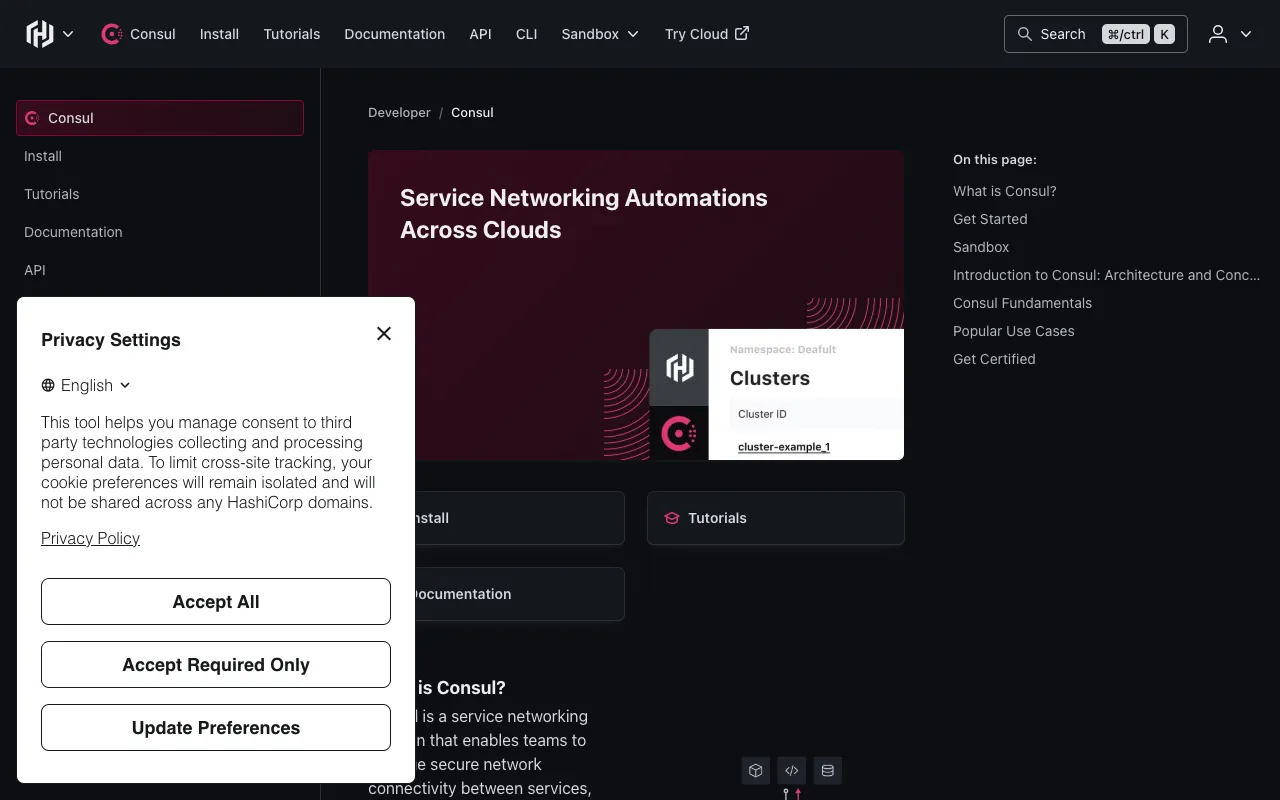
Consul – The Essential Service Mesh & Networking Tool for DevOps
Consul is the industry-standard service mesh and networking solution designed for modern DevOps teams building and managing dynamic, microservices-based applications. Developed by HashiCorp, Consul solves critical distributed system challenges like service discovery, secure communication, and dynamic configuration across any cloud or runtime. It enables DevOps engineers to automate network infrastructure, enforce security policies, and maintain application resilience at scale.
What is Consul by HashiCorp?
Consul is a distributed, highly available tool that provides a centralized control plane for service networking across cloud and on-premise environments. At its core, Consul registers and discovers services, checks their health, and enables secure communication between them. It acts as a service mesh, providing a dedicated infrastructure layer for managing service-to-service communication, making it indispensable for organizations adopting microservices, Kubernetes, or multi-cloud strategies. By decoupling network configuration from application code, Consul gives DevOps teams the agility and control needed for modern application delivery.
Key Features of Consul
Multi-Cloud Service Discovery
Consul provides a global service registry that automatically catalogues services running across any environment—Kubernetes, VMs, bare metal, or public clouds. This enables services to find each other dynamically via DNS or HTTP APIs, eliminating hard-coded IP addresses and manual configuration, which is crucial for scalable, resilient architectures.
Secure Service Segmentation & Communication
Consul secures all service-to-service traffic with automatic TLS encryption and identity-based authorization. It uses mTLS (mutual TLS) to authenticate services and enforce network-level segmentation policies via intentions, ensuring only authorized services can communicate, which is vital for zero-trust security models.
Dynamic Runtime Configuration
With Consul's Key/Value store, teams can manage application configuration dynamically. Services can subscribe to configuration changes, enabling features like feature flagging, database connection strings, and other runtime parameters to be updated without requiring service restarts or redeployments.
Integrated Health Checking
Consul performs regular health checks on services (via scripts, HTTP, TCP, or TTL) and automatically removes unhealthy instances from the service catalog. This ensures traffic is only routed to healthy endpoints, dramatically improving application uptime and reliability.
Multi-Datacenter Federation
A standout feature for global deployments, Consul can seamlessly connect and synchronize service discovery across multiple datacenters and clouds. This enables true geo-distributed applications, disaster recovery strategies, and low-latency routing for users worldwide.
Who Should Use Consul?
Consul is essential for DevOps Engineers, Site Reliability Engineers (SREs), and Platform Teams building or managing cloud-native, microservices-based applications. It is particularly valuable for organizations using Kubernetes that need service mesh capabilities beyond basic kube-proxy, companies operating in hybrid or multi-cloud environments requiring unified service networking, and any team implementing a zero-trust security model for internal service communication. If you're dealing with the complexity of service discovery, secure inter-service communication, or dynamic configuration at scale, Consul provides the foundational control plane.
Consul Pricing and Free Tier
Consul offers a robust, fully-featured open-source version that is completely free to use, deploy, and scale. This free tier includes all core functionality: service discovery, health checking, the KV store, and multi-datacenter federation. HashiCorp also provides Consul Enterprise with additional enterprise-grade features focused on large-scale operations, governance, and enhanced observability, which is available under a commercial license. The generous free tier makes Consul accessible for startups, side projects, and production deployments alike.
Common Use Cases
- Implementing a secure service mesh for Kubernetes microservices
- Managing service discovery in a hybrid cloud or multi-cloud architecture
- Enforcing zero-trust network security between application services
- Dynamically managing configuration for distributed applications without restarts
- Building resilient applications with automated health checking and failover
Key Benefits
- Accelerates microservices adoption by providing a reliable networking foundation
- Enhances application security with automatic mTLS and identity-based policies
- Increases operational resilience through automated health checking and service discovery
- Reduces deployment complexity and manual configuration errors
- Provides a unified control plane for services across any infrastructure
Pros & Cons
Pros
- Industry-leading, production-proven tool with strong community and enterprise backing
- True multi-platform and multi-cloud support, not limited to Kubernetes
- Comprehensive feature set covering discovery, configuration, segmentation, and health checking
- Strong security model with built-in mTLS and access control lists (ACLs)
- Excellent integration with the broader HashiCorp ecosystem (Terraform, Vault)
Cons
- Operational overhead to manage the Consul cluster itself, though managed offerings exist
- Steeper initial learning curve compared to simpler, cloud-native service discovery tools
- Can be overkill for simple, monolithic applications or small-scale deployments
Frequently Asked Questions
Is Consul free to use?
Yes, Consul has a powerful, fully-featured open-source version that is completely free for any use, including commercial production deployments. HashiCorp offers a separate Consul Enterprise version with advanced features for large organizations.
Is Consul a good tool for DevOps engineers?
Absolutely. Consul is considered a foundational tool for modern DevOps practices. It automates critical but complex networking tasks—service discovery, security, and configuration—allowing DevOps and SRE teams to focus on building features rather than managing brittle, manual infrastructure. Its declarative approach aligns perfectly with Infrastructure as Code (IaC) principles.
What is the difference between Consul and a Kubernetes service mesh?
While tools like Istio or Linkerd are designed specifically as service meshes for Kubernetes, Consul is a broader service networking platform. Consul supports Kubernetes via its Consul Connect feature but also works seamlessly with VMs, bare metal, and across multiple datacenters. Consul provides service discovery and a KV store, which are not primary features of dedicated K8s service meshes.
Does Consul work with Terraform?
Yes, Consul integrates deeply with Terraform, another HashiCorp product. You can use the Consul provider in Terraform to manage keys and values in the Consul KV store, and Terraform can output information (like instance IPs) directly to Consul for service discovery, creating a powerful Infrastructure as Code workflow.
Conclusion
For DevOps engineers tasked with taming the complexity of microservices and distributed systems, Consul is not just another tool—it's a critical piece of infrastructure. It provides the reliable, secure, and automated networking layer that modern applications require. Whether you're starting your cloud-native journey on Kubernetes or managing a sprawling hybrid cloud estate, Consul's robust service discovery, dynamic configuration, and zero-trust security model offer a proven path to resilience and agility. With its powerful free tier and deep ecosystem integrations, Consul stands as a top-tier choice for any team serious about building and operating scalable, secure software.