Go back
Image of GitLab – The Complete DevOps Platform for Modern Engineering Teams

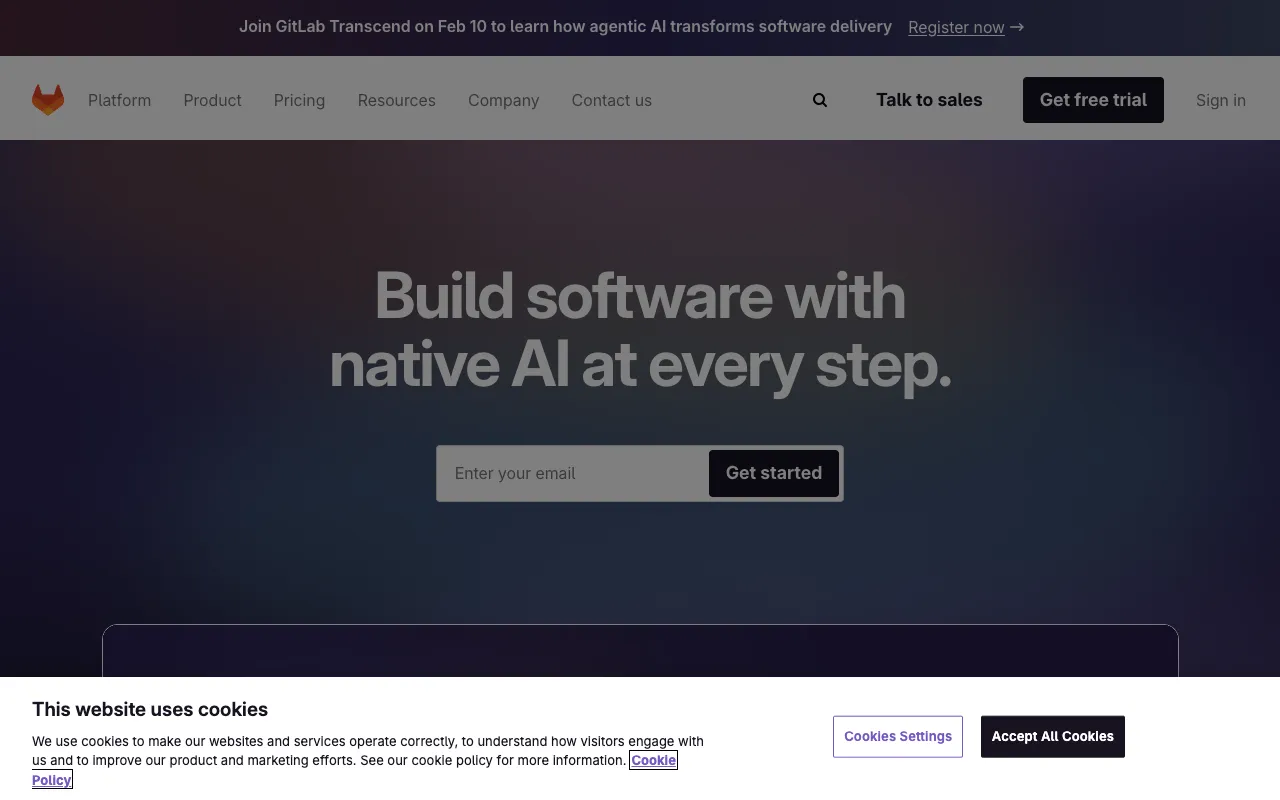
GitLab – The Complete DevOps Platform for Modern Engineering Teams

GitLab is the industry-leading, end-to-end DevOps platform that consolidates your entire software development lifecycle into a single, unified application. It moves beyond simple Git repository hosting to deliver integrated CI/CD, security scanning, project management, and monitoring, enabling teams to ship better software faster with improved collaboration and visibility. Whether you're a startup building a microservices architecture or an enterprise managing complex deployments, GitLab provides the tools to automate, secure, and accelerate your DevOps pipeline.

What is GitLab?

GitLab is a comprehensive, web-based DevOps lifecycle tool that began as an open-source Git repository manager and has evolved into a full-featured platform. It replaces the need for a fragmented toolchain (like separate tools for source control, CI servers, and artifact repositories) with one cohesive application. GitLab provides a 'single source of truth' for code, enabling seamless collaboration between development, operations, and security teams. Its core philosophy is 'concurrent DevOps,' where stages of the software lifecycle can happen in parallel, dramatically reducing cycle time and increasing efficiency.

Key Features of GitLab

Built-in Git Repository Management

GitLab provides robust, enterprise-grade Git repository hosting with fine-grained access controls, branch protection rules, and powerful code review tools like merge requests. It supports large file storage (Git LFS) and offers a familiar, collaborative interface for managing source code, making it a powerful alternative to standalone Git hosts.

Integrated CI/CD Pipelines

GitLab CI/CD is natively integrated into the platform, eliminating the complexity of configuring and maintaining external CI servers. You define pipelines using a simple `.gitlab-ci.yml` file stored in your repository. This enables automated building, testing, and deployment of your applications directly from the same interface where you manage your code.

DevSecOps and Security Scanning

Security is built into the GitLab workflow. The platform offers automated, continuous security scanning for SAST (Static Application Security Testing), DAST (Dynamic Application Security Testing), dependency scanning, container scanning, and license compliance. Vulnerabilities are surfaced directly in merge requests, allowing developers to fix security issues before code is merged.

Value Stream Management & Analytics

GitLab provides powerful analytics to measure and optimize your DevOps performance. Track key metrics like cycle time, deployment frequency, and lead time from the Value Stream Analytics dashboard. These insights help teams identify bottlenecks and continuously improve their development processes.

Who Should Use GitLab?

GitLab is ideal for any engineering organization seeking to streamline and secure its software delivery process. It is particularly powerful for DevOps teams, platform engineers, and security professionals (DevSecOps) who want to break down silos between development and operations. Startups benefit from its all-in-one nature to scale efficiently, while large enterprises leverage its enterprise features for governance, compliance, and managing complex, multi-project environments. Development teams of all sizes use GitLab to implement modern practices like CI/CD, Infrastructure as Code (IaC), and GitOps.

GitLab Pricing and Free Tier

GitLab offers a generous and fully-featured Free tier for individuals and small teams, which includes unlimited private repositories, a 400 CI/CD pipeline minutes monthly allowance, and 5GB of storage. For advanced needs, paid tiers (Premium and Ultimate) add enterprise features like advanced CI/CD, security risk mitigation, compliance, portfolio management, and priority support. This tiered model allows teams to start for free and scale their investment as their DevOps maturity grows.

Common Use Cases

Key Benefits

Pros & Cons

Pros

  • Unified platform eliminates integration headaches between disparate DevOps tools
  • Strong open-core model with a vibrant community and extensive documentation
  • Comprehensive built-in security features support modern DevSecOps practices

Cons

  • The all-in-one nature can feel monolithic compared to best-of-breed, specialized tools
  • Self-managed instances require significant infrastructure and maintenance resources
  • Advanced enterprise features are locked behind the highest pricing tiers

Frequently Asked Questions

Is GitLab free to use?

Yes, GitLab offers a powerful Free tier with unlimited private repositories and collaborators, 400 CI/CD minutes per month, and essential project management features. This makes it an excellent starting point for individuals, startups, and small teams.

Is GitLab good for DevOps engineers?

Absolutely. GitLab is specifically designed for DevOps engineers, providing an integrated toolkit for source control, automation, infrastructure management, and security. It enables DevOps teams to build, test, secure, and deploy code from a single application, embodying the principles of a streamlined DevOps workflow.

What is the difference between GitLab and GitHub?

While both offer Git repository hosting, GitLab is a complete DevOps platform with native, integrated CI/CD, security, and monitoring tools. GitHub, traditionally focused on source code collaboration, requires integrating third-party services (like GitHub Actions, external CI servers) to achieve a similar end-to-end DevOps pipeline. GitLab provides this unified experience out-of-the-box.

Conclusion

For engineering teams committed to a mature, efficient, and secure DevOps practice, GitLab stands out as a premier, all-in-one solution. It successfully consolidates the complex toolchain required for modern software delivery into a single, cohesive platform. From its robust free offering to its enterprise-grade security and compliance features, GitLab empowers organizations to ship higher quality software faster. If your goal is to reduce tool sprawl, enhance cross-team collaboration, and embed security into your development lifecycle, GitLab is a top-tier choice that scales from individual projects to global enterprise deployments.