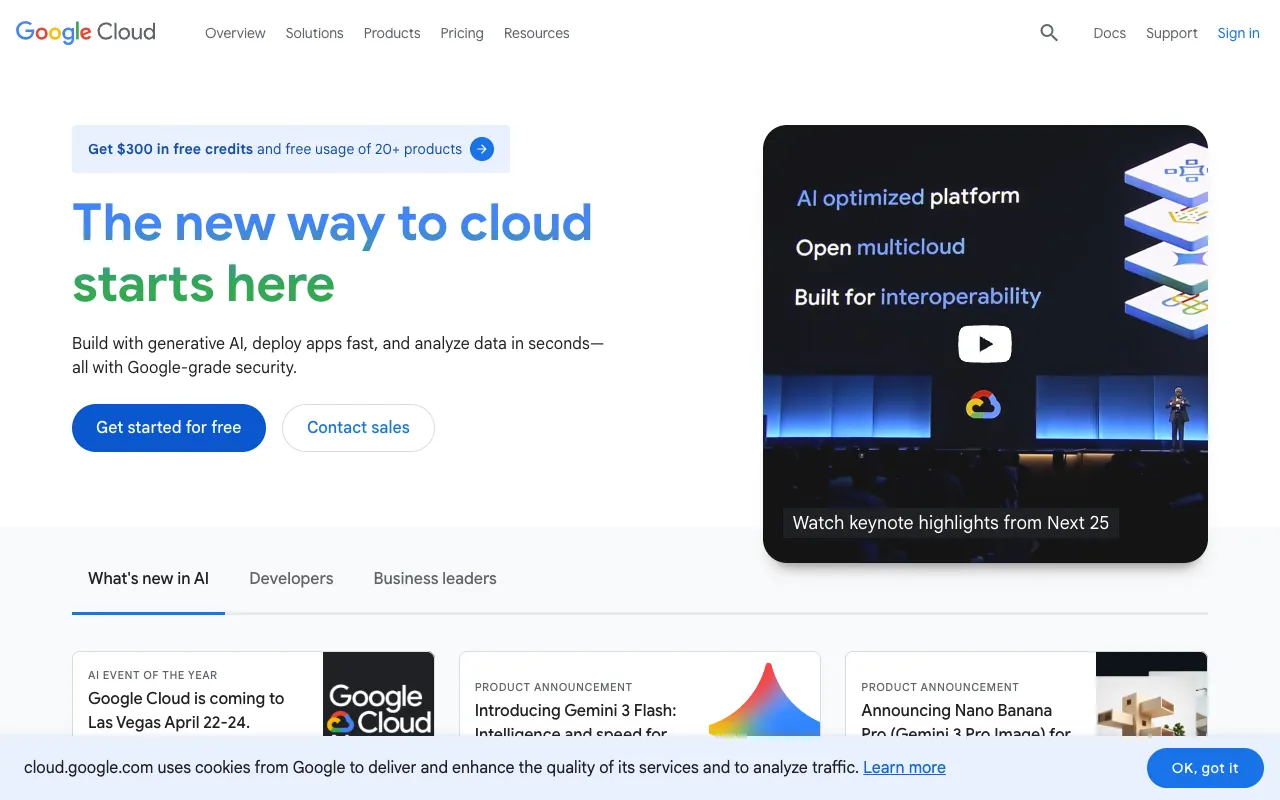
Google Cloud Platform (GCP) – Best DevOps Tools & Infrastructure
Google Cloud Platform (GCP) is a leading cloud computing service offering a powerful, integrated suite of DevOps tools and scalable infrastructure. Built on Google's global network, it empowers DevOps engineers to build, test, deploy, and monitor applications with high performance, security, and reliability. With its robust managed services, native Kubernetes support, and a substantial always-free tier, GCP is engineered for modern, agile development workflows.
What is Google Cloud Platform (GCP)?
Google Cloud Platform is a comprehensive collection of cloud computing services that runs on the same infrastructure Google uses internally for its end-user products. For DevOps engineers, GCP provides the essential building blocks for creating a complete software delivery pipeline, from source code management to production deployment and monitoring. It combines raw infrastructure (Compute Engine VMs) with fully managed platforms (Kubernetes Engine, Cloud Run) and a vast ecosystem of tools for automation, security, and data analytics.
Key Features of Google Cloud Platform
Google Kubernetes Engine (GKE)
GKE is a fully managed Kubernetes service for deploying, managing, and scaling containerized applications. It offers automatic scaling, multi-cluster support, and deep integration with Google's infrastructure, providing a robust and resilient platform for microservices.
Cloud Build (CI/CD)
A fully managed continuous integration and delivery platform that executes fast, consistent, and secure builds. It can trigger builds from code changes in GitHub, GitLab, or Cloud Source Repositories and deploy to various GCP services or Kubernetes.
Operations Suite (Monitoring, Logging, APM)
Formerly Stackdriver, this integrated suite provides comprehensive monitoring, logging, tracing, and diagnostics for applications on GCP and multi-cloud environments. It gives DevOps teams full observability into system performance and health.
Infrastructure as Code with Deployment Manager & Terraform
GCP supports infrastructure automation through its native Deployment Manager and the widely-used Terraform. This allows engineers to define and provision cloud resources using declarative configuration files, ensuring repeatable and version-controlled environments.
Serverless with Cloud Run & Cloud Functions
Build and deploy applications without managing servers. Cloud Run is a fully managed platform for running stateless containers, while Cloud Functions is an event-driven serverless compute platform, enabling developers to focus solely on code.
Artifact Registry & Container Registry
Securely store, manage, and deploy Docker container images and language packages (like Maven, npm). These private registries integrate seamlessly with CI/CD pipelines and Google Kubernetes Engine for secure software supply chains.
Who Should Use Google Cloud Platform?
Google Cloud Platform is ideal for DevOps engineers, SREs (Site Reliability Engineers), cloud architects, and development teams building modern, scalable applications. It's particularly valuable for organizations running containerized microservices, those invested in the Kubernetes ecosystem, startups seeking scalable infrastructure, and enterprises undergoing digital transformation. Teams that prioritize developer productivity, automation, and deep integration with open-source technologies will find GCP a powerful ally.
Google Cloud Platform Pricing and Free Tier
GCP operates on a flexible pay-as-you-go pricing model, charging only for the resources you consume. Crucially, it offers an extensive **Always Free Tier** that includes limited access to over 20 core products like Compute Engine, Cloud Storage, and BigQuery, allowing users to learn, prototype, and run small applications at no cost. New customers also receive $300 in free credits to use over 90 days. This makes GCP exceptionally accessible for experimentation and scaling projects predictably.
Common Use Cases
- Building a scalable microservices architecture with Kubernetes and service mesh
- Implementing a fully automated CI/CD pipeline for cloud-native applications
- Managing hybrid or multi-cloud infrastructure with centralized monitoring and security
Key Benefits
- Accelerate software delivery with fully managed CI/CD and container orchestration services.
- Reduce operational overhead with Google's SRE expertise built into managed platform services.
- Optimize costs with per-second billing, sustained use discounts, and a comprehensive free tier.
Pros & Cons
Pros
- Industry-leading managed Kubernetes service (GKE) with multi-cluster management.
- Deep integration with open-source tools and a strong commitment to the Kubernetes ecosystem.
- Global high-performance network and infrastructure built for security and scale.
- Generous free tier and transparent, granular pricing model.
Cons
- The ecosystem and third-party integrations can be smaller than the largest competitor.
- Some advanced enterprise features may have a steeper learning curve for new users.
- Regional service availability for newer products may vary compared to established offerings.
Frequently Asked Questions
Is Google Cloud Platform free to use?
Yes, Google Cloud Platform offers a substantial Always Free Tier that provides limited monthly usage of many core services like Compute Engine, Cloud Storage, and Cloud Functions at no charge forever. New users also get $300 in free credits to explore any GCP service for 90 days.
Is Google Cloud Platform good for DevOps engineers?
Absolutely. GCP is one of the best cloud platforms for DevOps, offering native tools like Cloud Build for CI/CD, Google Kubernetes Engine for container orchestration, and Operations Suite for monitoring. Its infrastructure-as-code support and focus on automation align perfectly with modern DevOps practices.
How does GCP compare to AWS and Azure for DevOps?
GCP is renowned for its strengths in containerization (Kubernetes), data analytics, and machine learning. Its network performance is exceptional, and it offers a more streamlined, developer-friendly experience for certain services like managed Kubernetes. The choice often depends on specific project needs, existing stack, and team expertise.
What is the best way to learn Google Cloud Platform for DevOps?
Start with the Always Free Tier to experiment hands-on. Utilize Google's extensive documentation, Qwiklabs for guided tutorials, and pursue role-based certifications like the Associate Cloud Engineer or Professional Cloud DevOps Engineer to validate your skills.
Conclusion
Google Cloud Platform stands as a top-tier choice for DevOps engineers seeking a powerful, integrated, and scalable cloud ecosystem. Its unwavering commitment to Kubernetes, robust managed services, and a genuine focus on developer productivity make it more than just infrastructure—it's a platform engineered for the future of software delivery. Whether you're building a new greenfield microservices application or modernizing an existing stack, GCP provides the tools, reliability, and innovation to accelerate your DevOps journey effectively and efficiently.