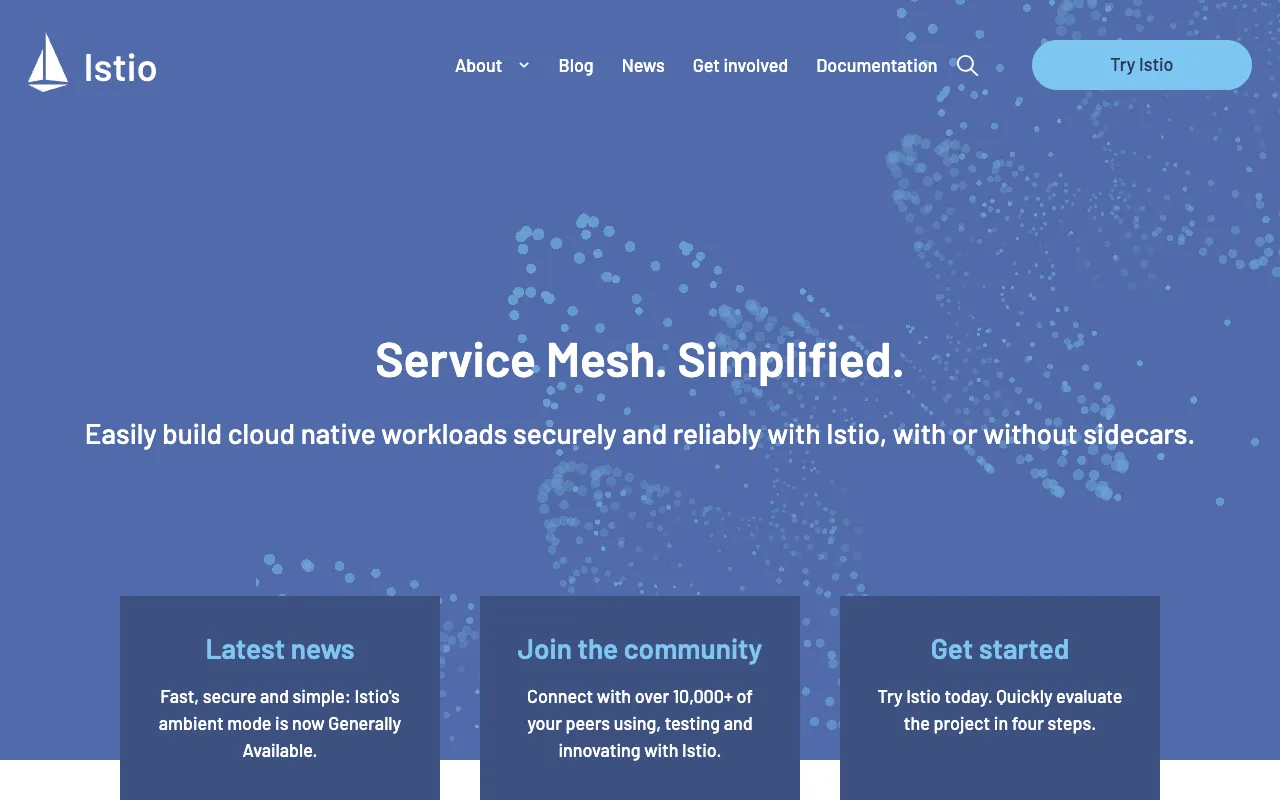
Istio – The Essential Service Mesh Platform for DevOps Engineers
Istio is the industry-standard service mesh that solves the inherent complexity of managing microservices at scale. For DevOps engineers operating in Kubernetes and cloud-native environments, Istio provides critical infrastructure for secure service-to-service communication, intelligent traffic management, and comprehensive observability—all without requiring changes to application code. As microservices architectures become the norm, mastering Istio has become a non-negotiable skill for modern DevOps professionals.
What is Istio Service Mesh?
Istio is an open-source service mesh layer that sits alongside your microservices, providing a dedicated infrastructure layer for handling service communication. Unlike traditional approaches that bake networking logic into each application, Istio externalizes this complexity into a configurable, uniform control plane. It operates by deploying lightweight proxy containers (Envoy) alongside each service pod, intercepting all network traffic. This architecture gives DevOps teams unprecedented control over traffic routing, security policies, failure recovery, and telemetry collection across their entire microservices ecosystem.
Key Features of Istio for DevOps
Traffic Management & Intelligent Routing
Istio provides sophisticated traffic control with features like canary deployments, A/B testing, circuit breaking, and fault injection. DevOps engineers can implement gradual rollouts, split traffic between service versions based on headers or weights, and simulate failures to test application resilience—all through declarative configuration rather than code changes.
Zero-Trust Security & mTLS
Implement automatic mutual TLS (mTLS) encryption between all services without modifying applications. Istio enables zero-trust security models with fine-grained access policies, authentication, and authorization. DevOps teams can enforce 'least privilege' access, secure east-west traffic, and manage certificates automatically across thousands of services.
Comprehensive Observability Stack
Gain deep insights into service behavior with automatic generation of metrics, logs, and traces. Istio integrates with monitoring tools like Prometheus, Grafana, Jaeger, and Kiali to provide real-time visibility into latency, errors, traffic flows, and service dependencies—essential for debugging and performance optimization in complex microservices environments.
Policy Enforcement & Rate Limiting
Centrally enforce organizational policies across all services. Configure rate limiting, quota management, and access controls to prevent API abuse and ensure fair resource usage. These policies are applied consistently regardless of programming language or framework, simplifying compliance and governance.
Who Should Use Istio?
Istio is essential for DevOps teams, SREs, and platform engineers managing production Kubernetes clusters with multiple microservices. It's particularly valuable for organizations experiencing growing pains from microservices complexity—those struggling with service discovery, securing inter-service communication, implementing reliable deployments, or gaining visibility into distributed transactions. Companies running 10+ microservices, especially in regulated industries like finance or healthcare, benefit most from Istio's security and observability capabilities.
Istio Pricing and Free Tier
Istio is completely open-source and free to use under the Apache 2.0 license. There are no licensing fees for the core platform. Organizations typically incur costs through the infrastructure required to run Istio (Kubernetes clusters, compute resources) and optional commercial support or enterprise distributions from vendors like Google (Anthos Service Mesh), IBM, or Solo.io. The free, community-supported version provides full functionality for production use, making it accessible to teams of all sizes.
Common Use Cases
- Implementing secure microservices communication in Kubernetes for financial applications
- Managing canary deployments and traffic splitting for e-commerce platforms during peak seasons
- Gaining observability into distributed tracing for debugging complex microservices architectures
Key Benefits
- Reduce microservices management complexity by externalizing networking concerns from application code
- Achieve production-grade security with automatic mTLS encryption between all services
- Gain complete visibility into service dependencies and performance metrics without instrumenting each service individually
Pros & Cons
Pros
- Industry-standard solution with strong community and corporate backing
- Comprehensive feature set covering security, observability, and traffic management
- Platform-agnostic approach that works with any Kubernetes distribution
- No vendor lock-in with open-source core and multiple commercial support options
Cons
- Steep learning curve with complex configuration and operational overhead
- Performance overhead from sidecar proxies, though typically minimal (1-10ms latency)
- Requires Kubernetes expertise and dedicated platform engineering resources
Frequently Asked Questions
Is Istio free to use?
Yes, Istio is completely free and open-source under the Apache 2.0 license. You can download, use, and modify it without any licensing costs. Organizations only pay for the underlying infrastructure and optional commercial support.
Is Istio good for Kubernetes DevOps teams?
Istio is considered essential for Kubernetes DevOps teams managing microservices at scale. It solves critical challenges in service communication, security, and observability that native Kubernetes alone doesn't address, making it a foundational component of modern cloud-native DevOps stacks.
What's the difference between Istio and Kubernetes Service?
Kubernetes Services provide basic service discovery and load balancing. Istio builds on this with advanced traffic management (canary deployments, circuit breaking), automatic mTLS security, fine-grained access policies, and comprehensive observability (metrics, logs, traces) that Kubernetes alone doesn't provide.
How difficult is Istio to implement for DevOps teams?
Istio has a significant learning curve but provides immense value. Implementation requires solid Kubernetes knowledge and typically 2-4 weeks for initial deployment and basic configuration. The investment pays off through reduced operational complexity and enhanced capabilities for managing microservices in production.
Conclusion
For DevOps engineers navigating the complexities of microservices architectures, Istio isn't just another tool—it's fundamental infrastructure. By providing a uniform way to secure, connect, and observe services, Istio transforms chaotic microservices environments into manageable, observable, and secure systems. While the learning curve is substantial, the payoff in reduced operational complexity, enhanced security posture, and production reliability makes Istio an indispensable component of any serious cloud-native DevOps toolkit. For teams committed to Kubernetes and microservices, mastering Istio represents a critical competitive advantage in building resilient, scalable applications.