Go back
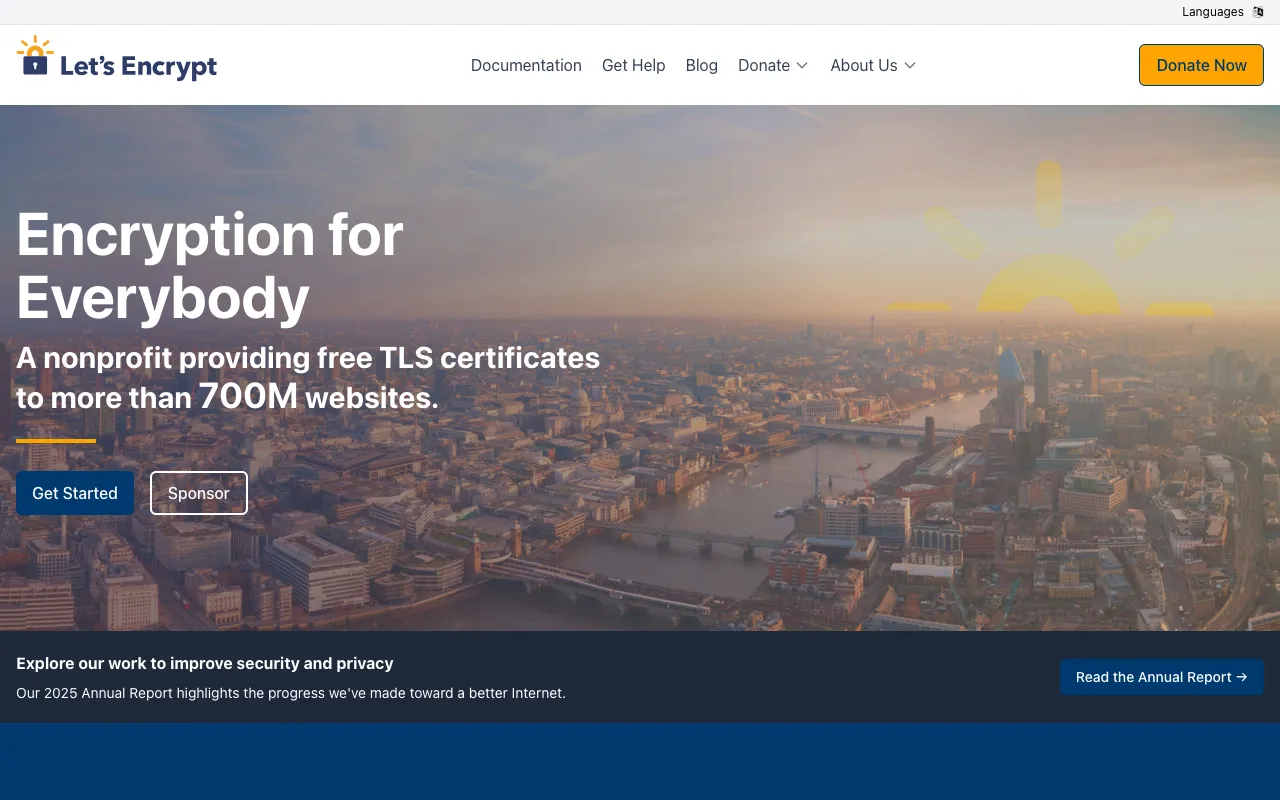
Image of Let's Encrypt – The Essential Free SSL/TLS Certificate Authority for DevOps Engineers

Let's Encrypt – The Essential Free SSL/TLS Certificate Authority for DevOps Engineers

Let's Encrypt is the revolutionary, non-profit Certificate Authority (CA) that provides free SSL/TLS certificates, fundamentally changing web security and DevOps automation. For DevOps engineers, site reliability engineers (SREs), and platform teams, it eliminates the cost and manual overhead of securing web applications. By offering fully automated certificate issuance and renewal via the ACME protocol, Let's Encrypt integrates seamlessly into CI/CD pipelines, infrastructure as code (IaC), and automated deployment workflows. It's the cornerstone technology for implementing HTTPS-by-default across development, staging, and production environments at zero cost.

What is Let's Encrypt?

Let's Encrypt is a free, automated, and open Certificate Authority run by the Internet Security Research Group (ISRG). Its mission is to create a more secure and privacy-respecting web by making it effortless for website owners to obtain and manage the SSL/TLS certificates required for HTTPS. Unlike traditional CAs that involve manual verification, payments, and complex renewal processes, Let's Encrypt automates everything through a standardized protocol (ACME). This makes it not just a tool, but an infrastructure service that empowers developers and DevOps professionals to enforce encryption everywhere without friction, budget constraints, or operational bottlenecks. It has issued billions of certificates, securing a massive portion of the modern web.

Key Features of Let's Encrypt for DevOps

Completely Free SSL/TLS Certificates

Let's Encrypt provides Domain Validation (DV) certificates at absolutely no cost. This removes a significant financial barrier, allowing teams to secure every microservice, internal tool, staging site, and customer-facing application without impacting the budget. It enables the 'secure by default' principle across the entire application portfolio.

Automated Certificate Management (ACME Protocol)

The core innovation is the ACME (Automated Certificate Management Environment) protocol. DevOps tools like Certbot, Traefik, Caddy, and Kubernetes ingress controllers use ACME to automatically prove domain control, request certificates, and install them. This automation is critical for managing certificates at scale, especially in dynamic environments where containers and instances are frequently created and destroyed.

Short Validity & Automated Renewal (90-Day)

Certificates are valid for 90 days (reduced from the traditional 1-2 years), which encourages and necessitates automation. Clients automatically renew certificates well before expiry. This short lifecycle improves security by limiting the impact of key compromise and ensures your automation is continuously tested and working.

Wildcard Certificate Support

Let's Encrypt supports wildcard certificates (e.g., *.yourdomain.com), which are invaluable for DevOps. A single wildcard certificate can secure an unlimited number of subdomains for a domain, simplifying certificate management for complex SaaS platforms, multi-tenant applications, and dynamic development environments.

Broad Client & Platform Integration

It's supported by a vast ecosystem. Official clients like Certbot exist, but native integration is built into web servers (Apache, Nginx), reverse proxies (Caddy, Traefik), load balancers, PaaS providers, and major cloud platforms. This means you can often enable HTTPS with just a few configuration lines in your IaC templates.

Who Should Use Let's Encrypt?

Let's Encrypt is indispensable for any technical professional or team responsible for web infrastructure. It's a primary tool for **DevOps Engineers and SREs** automating security and deployment. **Web Developers** use it to secure personal projects, portfolios, and client sites easily. **Startups and SMBs** leverage it to achieve enterprise-grade HTTPS without cost. **Enterprise Platform Teams** use it to provide a secure, self-service TLS capability for internal development teams. It's perfect for securing blogs, APIs, admin panels, IoT device dashboards, and any HTTP service that requires trusted encryption. If you manage a domain and serve traffic over the web, Let's Encrypt should be your default choice for TLS certificates.

Let's Encrypt Pricing and Free Tier

Let's Encrypt operates on a 100% free model. There is no paid tier, no premium plan, and no hidden fees. The service is funded through sponsorships and donations from organizations and individuals who believe in a more secure web. The free tier includes unlimited issuance of standard Domain Validated (DV) certificates, including wildcard certificates, with the same automation and reliability as the core service. This makes it the most cost-effective and scalable TLS solution available, especially when compared to traditional CAs that charge per certificate or per year.

Common Use Cases

Key Benefits

Pros & Cons

Pros

  • Zero cost for unlimited Domain Validated (DV) SSL/TLS certificates
  • Full automation via ACME protocol integrates perfectly with DevOps tools and IaC
  • Wildcard certificate support simplifies management for complex domains
  • Trusted by all major browsers and operated transparently as a non-profit
  • Massively reduces the operational toil of manual certificate renewals

Cons

  • Only provides Domain Validation (DV) certificates; no Organization Validation (OV) or Extended Validation (EV)
  • 90-day certificate validity requires robust automation; manual management is impractical
  • Rate limits exist (e.g., certificates per registered domain per week) which must be considered for very high-scale operations

Frequently Asked Questions

Is Let's Encrypt free to use?

Yes, absolutely. Let's Encrypt provides free SSL/TLS certificates for everyone. There are no charges for issuance, renewal, or wildcard certificates. The service is funded by sponsorships and donations.

Is Let's Encrypt good for DevOps and automation?

Let's Encrypt is arguably the best tool for DevOps TLS automation. Its ACME protocol is designed for automation, allowing certificates to be requested, installed, and renewed entirely by software. This integrates seamlessly with CI/CD pipelines, configuration management (Ansible, Chef, Puppet), container orchestration (Kubernetes), and infrastructure as code (Terraform).

What is the difference between Let's Encrypt and traditional Certificate Authorities?

Traditional CAs often involve manual processes, identity verification, fees, and longer certificate lifespans (1-2 years). Let's Encrypt is fully automated, free, provides Domain-Validated certificates only, and uses a short 90-day validity period to encourage and enforce automation, making it ideal for modern, agile infrastructure management.

How do I automate Let's Encrypt certificate renewal?

Automation is typically handled by an ACME client like Certbot, which can be configured to run as a cron job or systemd timer. For deeper DevOps integration, use tools with built-in ACME support: the Caddy web server auto-manages certificates, Traefik proxy handles it for containers, and Kubernetes cert-manager operator automates certificates for Ingress resources.

Conclusion

For DevOps engineers committed to security, automation, and efficiency, Let's Encrypt is not just a tool—it's a foundational service. It transforms TLS certificate management from a costly, manual chore into a fully automated, zero-cost component of your infrastructure. By integrating Let's Encrypt with your DevOps toolchain, you ensure every application, from internal tools to customer-facing services, is secured with trusted HTTPS by default. Its widespread adoption, robust automation protocol, and unwavering commitment to a free and secure web make it the definitive choice for TLS certificates in modern software development and operations.