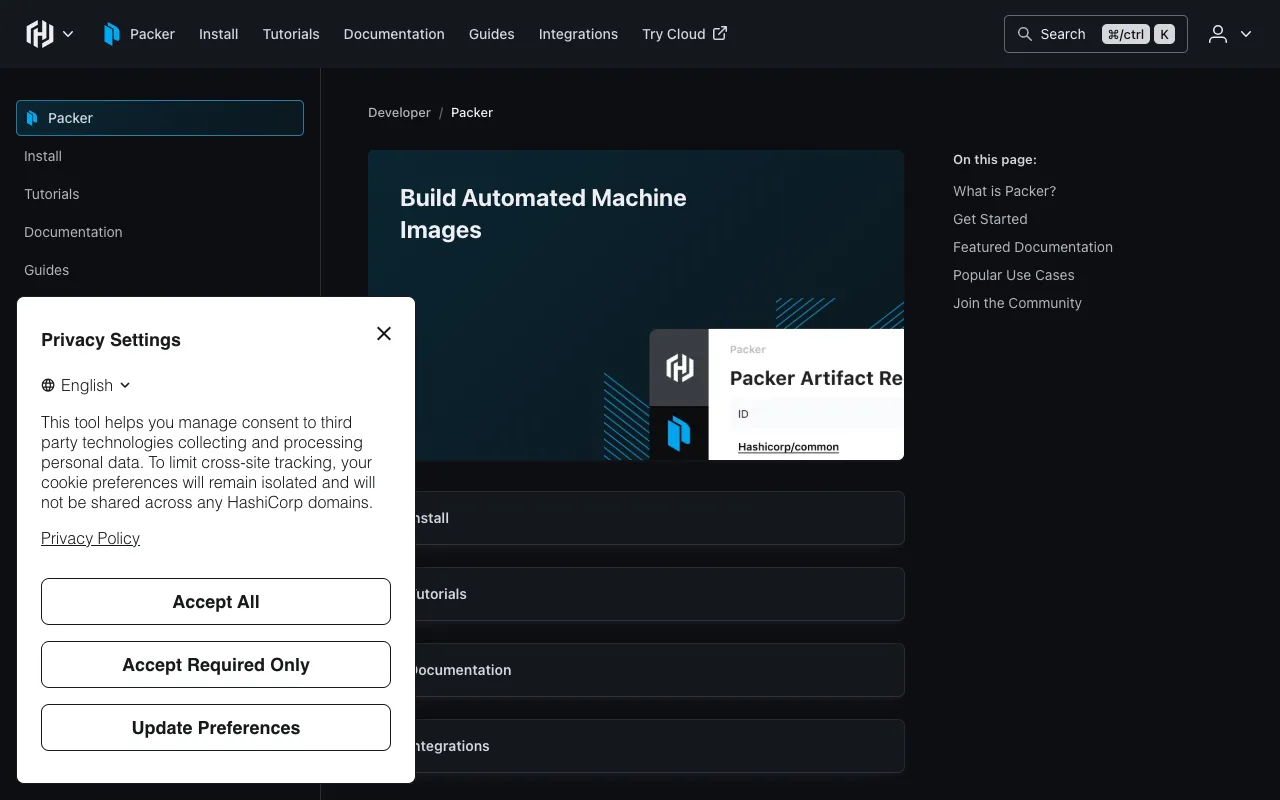
Packer – The Ultimate Multi-Platform Machine Image Builder for DevOps
Packer is the definitive open-source tool for DevOps engineers and platform teams automating infrastructure deployment. It enables you to create identical, pre-configured machine images (like Amazon AMIs, Azure VM Images, Google Compute Engine images, Docker containers, and VMware templates) from a single source configuration. By building immutable infrastructure images once and deploying them everywhere, Packer eliminates configuration drift, accelerates deployment cycles, and ensures production environments are consistent, secure, and reproducible—cornerstones of modern DevOps and Infrastructure as Code (IaC) practices.
What is HashiCorp Packer?
HashiCorp Packer is a lightweight, command-line tool that automates the creation of machine images across multiple platforms. It follows the principle of 'immutable infrastructure,' where servers are never modified after deployment—instead, you build a new, fully-configured image and replace the old one. Packer reads a JSON or HCL configuration file (the 'template'), provisions a temporary machine, runs your configuration scripts (like shell, PowerShell, or Ansible), and then captures that machine's state as a ready-to-use image for platforms like AWS EC2, Microsoft Azure, Google Cloud, VMware vSphere, Docker, and more. This process transforms manual, error-prone server setup into a fast, automated, and repeatable pipeline.
Key Features of Packer
Multi-Platform Image Creation
Build machine images for dozens of platforms simultaneously from a single Packer template. Create an Amazon AMI, an Azure Managed Image, a Google Cloud compute image, and a VMware VM template all from the same set of provisioning scripts, ensuring absolute consistency across your hybrid or multi-cloud environment.
Immutable Infrastructure Workflow
Enforce server consistency and eliminate configuration drift. Once a Packer image is built and validated, it becomes an immutable artifact. Deployment simply launches instances from this known-good image, making rollbacks trivial and deployments predictable—a core DevOps best practice.
Extensive Provisioner Support
Use your preferred configuration management tools within the image build process. Packer integrates seamlessly with Shell scripts, PowerShell, Ansible, Chef, Puppet, and Salt to install software, configure settings, and harden security, all before the image is frozen.
Lightweight and Fast
Packer runs on your local machine or in a CI/CD pipeline. It orchestrates cloud providers' native APIs to create temporary resources, run provisioning, and create the final image, resulting in a fast build process without the need for a long-running management server.
Who Should Use Packer?
Packer is essential for DevOps Engineers, Site Reliability Engineers (SREs), Cloud Architects, and platform teams managing infrastructure at scale. It's ideal for organizations practicing Infrastructure as Code (IaC), implementing CI/CD for infrastructure, operating in multi-cloud or hybrid environments, or those needing to meet strict compliance and security baselines through pre-hardened images. If you're tired of manual server setup or battling inconsistencies between development, staging, and production, Packer automates and solves these critical challenges.
Packer Pricing and Free Tier
Packer is proudly open-source software released under the MPL 2.0 license. The core Packer binary is completely free to download, use, and integrate into your workflows without any cost or subscription. HashiCorp offers paid enterprise solutions like Terraform Cloud/Enterprise for broader infrastructure orchestration, but the Packer tool itself remains a free, standalone utility. This makes it an incredibly cost-effective and accessible entry point for automating machine image creation.
Common Use Cases
- Creating pre-hardened, security-compliant golden images for PCI DSS or HIPAA workloads
- Building consistent development environment images for AWS EC2 and Docker simultaneously
- Automating base image updates across Azure, Google Cloud, and VMware after a critical OS patch
Key Benefits
- Reduces deployment failures by eliminating manual configuration steps and environment inconsistencies.
- Accelerates scaling and disaster recovery by having pre-baked, ready-to-launch images for auto-scaling groups or new regions.
- Improves security posture by baking in security patches, agent installations, and compliance configurations once in a controlled build process.
Pros & Cons
Pros
- Completely free and open-source with a strong community and ecosystem.
- Unparalleled consistency across different cloud and virtualization platforms.
- Integrates perfectly with other HashiCorp tools like Terraform and Vagrant for a complete IaC workflow.
- Significantly reduces time to provision new, identical servers from minutes to seconds.
Cons
- Has a learning curve, particularly for writing and debugging JSON/HCL templates.
- The image build process can incur small, temporary costs from cloud providers for the running build instance.
- Primarily focuses on image creation; requires other tools like Terraform or cloud-native services for full lifecycle orchestration.
Frequently Asked Questions
Is Packer free to use?
Yes, Packer is completely free and open-source. You can download the binary from the official website and use it without any licensing fees for personal or commercial projects. It is a standalone tool maintained by HashiCorp.
Is Packer good for DevOps engineers?
Absolutely. Packer is considered a fundamental DevOps tool. It directly supports key DevOps principles like automation, consistency, and immutable infrastructure. By baking configuration into machine images, it makes deployments faster, more reliable, and perfectly aligned with CI/CD pipelines, making it a top-choice tool for any DevOps toolkit.
What is the difference between Packer and Terraform?
Packer and Terraform are complementary tools in the HashiCorp ecosystem. Packer specializes in *building* machine images (the 'what' runs on a server). Terraform specializes in *provisioning and managing* the infrastructure that runs those images (the 'where'—networks, VMs, load balancers). A common workflow uses Packer to create an image and Terraform to deploy instances of that image across your infrastructure.
Conclusion
For DevOps teams committed to automation, consistency, and speed, Packer is not just a helpful utility—it's a transformative tool. It solves the foundational problem of environment inconsistency by making immutable, multi-platform machine images a standard part of your workflow. When integrated into a CI/CD pipeline alongside tools like Terraform, Packer creates a robust, automated infrastructure delivery system. If your goal is to move from fragile, manually configured servers to reliable, version-controlled, and rapidly deployable infrastructure, implementing Packer is a critical and highly rewarding next step.