Go back
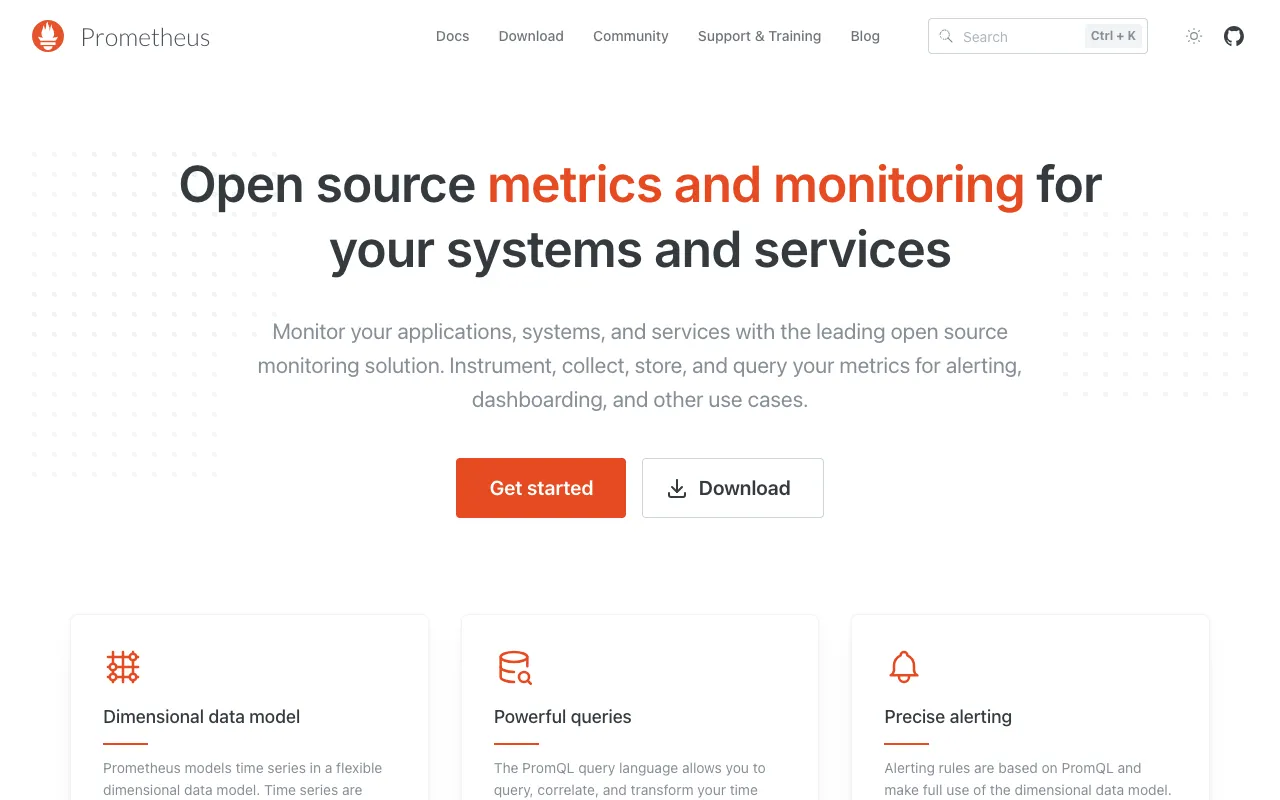
Image of Prometheus – The Essential Monitoring & Alerting Toolkit for DevOps

Prometheus – The Essential Monitoring & Alerting Toolkit for DevOps

Prometheus has redefined infrastructure and application monitoring for DevOps engineers and Site Reliability Engineers (SREs). As a robust, open-source toolkit, it excels at collecting multidimensional time-series data, querying metrics with its powerful PromQL language, and triggering actionable alerts. Built for reliability in dynamic, cloud-native environments, Prometheus is the de facto standard for teams requiring deep visibility into system health, performance bottlenecks, and service-level objectives (SLOs).

What is Prometheus?

Prometheus is a comprehensive, open-source monitoring and alerting system originally developed at SoundCloud. It is specifically engineered for the modern, containerized world of microservices and dynamic cloud infrastructure. Unlike traditional monitoring tools, Prometheus employs a pull model over HTTP, scraping metrics from instrumented jobs at configured intervals. Its core strength lies in its multi-dimensional data model, where time-series data is identified by metric name and key-value pairs (labels), and its flexible query language, PromQL, which allows for powerful real-time aggregation and analysis.

Key Features of Prometheus

Multi-Dimensional Data Model

Metrics are identified by a name and a set of key-value labels, enabling rich, contextual queries. This model allows you to slice, dice, and aggregate data across any dimension, such as by service, pod, instance, or region, providing unparalleled granularity in your monitoring.

Powerful PromQL Query Language

PromQL is a flexible query language designed for Prometheus's data model. It enables DevOps engineers to perform real-time calculations, create complex alerts, and generate insightful visualizations in tools like Grafana, turning raw metrics into actionable intelligence.

Efficient Time-Series Storage

Prometheus stores time-series data locally on disk in a custom, highly efficient format. This design ensures fast query performance and reliable data persistence, optimized for the high-cardinality and high-churn environments typical of DevOps.

Service Discovery Integration

Automatically discovers monitoring targets in dynamic environments like Kubernetes, AWS EC2, or Consul. This eliminates manual configuration, allowing Prometheus to seamlessly scale with your infrastructure as containers and services are created or destroyed.

Sophisticated Alerting (Alertmanager)

The Alertmanager component handles alerts sent by the Prometheus server. It provides features for deduplication, grouping, inhibition, and routing alerts to various receivers like email, PagerDuty, or Slack, ensuring the right person gets notified at the right time.

Extensive Client Libraries & Exporters

A vast ecosystem of official and community-contributed client libraries (for instrumenting your code) and exporters (for pulling metrics from third-party systems like MySQL, NGINX, or hardware) makes monitoring virtually any component straightforward.

Who Should Use Prometheus?

Prometheus is the ideal monitoring backbone for DevOps teams, SREs, and platform engineers managing cloud-native, containerized, or microservices-based architectures. It's particularly valuable for organizations running Kubernetes, as it's the foundational component of the Kubernetes monitoring stack. Developers building observable applications, infrastructure teams managing dynamic cloud resources, and anyone requiring precise, real-time insights into system performance and reliability will benefit from its powerful capabilities.

Prometheus Pricing and Free Tier

Prometheus is 100% open-source software released under the Apache 2.0 license. There is no cost for the software itself—it is completely free to download, use, and modify. The primary costs associated with running Prometheus at scale are related to the infrastructure (compute and storage) required to host the monitoring servers and the operational expertise needed to manage the system. Many managed service providers also offer Prometheus-as-a-Service, handling the operational overhead for a fee.

Common Use Cases

Key Benefits

Pros & Cons

Pros

  • Industry-standard, battle-tested reliability for mission-critical systems.
  • Powerful, flexible querying with PromQL enables deep data analysis.
  • Vibrant ecosystem with extensive integrations and exporters.
  • Designed for the scale and dynamism of modern cloud and container environments.
  • Completely free and open-source with a very permissive license.

Cons

  • Primarily a pull-based model, which can be challenging for short-lived jobs or certain event-driven architectures.
  • Local storage is not inherently clustered, requiring a federation strategy or Thanos/Cortex for very long-term, multi-cluster storage.
  • Steeper initial learning curve compared to simpler SaaS monitoring tools, especially for mastering PromQL.

Frequently Asked Questions

Is Prometheus free to use?

Yes, absolutely. Prometheus is 100% free and open-source software. You can download, install, and use it without any licensing fees. Costs are typically associated with the infrastructure (servers, storage) needed to run it and operational expertise.

Is Prometheus good for Kubernetes monitoring?

Prometheus is considered the gold standard for Kubernetes monitoring. It integrates natively with Kubernetes service discovery, making it effortless to monitor dynamically changing pods and services. It is the core component of the Kubernetes monitoring stack and is used by tools like kube-state-metrics and many Helm charts.

What is the difference between Prometheus and Grafana?

Prometheus and Grafana serve complementary roles. Prometheus is primarily for metrics collection, storage, and alerting. Grafana is a visualization and dashboarding tool that can query data from Prometheus (and many other sources) to create rich, interactive graphs and dashboards. They are often used together in a powerful observability pipeline.

How does Prometheus scale for large enterprises?

For large-scale deployments, Prometheus can be scaled using federation (hierarchical scraping), sharding, or by adopting projects like Thanos or Cortex. These solutions add global query views, long-term storage in object stores like S3, and high-availability features, making Prometheus viable for enterprise-wide monitoring.

Conclusion

For DevOps engineers building resilient, observable systems, Prometheus is not just a tool—it's a foundational platform. Its powerful data model, precise alerting, and seamless fit with cloud-native ecosystems make it an indispensable component of the modern tech stack. While it demands investment in learning and operational practice, the payoff in system reliability, troubleshooting speed, and operational insight is immense. If you're serious about monitoring in a dynamic, containerized world, implementing Prometheus is a strategic decision that will serve your team and your infrastructure for years to come.