Go back
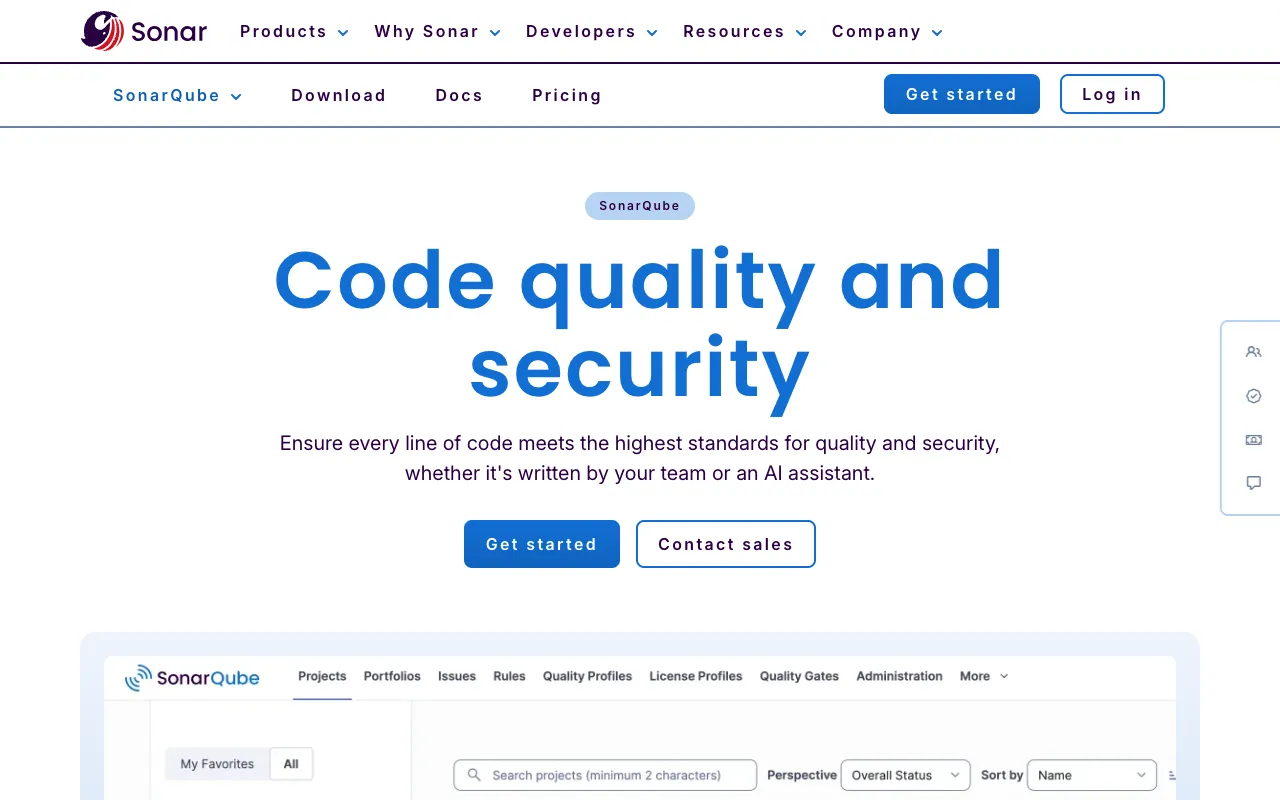
Image of SonarQube – The Best Code Quality & Security Platform for DevOps Engineers

SonarQube – The Best Code Quality & Security Platform for DevOps Engineers

SonarQube is the industry-standard platform for continuous code inspection, empowering DevOps teams to systematically improve code quality, enhance security, and reduce technical debt. By integrating directly into CI/CD pipelines, SonarQube automatically analyzes code in over 30 programming languages, providing actionable feedback on bugs, vulnerabilities, code smells, and coverage. For engineers committed to building robust, maintainable, and secure software, SonarQube delivers the automated governance and deep insights needed to ship with confidence.

What is SonarQube?

SonarQube is a self-managed, open-source platform designed for the continuous inspection of code quality and security. It acts as a central hub for static application security testing (SAST), software composition analysis (SCA), and code quality metrics. Unlike one-time analysis tools, SonarQube integrates seamlessly into development workflows, providing real-time feedback on every commit and pull request. Its core purpose is to shift quality and security left in the SDLC, enabling developers to identify and fix issues early, before they escalate into production defects or security breaches. It's the essential tool for DevOps teams aiming to enforce coding standards, reduce remediation costs, and build a culture of quality.

Key Features of SonarQube

Multi-Language Static Analysis

SonarQube supports deep static analysis for over 30 programming languages, including Java, C#, JavaScript, TypeScript, Python, Go, and PHP. It goes beyond basic linting, using sophisticated rules to detect complex bugs, potential runtime errors, and security vulnerabilities (OWASP Top 10, CWE) specific to each language's ecosystem.

Leak Period & Quality Gates

Define and enforce quality standards with configurable Quality Gates. The 'Leak Period' concept allows you to focus analysis on new code, ensuring that recent changes don't degrade overall code quality. This prevents the introduction of new bugs, security hotspots, or coverage regressions, making it ideal for incremental development.

Centralized Security Vulnerability Detection

Consolidate SAST and SCA findings in one dashboard. SonarQube identifies security vulnerabilities within your custom code and detects known vulnerabilities (CVEs) in third-party dependencies. It provides clear remediation guidance, prioritizes issues based on severity, and tracks security hotspots over time.

Technical Debt & Maintainability Analysis

Quantify and manage technical debt with the SQALE (Software Quality Assessment based on Lifecycle Expectations) methodology. SonarQube calculates the effort required to fix code smells and maintainability issues, giving teams a clear, business-focused metric to prioritize refactoring work and improve long-term code health.

Who Should Use SonarQube?

SonarQube is essential for DevOps engineers, platform teams, and development leaders in organizations that prioritize software quality, security, and operational excellence. It is perfectly suited for teams practicing CI/CD, as it provides the automated quality checks needed for rapid, reliable releases. Enterprise development teams use it to standardize code quality across multiple projects and squads. Security champions and AppSec teams leverage it to embed security scanning into the developer workflow. Ultimately, any engineering organization looking to reduce bug density, prevent security flaws in production, and improve code maintainability at scale will benefit from integrating SonarQube into their toolchain.

SonarQube Pricing and Free Tier

SonarQube offers a powerful, fully-featured Community Edition that is completely free and open-source, making advanced code quality analysis accessible to teams of all sizes. For organizations requiring enterprise-grade features—such as advanced branch analysis, portfolio management, developer-centric security rules, and professional support—SonarQube provides commercial editions (Developer, Enterprise, and Data Center). These paid tiers offer enhanced scalability, security, and governance capabilities for large-scale deployments.

Common Use Cases

Key Benefits

Pros & Cons

Pros

  • Comprehensive, language-specific analysis for over 30 programming languages
  • Powerful free Community Edition with no user or repository limits
  • Deep integration with major CI/CD platforms, issue trackers, and IDEs
  • Clear, actionable reporting with remediation guidance for developers

Cons

  • Requires self-hosting and infrastructure management for the on-premise edition
  • The initial setup and rule configuration can have a learning curve for new teams
  • Advanced security and portfolio features are locked behind commercial licenses

Frequently Asked Questions

Is SonarQube free to use?

Yes, SonarQube offers a robust, production-ready Community Edition that is completely free and open-source. It includes core code quality, security, and coverage analysis for all supported languages, with no restrictions on the number of users, projects, or lines of code.

Is SonarQube good for DevOps?

Absolutely. SonarQube is a foundational DevOps tool for implementing 'Shift-Left' quality and security. It automates code inspection within CI/CD pipelines, provides gating mechanisms to prevent quality regression, and delivers the metrics needed for a data-driven DevOps culture focused on continuous improvement of software health.

What is the difference between SonarQube and SonarCloud?

SonarQube is the self-managed, on-premise or cloud-hosted platform you install and maintain. SonarCloud is the fully-managed SaaS version offered by SonarSource. SonarCloud is simpler to start with (no hosting), while SonarQube offers greater control, customization, and is necessary for environments with strict data residency or air-gapped security requirements.

How does SonarQube improve code security?

SonarQube improves code security by performing automated Static Application Security Testing (SAST) on every code change. It detects security vulnerabilities like SQL injection, cross-site scripting (XSS), and insecure deserialization based on thousands of security-specific rules. It also scans project dependencies for known vulnerabilities (SCA), giving DevOps teams a unified view of application security risk.

Conclusion

For DevOps engineers building the toolchains of modern software delivery, SonarQube is not just another utility—it's a critical component for ensuring code integrity, security, and long-term maintainability. Its ability to automate deep, multi-language analysis and integrate findings directly into developer workflows makes it indispensable for any team practicing continuous integration and delivery. Whether you start with the powerful free Community Edition or scale with an enterprise license, SonarQube provides the actionable insights and automated governance needed to ship higher-quality software, faster and more securely. It is the definitive platform for teams committed to turning code quality and security from an afterthought into a continuous, automated practice.