Go back
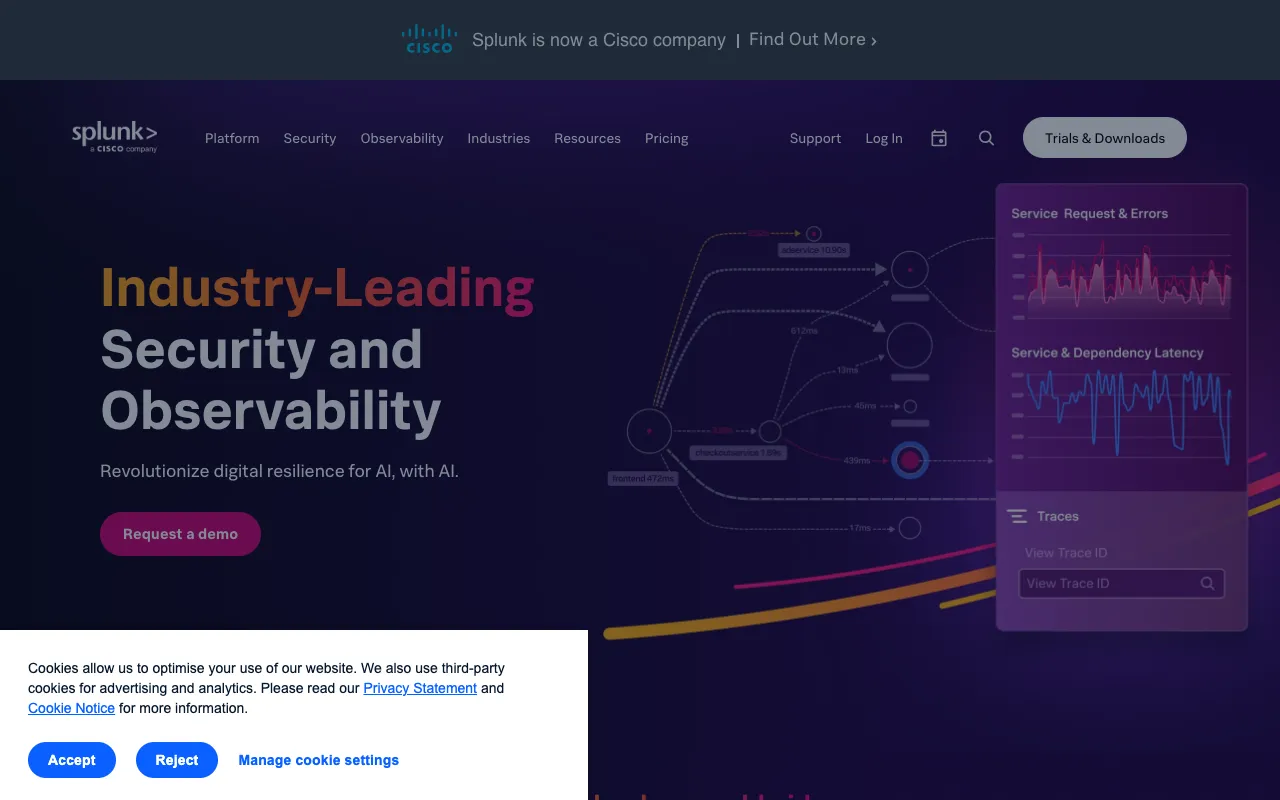
Image of Splunk – Best Platform for DevOps Monitoring & Log Analysis

Splunk – Best Platform for DevOps Monitoring & Log Analysis

Splunk is the industry-leading platform for operational intelligence, designed specifically for DevOps engineers who need to search, monitor, and analyze vast streams of machine-generated data. In modern cloud-native and microservices environments, Splunk turns logs, metrics, and traces into real-time insights, enabling faster troubleshooting, proactive monitoring, and data-driven decision-making. It stands out as a comprehensive solution for full-stack observability, security, and IT operations.

What is Splunk?

Splunk is a powerful software platform that ingests, indexes, and correlates machine-generated data from virtually any source—including applications, servers, networks, sensors, and IoT devices. For DevOps engineers, it serves as a central nervous system for IT operations, providing deep visibility into system performance, application health, and user experience. Its core strength lies in its ability to perform fast, ad-hoc searches across petabytes of unstructured or structured data, transforming raw logs and metrics into actionable dashboards, alerts, and reports.

Key Features of Splunk for DevOps

Universal Machine Data Ingestion

Splunk connects to any data source, whether on-premises, in the cloud, or hybrid. It seamlessly ingests logs (syslog, JSON, text), metrics (time-series data), traces (APM), and configuration data, providing a single pane of glass for all telemetry.

Powerful Search Processing Language (SPL)

Splunk's proprietary SPL allows DevOps teams to perform complex queries, statistical analysis, and correlations across diverse datasets without predefined schemas. This enables root cause analysis, anomaly detection, and trend forecasting.

Real-Time Monitoring & Alerting

Set up proactive alerts based on custom thresholds, patterns, or statistical anomalies. Splunk provides real-time visibility into system health, enabling engineers to detect and respond to incidents before they impact users.

Interactive Dashboards & Visualizations

Build custom, interactive dashboards with charts, graphs, and reports to visualize KPIs, application performance, infrastructure health, and business metrics. Share insights across development, operations, and business teams.

IT Service Intelligence (ITSI) & AIOps

Leverage machine learning and AI-driven insights for event correlation, anomaly detection, and predictive analytics. ITSI provides service-centric monitoring, reducing alert noise and pinpointing critical issues.

Who Should Use Splunk?

Splunk is essential for Site Reliability Engineers (SREs), DevOps practitioners, platform engineers, and IT operations teams managing complex, distributed systems. It's particularly valuable for organizations running microservices architectures, hybrid cloud environments, or those with stringent compliance and security monitoring requirements. Teams that need to correlate application performance with infrastructure metrics, troubleshoot production incidents quickly, or prove service level objective (SLO) compliance will find immense value in Splunk's capabilities.

Splunk Pricing and Free Tier

Splunk operates on a consumption-based pricing model, primarily based on the volume of data ingested per day. While Splunk does not offer a traditional, permanently free tier for production use, it provides a fully functional **Splunk Free** version for individual learning and testing. This free version allows ingestion of up to 500MB of data per day with some feature limitations. For enterprise-scale deployment, contact Splunk sales for custom quotes based on your expected daily data volume and required features like enterprise security or ITSI.

Common Use Cases

Key Benefits

Pros & Cons

Pros

  • Unmatched flexibility in ingesting and analyzing virtually any type of machine data
  • Extremely powerful and granular search capabilities with SPL
  • Massive ecosystem of apps, add-ons, and integrations for extended functionality
  • Strong enterprise features for security, compliance, and large-scale deployments

Cons

  • Cost can be significant at scale, based on data ingestion volume
  • Steep learning curve associated with mastering the Search Processing Language (SPL)
  • Initial setup and configuration for optimal performance requires expertise

Frequently Asked Questions

Is Splunk free to use?

Splunk offers a 'Splunk Free' version for individual learning and testing, which allows ingestion of up to 500MB of data per day. For professional and enterprise use with higher data volumes and advanced features, paid licensing is required.

Is Splunk good for DevOps and SRE teams?

Yes, Splunk is considered a top-tier platform for DevOps and SRE. It provides the deep, correlated insights needed for monitoring complex systems, troubleshooting issues, ensuring service reliability, and meeting SLOs/SLAs, making it a cornerstone of modern observability practices.

How does Splunk compare to open-source alternatives like ELK Stack?

While tools like the ELK Stack (Elasticsearch, Logstash, Kibana) are powerful open-source alternatives, Splunk often provides a more polished, out-of-the-box experience with stronger enterprise support, advanced analytics, and a more mature ecosystem for large organizations, albeit at a higher cost.

What types of data can Splunk analyze?

Splunk can analyze any machine-generated data, including application logs, web server logs, network telemetry, sensor data, metrics from monitoring tools, APM traces, configuration files, and script outputs, making it a universal platform for operational data.

Conclusion

For DevOps engineering teams tasked with ensuring the reliability, performance, and security of complex digital services, Splunk remains a premier choice. Its unparalleled ability to ingest, search, and visualize diverse machine data streams provides the operational intelligence necessary to move from reactive firefighting to proactive management. While the investment and learning curve are considerations, the depth of insight, enterprise-grade scalability, and comprehensive ecosystem make Splunk an indispensable tool for organizations where data-driven operations are critical to success. It is best deployed in environments requiring robust, correlated observability across hybrid infrastructure and applications.