Go back
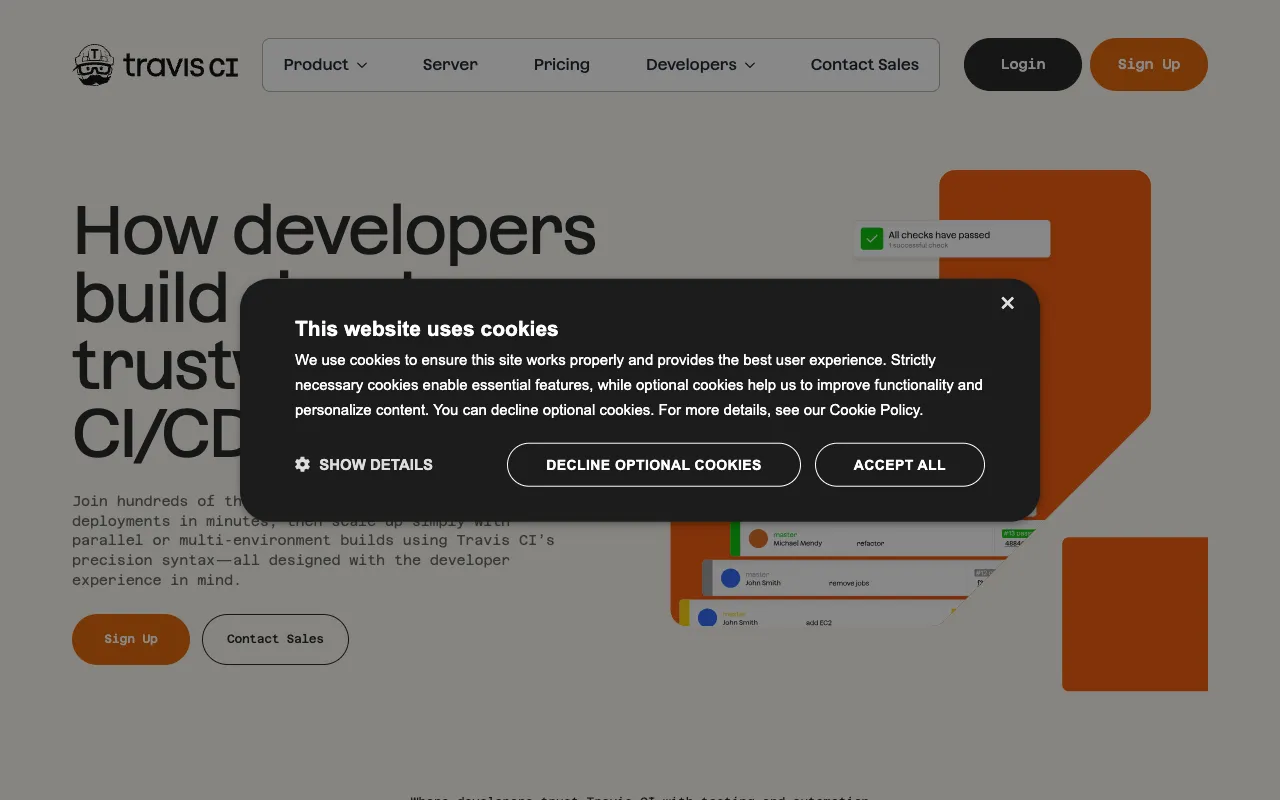
Image of Travis CI – The Premier Continuous Integration Tool for DevOps Engineers

Travis CI – The Premier Continuous Integration Tool for DevOps Engineers

Travis CI is a powerful, cloud-hosted continuous integration (CI) service that automates the build, test, and deployment pipeline for software projects. Designed with developers and DevOps engineers in mind, it integrates seamlessly with GitHub and Bitbucket to run automated tests on every code commit. This ensures code quality, accelerates release cycles, and helps teams ship reliable software faster. As a cornerstone of modern DevOps practices, Travis CI enables teams to implement robust CI/CD workflows with minimal configuration overhead.

What is Travis CI?

Travis CI is a hosted continuous integration and continuous deployment (CI/CD) platform that automates the software development process. Its core purpose is to automatically build and test code changes whenever developers push to a version control repository. By providing immediate feedback on the health of a codebase, Travis CI helps DevOps engineers and development teams catch bugs early, maintain code quality, and streamline deployments. It supports a wide array of programming languages and frameworks, making it a versatile choice for projects of all sizes, from open-source libraries to enterprise applications.

Key Features of Travis CI

Seamless GitHub and Bitbucket Integration

Travis CI connects directly to your GitHub or Bitbucket repositories with just a few clicks. Once enabled, it automatically detects new commits and pull requests, triggering predefined build and test pipelines. This deep integration eliminates complex setup and provides a native experience within your development workflow.

Multi-Language and Environment Support

Whether your stack is Node.js, Python, Java, Ruby, Go, PHP, or others, Travis CI offers first-class support. You can define custom build matrices to test against multiple language versions, operating systems (including Linux and macOS), and dependency sets in parallel, ensuring comprehensive test coverage.

Powerful .travis.yml Configuration

Control your entire CI/CD pipeline through a single, version-controlled `.travis.yml` file in your repository. This YAML-based configuration allows you to define build stages, specify dependency installations, run test scripts, configure deployment targets (like AWS, Heroku, or Docker registries), and set up notifications.

Live Build Logs and Insights

Monitor your builds in real-time with detailed, streaming logs. Travis CI provides clear visual indicators for build status (pass/fail) and offers insights into build duration and trends, helping DevOps teams identify bottlenecks and optimize their pipeline performance.

Who Should Use Travis CI?

Travis CI is ideal for DevOps engineers, software development teams, and open-source maintainers who need a reliable, scalable CI/CD solution. It's particularly valuable for teams practicing Agile or DevOps methodologies, as it enforces continuous integration principles. Startups benefit from its free tier for public repositories, while growing teams can leverage its paid plans for private projects. It's also a perfect fit for projects with complex testing requirements across multiple environments or those requiring automated deployments to cloud platforms.

Travis CI Pricing and Free Tier

Travis CI offers a generous free tier, making it accessible to a wide audience. For open-source projects hosted on public GitHub repositories, Travis CI provides unlimited build minutes free of charge. For private repositories and commercial use, Travis CI offers paid plans (Travis CI.com) with scalable concurrency, priority support, and enhanced security features. This flexible pricing model allows individual developers, startups, and enterprises to choose a plan that fits their build volume and collaboration needs.

Common Use Cases

Key Benefits

Pros & Cons

Pros

  • Extremely easy setup and integration with GitHub/Bitbucket
  • Powerful, flexible configuration via YAML file
  • Strong free tier for open-source and public projects
  • Excellent support for multiple programming languages and platforms

Cons

  • Build minutes for private repositories on paid plans can be a cost factor for very high-volume teams
  • As a hosted service, it offers less customization than self-hosted CI solutions like Jenkins

Frequently Asked Questions

Is Travis CI free to use?

Yes, Travis CI offers a free tier with unlimited build minutes for all public GitHub repositories. This makes it an excellent choice for open-source projects. For private repositories, Travis CI provides paid plans on travis-ci.com with scalable features and support.

Is Travis CI good for DevOps engineers?

Absolutely. Travis CI is a foundational tool for DevOps engineers implementing CI/CD pipelines. It automates the critical steps of building, testing, and deploying code, which are central to DevOps practices. Its ease of use, powerful configuration, and integration capabilities make it a top-tier choice for streamlining development workflows and improving deployment frequency and reliability.

How does Travis CI compare to Jenkins?

Travis CI is a fully managed, cloud-based SaaS solution, whereas Jenkins is typically self-hosted and requires more maintenance. Travis CI offers faster setup and lower operational overhead, making it ideal for teams that want a ready-to-use service. Jenkins offers more granular customization and control for complex, on-premise environments. The best choice depends on your team's need for managed service versus customization.

Conclusion

Travis CI stands as a proven, developer-centric continuous integration service that empowers DevOps teams to build better software, faster. Its intuitive setup, robust feature set, and commitment to the open-source community (via its free tier) make it a compelling choice for any team serious about implementing automated CI/CD. Whether you're an individual developer maintaining a library or an enterprise engineering team, Travis CI provides the automation foundation needed for modern, agile software delivery. For a reliable, scalable, and integrated CI solution, Travis CI remains a top recommendation in the DevOps toolkit.