Go back
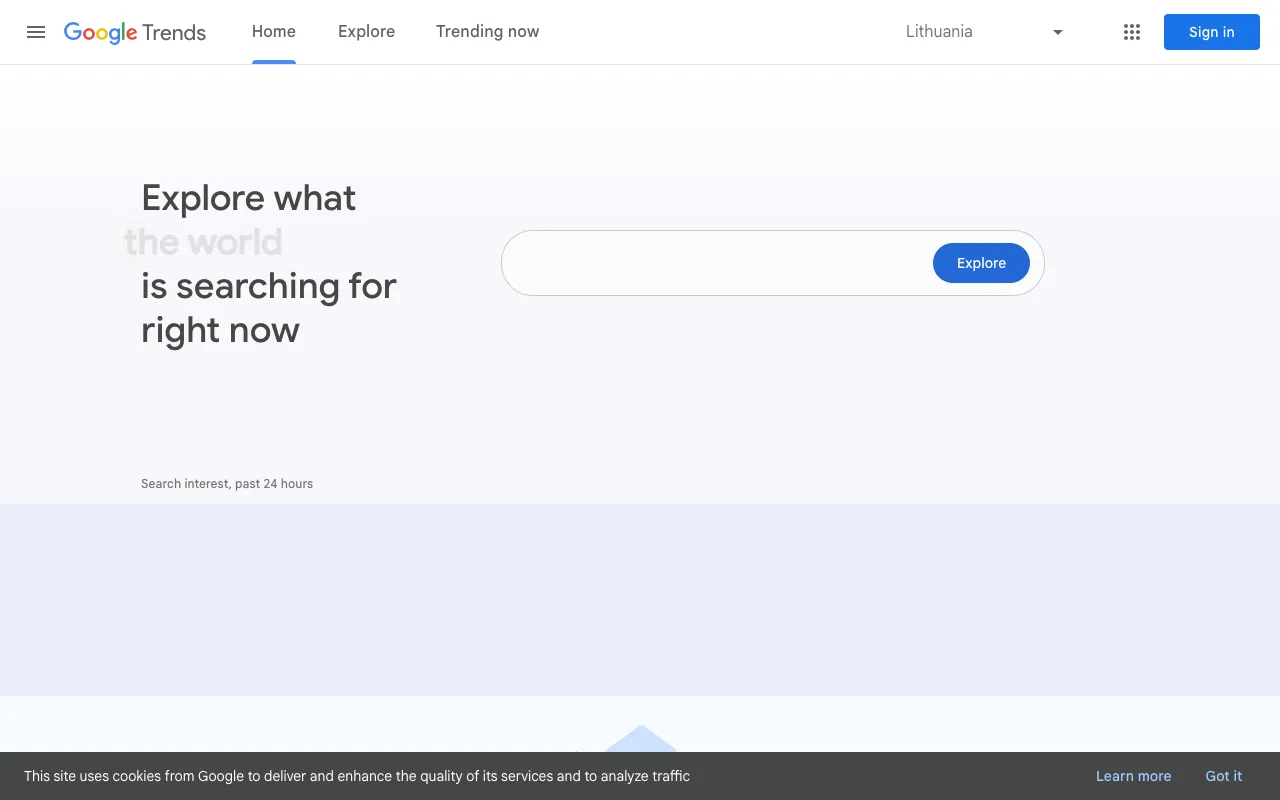
Image of Google Trends – The Essential Free Tool for Digital Marketers

Google Trends – The Essential Free Tool for Digital Marketers

Google Trends is the definitive, free resource for digital marketers seeking to understand what the world is searching for. By analyzing the relative popularity of search queries across Google's platforms, this powerful web app provides unparalleled insights into consumer behavior, emerging trends, and seasonal fluctuations. It empowers marketers to move beyond guesswork, making data-driven decisions for content strategy, SEO, advertising, and product development. As a cornerstone of modern market research, Google Trends helps you anticipate demand, validate ideas, and stay ahead of the competition.

What is Google Trends?

Google Trends is a free analytics tool provided by Google that allows users to explore and visualize the search volume for specific terms and topics. It doesn't show absolute search numbers but rather indexes search interest on a scale from 0 to 100, enabling comparisons over time, across different regions, and between multiple queries. It aggregates data from Google Search, Google Shopping, YouTube, and Google News, offering a holistic view of what captures public attention. For digital marketers, it's an indispensable asset for gauging market interest, identifying content opportunities, and understanding the zeitgeist of their target audience.

Key Features of Google Trends for Marketers

Real-Time & Historical Trend Analysis

Track the ebb and flow of search interest for any keyword or topic. Analyze historical data back to 2004 to identify long-term patterns, seasonal cycles, and sudden spikes. This feature is crucial for planning timely content launches, seasonal campaigns, and understanding the lifecycle of trends.

Geographic & Regional Interest Breakdown

Pinpoint exactly where search interest is highest. Break down data by country, region, or even metropolitan area. This granular geographic insight is invaluable for local SEO, geo-targeted ad campaigns, and understanding regional market variations.

Related Queries & Topics Discovery

Discover what users search for before, during, and after your target query. The 'Related queries' and 'Related topics' sections reveal associated search behavior, helping you build comprehensive topic clusters, optimize for semantic search, and uncover new keyword opportunities you might have missed.

Category Filtering & YouTube Search Data

Refine your analysis by industry categories like 'Arts & Entertainment' or 'Business & Industrial' for more relevant results. Access separate data for YouTube search trends, which is essential for video content strategy and understanding visual media consumption patterns.

Comparison of Multiple Search Terms

Directly compare the search interest for up to five terms or topics on a single chart. This is perfect for evaluating brand vs. competitor terms, comparing product features, or testing different phrasing for a campaign slogan.

Who Should Use Google Trends?

Google Trends is a versatile tool essential for a wide range of marketing professionals. SEO specialists use it to identify rising keywords and content gaps. Content marketers and bloggers leverage it to plan editorial calendars around trending topics. PPC advertisers utilize it to inform keyword bidding strategies and discover new ad group ideas. E-commerce managers analyze it for product research and seasonal inventory planning. Social media managers track it to create timely, relevant posts. Product managers and market researchers rely on it to validate demand and understand consumer interests. Essentially, any digital marketer who needs to understand audience intent and market dynamics will benefit from integrating Google Trends into their workflow.

Google Trends Pricing and Free Tier

Google Trends is completely free to use. There is no paid tier, subscription fee, or usage limit for the core features available on the trends.google.com website. All users, from individual bloggers to enterprise marketing teams, have equal access to the same powerful dataset and visualization tools. This makes it one of the most accessible and valuable resources in a digital marketer's toolkit, offering enterprise-grade insights without any cost barrier.

Common Use Cases

Key Benefits

Pros & Cons

Pros

  • Completely free with no feature limitations or account required
  • Provides access to Google's massive, real-time search dataset
  • Intuitive visualizations (graphs, maps, charts) for easy interpretation
  • Excellent for discovering related queries and emerging topics
  • Invaluable for comparing multiple terms and understanding regional differences

Cons

  • Shows relative interest (indexed data), not absolute search volume numbers
  • Data can sometimes be volatile for very low-volume or new search terms
  • Limited ability to filter by specific user demographics like age or gender

Frequently Asked Questions

Is Google Trends free to use?

Yes, Google Trends is 100% free. There is no paid version, subscription, or usage limit. All features on the trends.google.com website are available to everyone at no cost, making it an exceptionally valuable resource for marketers of all budgets.

How accurate is Google Trends data?

Google Trends data is highly accurate for showing relative search interest and patterns over time. It's based on a sample of actual Google search data. However, it's important to remember it displays indexed values (0-100), not exact search volumes. It's most reliable for identifying trends, comparisons, and patterns rather than calculating precise traffic numbers.

Can Google Trends predict future trends?

Google Trends is exceptional at identifying current and past trends, which can be powerful indicators of future interest. By analyzing rising related queries, seasonal patterns, and the growth trajectory of a topic, marketers can make educated predictions. While not a crystal ball, it provides the strongest available data signal for anticipating what topics, products, or keywords may gain popularity.

What's the difference between Google Trends and Google Keyword Planner?

Google Trends is for analyzing the popularity and patterns of search terms over time and location. Google Keyword Planner (in Google Ads) is for estimating search volume, competition, and cost for specific keywords to plan PPC campaigns. Trends is ideal for research and strategy; Keyword Planner is designed for advertising execution and budgeting. Marketers often use them together: Trends to discover opportunities, and Keyword Planner to assess their commercial viability.

Conclusion

For digital marketers committed to evidence-based strategy, Google Trends is non-negotiable. It transforms the abstract concept of 'what's popular' into actionable, visual data. Whether you're planning a content calendar, launching a new product, or optimizing a global campaign, the insights from Google Trends provide a critical competitive edge. Its comprehensive features, combined with the unbeatable price of free, make it the foundational tool for anyone seeking to understand and capitalize on search behavior. Integrating Google Trends into your regular workflow is one of the highest-return investments you can make in your marketing intelligence.