Go back
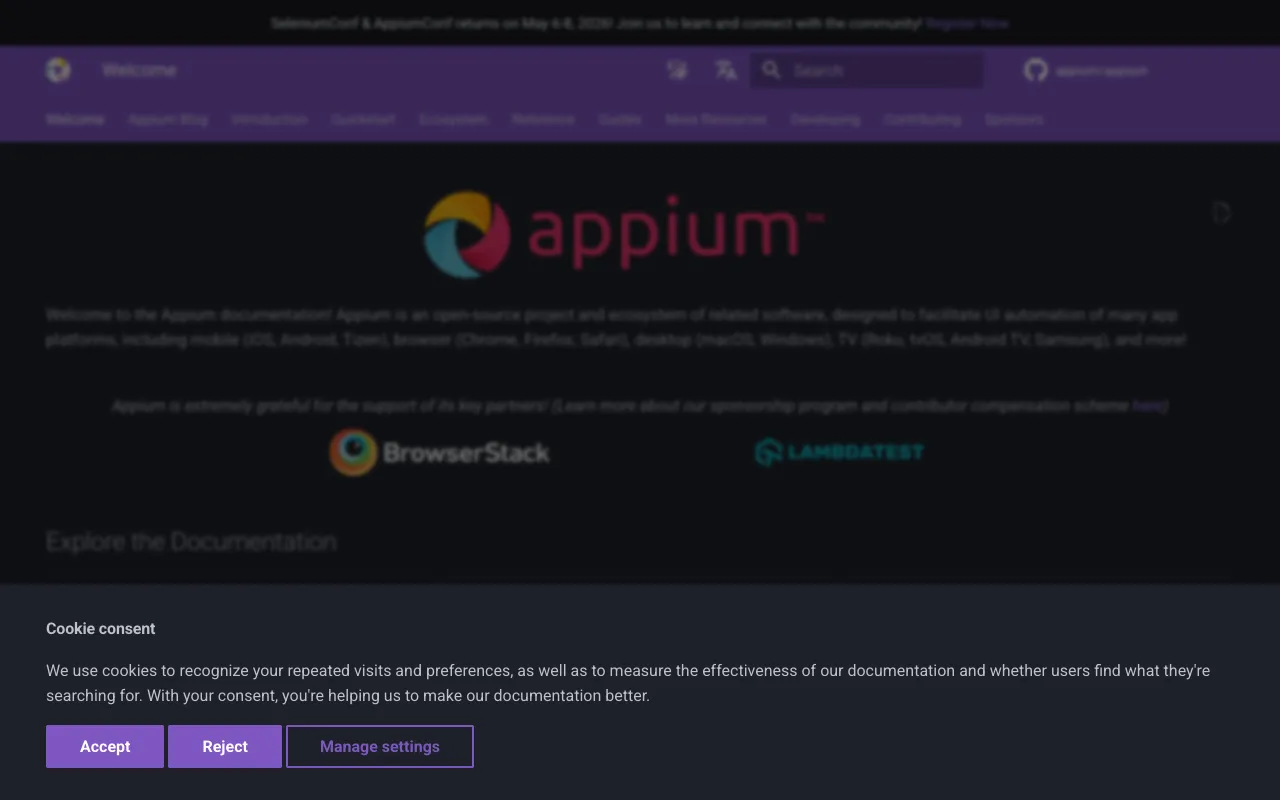
Image of Appium – The Best Open-Source Framework for Mobile App Automation Testing

Appium – The Best Open-Source Framework for Mobile App Automation Testing

Appium is the industry-standard open-source automation testing framework designed specifically for mobile applications. It enables developers and QA engineers to write automated tests for native, hybrid, and mobile web apps across both iOS and Android platforms using a single API. Built on the philosophy that testing native apps shouldn't require installing an SDK or recompiling your app, Appium provides unparalleled flexibility and freedom in mobile test automation. As a free, cross-platform solution, it has become the go-to choice for teams seeking to implement robust, scalable, and maintainable mobile testing strategies without vendor lock-in.

What is Appium?

Appium is a server-based automation framework that implements the WebDriver protocol to control mobile devices and emulators. Its core innovation is using the vendor-provided automation frameworks under the hood—XCUITest for iOS and UiAutomator2/Espresso for Android—allowing it to interact with apps in the same way a real user would, without requiring any modifications to the app's source code. This 'write once, run anywhere' capability means you can use the same test scripts for both platforms, drastically reducing the effort and complexity of maintaining separate iOS and Android test suites. Appium's client-server architecture supports a wide range of programming languages, including Java, Python, JavaScript, Ruby, C#, and PHP, making it accessible to nearly every development team.

Key Features of Appium

True Cross-Platform Testing

Appium's most powerful feature is its ability to automate both iOS and Android applications from a single codebase. By using standard WebDriver APIs, you can write tests that are largely platform-agnostic. This eliminates the need to learn and maintain two different testing ecosystems, saving significant development time and resources while ensuring consistent test coverage and behavior validation across all user bases.

No App Modification Required

Unlike some proprietary testing tools, Appium does not require you to recompile or modify your application in any way for automation. It interacts with your app in its production-ready state, using the same automation frameworks that the platform vendors themselves provide. This results in more authentic testing that accurately simulates real user interactions and ensures your tests remain valid through the build and deployment pipeline.

Support for Multiple App Types

Appium is uniquely versatile in its support for different application architectures. It can automate native apps built with Swift or Kotlin, hybrid apps that embed a WebView, and even pure mobile web applications accessed through a mobile browser. This comprehensive coverage makes it an ideal single solution for teams working with diverse tech stacks or transitioning between different app development paradigms.

Language and Framework Agnostic

With official client libraries available for all major programming languages, Appium empowers teams to write tests in the language they are most comfortable with. It also integrates seamlessly with popular testing frameworks like JUnit, TestNG, Mocha, Jest, and pytest, as well as CI/CD platforms such as Jenkins, GitLab CI, and GitHub Actions. This flexibility allows for easy adoption and integration into existing development workflows.

Who Should Use Appium?

Appium is the ideal testing solution for mobile app developers, QA automation engineers, and DevOps teams responsible for application quality. It is particularly valuable for cross-platform development teams using frameworks like React Native, Flutter, or Xamarin, as it provides a unified testing strategy. Startups and enterprises alike benefit from its zero-cost entry point and scalability. Whether you're performing regression testing, compatibility testing across hundreds of device configurations, or integrating automated checks into a continuous delivery pipeline, Appium provides the robust, programmable foundation needed to ensure app reliability and a superior user experience.

Appium Pricing and Free Tier

Appium is completely free and open-source software released under the Apache 2.0 license. There are no licensing fees, subscription costs, or hidden charges. The entire framework, including the server and all client libraries, is available for download and use without restriction. This makes it an exceptionally cost-effective choice for teams of any size, from independent developers to large enterprises. While the core software is free, users should consider potential ancillary costs related to maintaining their own test infrastructure, such as device labs or cloud-based device farming services (e.g., BrowserStack, Sauce Labs) which often have built-in support for Appium.

Common Use Cases

Key Benefits

Pros & Cons

Pros

  • 100% free and open-source with a strong, active community
  • True cross-platform support for iOS and Android from one API
  • No need to modify or recompile your app for testing
  • Extensive language support and integration with modern dev tools

Cons

  • Initial setup and configuration can be complex for beginners
  • Execution speed can be slower compared to some compiled, native frameworks
  • Advanced scenarios or debugging may require deep understanding of the underlying vendor frameworks

Frequently Asked Questions

Is Appium free to use?

Yes, Appium is completely free and open-source. It is released under the Apache 2.0 license, which means you can download, use, and modify it for both personal and commercial projects without paying any licensing fees.

Is Appium good for mobile app testing?

Absolutely. Appium is considered one of the best tools for mobile app automation testing, especially for teams needing cross-platform coverage. Its use of standard WebDriver protocol, support for real devices and emulators, and ability to test native, hybrid, and web apps make it a versatile and powerful choice for ensuring mobile app quality.

What programming languages does Appium support?

Appium supports all major programming languages through its client libraries. You can write Appium tests in Java, Python, JavaScript (Node.js), Ruby, C#, PHP, and more. This allows your team to use the language that best fits your skills and existing codebase.

Can Appium test on real mobile devices?

Yes, Appium can automate tests on both real physical devices and software emulators/simulators. Testing on real devices is crucial for capturing accurate performance and interaction data, and Appium facilitates this by communicating directly with devices connected via USB or over a network.

Conclusion

For mobile app developers and testers seeking a powerful, flexible, and cost-effective automation solution, Appium stands as a premier choice. Its open-source nature, combined with robust cross-platform capabilities and a philosophy of non-invasive testing, provides a foundation for building sustainable and scalable quality assurance processes. While there is a learning curve, the investment in mastering Appium pays significant dividends in accelerated release cycles, improved application stability, and comprehensive test coverage. For any team serious about mobile app quality, implementing Appium is a strategic move towards more reliable and efficient development.