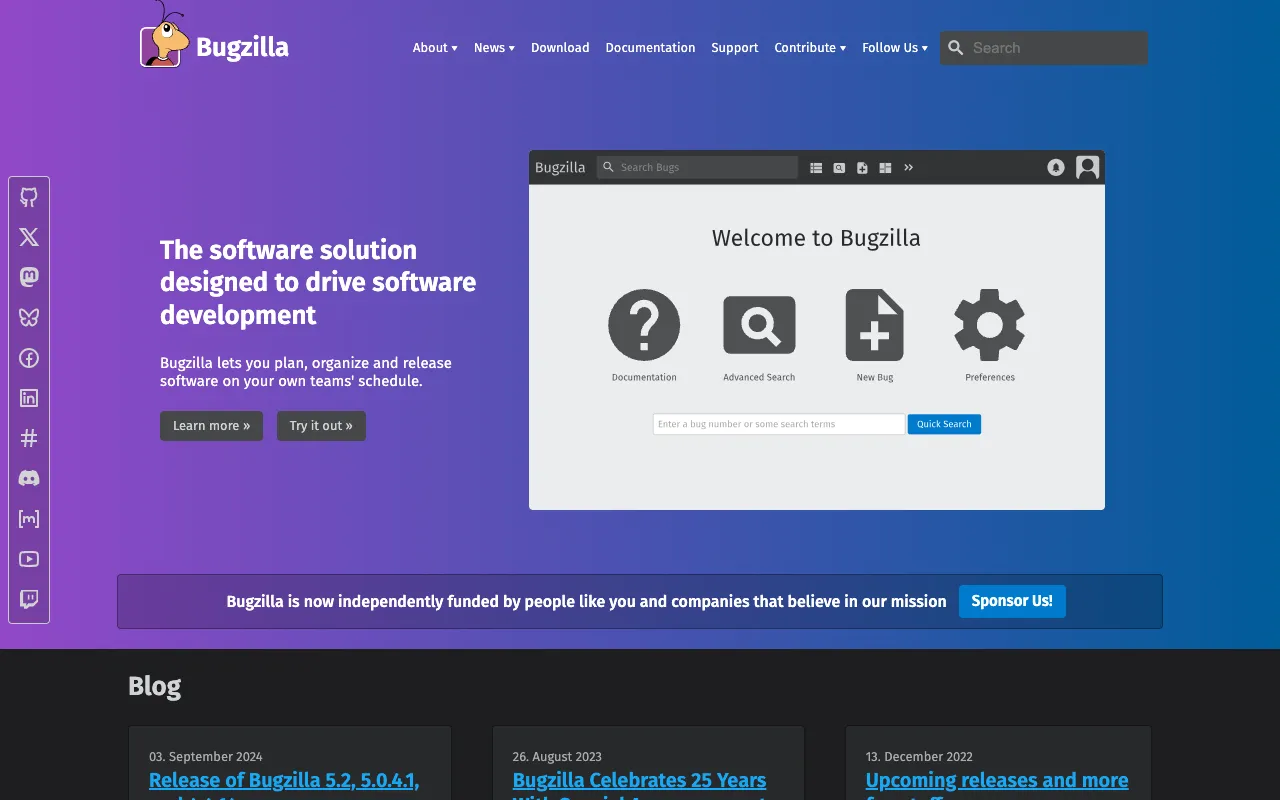
Bugzilla – The Best Open Source Bug Tracking Tool for QA Testers
Bugzilla is a robust, enterprise-grade bug tracking system trusted by QA professionals and development teams worldwide. As a free, open-source web application, it provides a comprehensive platform for reporting defects, managing test cases, and facilitating seamless collaboration between testers and developers. Its powerful search capabilities, customizable workflows, and extensive reporting make it an indispensable tool for maintaining software quality in agile and traditional environments alike.
What is Bugzilla?
Bugzilla is a mature, server-side software application designed specifically for bug tracking and software testing management. Originally developed for the Mozilla project, it has evolved into a standalone, open-source tool used by organizations of all sizes to track the lifecycle of software defects. Its core purpose is to provide a centralized, searchable database where QA testers can report bugs, assign them to developers, track their status through resolution, and verify fixes. It serves as the single source of truth for a project's defect history, making it essential for QA leads, software testers, and project managers.
Key Features of Bugzilla
Advanced Search and Query System
Bugzilla's powerful search interface allows QA testers to build complex queries using virtually any field. Save frequent searches, generate detailed reports, and quickly identify patterns or recurring issues, significantly speeding up root cause analysis and test cycle reporting.
Highly Customizable Workflow
Tailor Bugzilla's bug lifecycle to match your team's specific process. Define statuses, resolutions, and transitions to mirror agile sprints, waterfall phases, or your unique QA pipeline, ensuring the tool adapts to your methodology, not the other way around.
Email Integration & Notifications
Stay updated without constantly refreshing the interface. Bugzilla automatically sends email notifications for bug changes, comments, and status updates. This keeps testers, developers, and stakeholders aligned in real-time, reducing communication overhead.
Comprehensive Reporting & Charts
Generate instant visual reports and metrics on bug trends, tester activity, resolution times, and more. Use these data-driven insights to improve testing strategies, predict release readiness, and demonstrate QA's value to project stakeholders.
Robust Security & Access Control
Implement fine-grained permissions to control who can see, edit, or manage specific bugs or products. This is crucial for enterprise environments, client-sensitive projects, and maintaining integrity within the bug database.
Who Should Use Bugzilla?
Bugzilla is ideal for QA teams, software development managers, and open-source projects that require a reliable, self-hosted bug tracking solution. It's particularly valuable for: QA Engineers and Manual/Automation Testers who need a structured system to log and track defects; Development Teams in small to large organizations seeking a free alternative to commercial tools; Open-Source Project Maintainers who require a transparent, community-accessible issue tracker; and IT/DevOps Professionals who prefer open-source software that can be customized and integrated into their existing infrastructure.
Bugzilla Pricing and Free Tier
Bugzilla is completely free and open-source software released under the Mozilla Public License. There are no licensing fees, user limits, or subscription costs for the core software. The primary investment is in hosting the web application on your own server infrastructure and the time required for initial setup and potential customization. This makes it an exceptionally cost-effective choice for startups, large enterprises, and any team with in-house technical resources to manage deployment.
Common Use Cases
- Tracking regression bugs during automated testing cycles
- Managing customer-reported issues for software support teams
- Coordinating bug triage meetings between QA and development leads
Key Benefits
- Eliminates costly commercial bug tracking software licenses
- Provides complete data ownership and security through self-hosting
- Enables deep customization to fit any software development lifecycle
Pros & Cons
Pros
- Zero cost for the software license, ideal for budget-conscious teams
- Unmatched customization and control over workflows and fields
- Proven, stable platform with decades of development and community support
- Superior search and reporting capabilities for data-driven QA
Cons
- Requires technical expertise for server setup, maintenance, and upgrades
- The default user interface is functional but less modern than some SaaS competitors
- Lacks native, built-in project management features like Gantt charts or sprint planning
Frequently Asked Questions
Is Bugzilla free to use?
Yes, Bugzilla is 100% free and open-source. There are no fees for downloading, using, or modifying the software. Costs are typically associated with hosting it on your own servers or cloud infrastructure.
Is Bugzilla good for QA testing teams?
Absolutely. Bugzilla is a industry-standard tool specifically built for tracking software defects, which is a core function of QA. Its detailed reporting, email notifications, and customizable states make it excellent for managing the entire bug lifecycle from discovery by a tester to verification after a fix.
Can Bugzilla integrate with other testing tools?
While Bugzilla has a robust API for custom integrations, it does not have pre-built, one-click integrations with many modern CI/CD or test automation tools. Integration usually requires custom development work, which is a key consideration for highly automated DevOps pipelines.
What's the main difference between Bugzilla and Jira?
Bugzilla is a specialized, free bug tracker focused intensely on defect management. Jira is a commercial, broader project management platform that includes bug tracking as one feature among many (agile boards, roadmaps). Bugzilla offers more depth for pure bug tracking, while Jira offers more breadth for overall project coordination.
Conclusion
For QA testers and engineering teams who prioritize control, customization, and cost-efficiency, Bugzilla remains a top-tier choice for bug tracking. Its powerful feature set, proven reliability, and open-source nature provide a formidable foundation for any serious software quality assurance process. While it demands more initial setup than cloud-based SaaS tools, the long-term benefits of data ownership, no recurring fees, and a workflow tailored precisely to your team's needs are significant. If your team has the technical resources to host and maintain it, Bugzilla is an exceptional tool that can scale from a single project to an enterprise-wide defect management system.