Go back
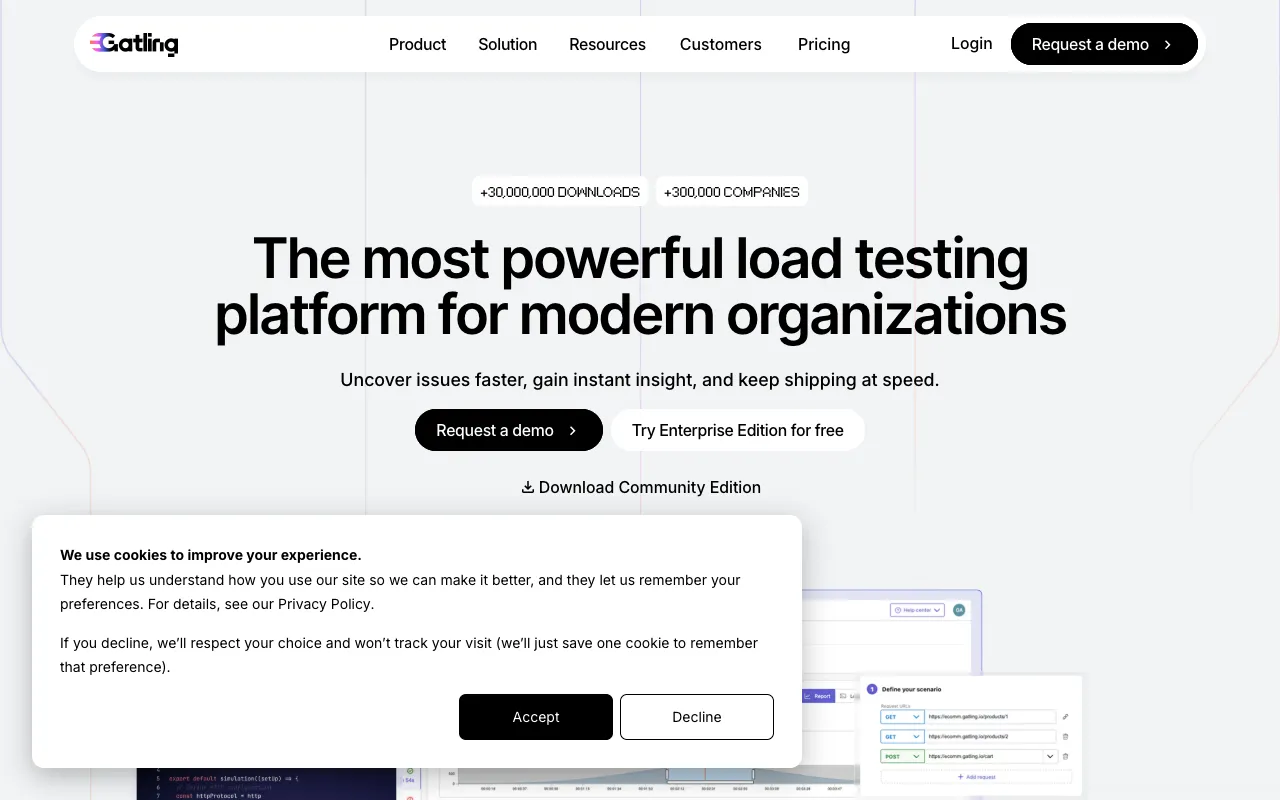
Image of Gatling – Best Open-Source Load Testing Tool for QA Testers

Gatling – Best Open-Source Load Testing Tool for QA Testers

Gatling is a high-performance, open-source load testing framework built for developers and QA engineers who demand precision and scalability. Unlike traditional tools, Gatling treats performance tests as code, offering a modern, developer-centric experience for simulating realistic user traffic, identifying bottlenecks, and ensuring web applications can handle production-level loads. Its focus on maintainable test scripts and comprehensive reporting makes it a top choice for agile teams integrating performance validation into their CI/CD pipelines.

What is Gatling?

Gatling is an advanced, open-source load and performance testing tool specifically designed for modern web applications. At its core, Gatling simulates thousands of concurrent virtual users to apply realistic stress to your application servers, APIs, and services. It stands out by prioritizing the developer and QA experience, allowing tests to be written as maintainable, version-controlled Scala or Kotlin/Java code. This approach enables teams to move beyond record-and-playback limitations, creating sophisticated, reusable performance test scenarios that provide deep insights into application behavior under load, response time distributions, and system resource utilization.

Key Features of Gatling

Code-Based Test Scripting

Write performance tests as Scala, Kotlin, or Java code for maximum flexibility and maintainability. This allows for complex logic, data-driven testing with external feeders (CSV, JSON), and seamless integration with build tools like Maven or Gradle, making tests a first-class citizen in your codebase.

High-Performance Engine

Built on a non-blocking, asynchronous architecture, Gatling's engine is incredibly resource-efficient. A single machine can simulate thousands of concurrent users with minimal overhead, providing accurate load simulation without skewing results with tool-induced bottlenecks.

Detailed HTML Reports

Gatling automatically generates rich, interactive HTML reports after each test run. These reports provide visual charts for active users, response times, requests per second, and pass/fail status, making it easy to identify performance regressions and communicate findings to stakeholders.

Realistic User Simulation & Scenarios

Model complex user journeys with pacing, think times, conditional logic, and loops. Gatling allows you to define realistic scenarios that mirror actual user behavior, including login sequences, browsing patterns, and transactional workflows, leading to more accurate performance insights.

CI/CD & DevOps Integration

Gatling is built for automation. It integrates effortlessly with Jenkins, TeamCity, GitLab CI, and other CI/CD tools. You can run performance tests as part of your deployment pipeline to catch performance issues early, enforcing performance gates before production releases.

Who Should Use Gatling?

Gatling is ideal for QA Performance Engineers, DevOps professionals, and Software Developers in Test (SDETs) working in agile environments. It's perfect for teams that need to integrate performance testing into automated pipelines, require detailed, actionable reports, and want to move beyond the limitations of GUI-based load testing tools. Organizations developing microservices, APIs, and high-traffic web applications will find Gatling's scalability and code-centric approach invaluable for ensuring reliability and speed.

Gatling Pricing and Free Tier

Gatling's core engine, Gatling Open Source, is completely free to use under the Apache 2.0 License. This includes all its powerful features for scripting, load generation, and reporting. For enterprise teams requiring advanced management features, centralized reporting, and support, Gatling Corporation offers Gatling FrontLine, a commercial enterprise edition. This makes Gatling an exceptionally cost-effective solution, allowing teams to start with a full-featured, professional-grade performance testing tool at zero cost.

Common Use Cases

Key Benefits

Pros & Cons

Pros

  • Completely free and open-source with no user or virtual user limits.
  • Superior performance and lower resource consumption compared to many GUI-based tools.
  • Tests-as-code approach enables collaboration, version control, and sophisticated test logic.
  • Produces industry-standard, presentation-ready performance reports automatically.

Cons

  • Requires basic programming knowledge (Scala/Java/Kotlin), presenting a learning curve for non-developers.
  • Lacks a built-in GUI for test creation, relying on code or a separate recorder tool for script generation.
  • Advanced enterprise features like distributed load injection require the paid FrontLine edition.

Frequently Asked Questions

Is Gatling free to use?

Yes, Gatling Open Source is completely free and open-source. You can download, use, and modify it for any purpose without cost, including commercial use. The enterprise edition, Gatling FrontLine, offers additional management and support features for larger teams.

Is Gatling good for API load testing?

Absolutely. Gatling is exceptionally well-suited for API load testing. Its code-based approach allows for precise definition of HTTP/HTTPS requests, handling of authentication tokens (OAuth, JWT), parsing of JSON/XML responses, and chaining API calls to simulate complex user workflows, making it a top choice for testing REST APIs and microservices.

What programming language do I need for Gatling?

Gatling scripts are primarily written in Scala, but the DSL (Domain-Specific Language) is designed to be easily readable. For teams more familiar with JVM languages, Gatling also supports writing tests in Java or Kotlin. Basic familiarity with one of these languages is needed to write advanced tests.

How does Gatling compare to JMeter?

While both are open-source load testing tools, Gatling offers a more modern, code-centric architecture. Gatling's asynchronous engine is generally more resource-efficient than JMeter's thread-per-user model, allowing for higher load from a single machine. Gatling's reports are also more modern and interactive out-of-the-box. JMeter has a wider user base and a full GUI, while Gatling appeals to developers who prefer tests as code.

Conclusion

For QA testers and development teams seeking a powerful, scalable, and modern approach to performance testing, Gatling represents a compelling first choice. Its commitment to a developer-friendly experience, combined with a robust free tier, empowers teams to build a proactive performance testing culture. By treating load tests as code, Gatling ensures your performance benchmarks are as maintainable and version-controlled as your application itself, making it an indispensable tool for delivering fast, reliable web applications that scale.