Go back
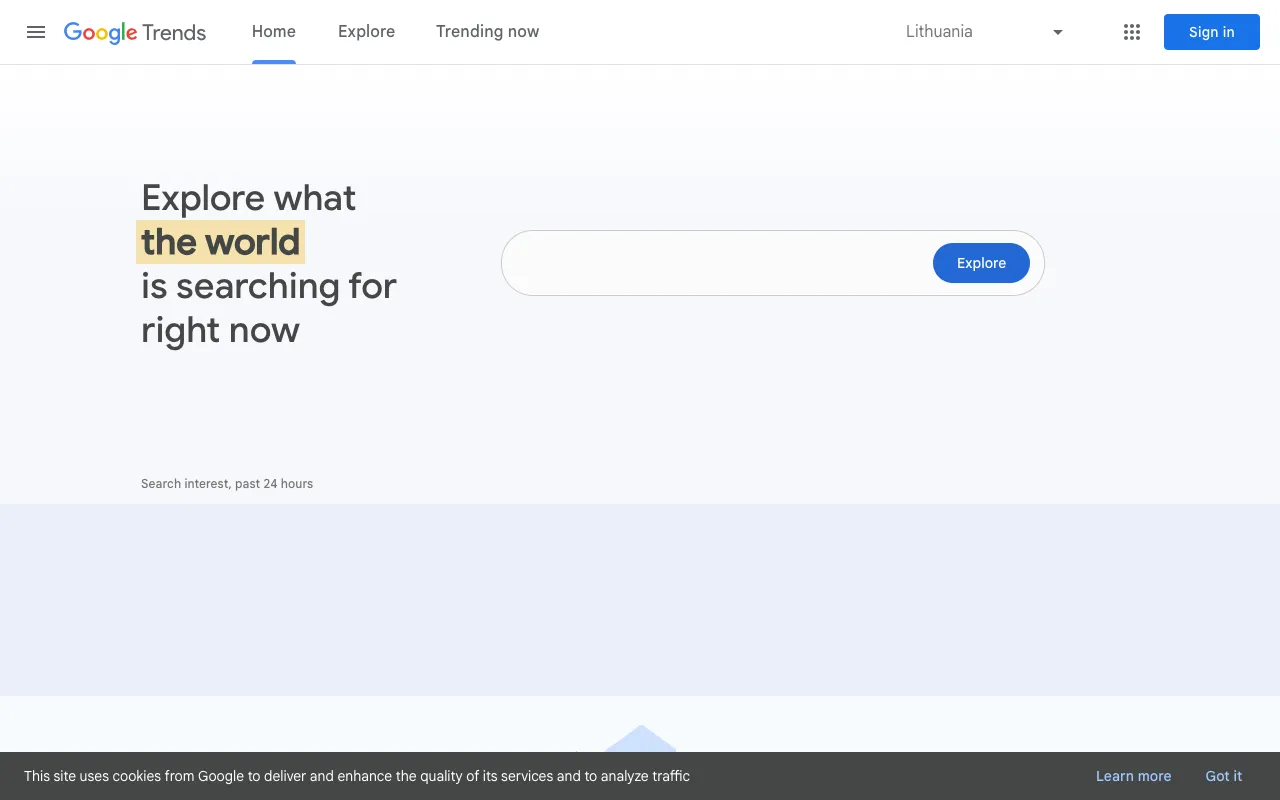
Image of Google Trends – The Essential Free Tool for SEO Keyword Research

Google Trends – The Essential Free Tool for SEO Keyword Research

Google Trends is the definitive, free resource for SEO specialists seeking to understand search demand beyond basic volume. While traditional keyword tools tell you *how many* people search, Google Trends reveals *how interest changes* over time, across regions, and in relation to other topics. It transforms raw search data into actionable insights for content strategy, seasonal planning, and competitive analysis, making it a non-negotiable asset in any SEO toolkit.

What is Google Trends?

Google Trends is a free analytics tool provided by Google that visualizes the relative popularity of search queries entered into the Google Search engine. Unlike keyword planners that provide estimated search volumes, Trends indexes search interest on a scale from 0 to 100, allowing for comparative analysis over time, by geographic location, and across related topics. Its core purpose is to identify patterns, spikes, and seasonality in what the world is searching for, providing SEOs, marketers, and researchers with a macro view of public interest and intent.

Key Features of Google Trends for SEO

Interest Over Time Analysis

Track how search interest for a keyword or topic fluctuates daily, weekly, monthly, or over custom date ranges. This feature is critical for identifying seasonal trends, measuring the impact of news events, and planning content calendars to align with peak search demand.

Regional Interest Breakdown

Discover exactly where in the world, country, or city your target keywords are most popular. This granular geographic data allows for hyper-localized SEO strategies, market prioritization, and tailoring content to specific regional audiences.

Related Queries & Topics

Uncover semantically related search terms and broader topics. The 'Rising' related queries are particularly valuable for spotting breakout trends and emerging keyword opportunities before they become mainstream, giving your content a first-mover advantage.

Category & Search Type Filtering

Refine your analysis by specific industries (e.g., Finance, Health) and search types (Web Search, Image Search, YouTube Search, Google Shopping). This helps isolate intent and understand how users explore different facets of a topic across Google's ecosystem.

Real-Time & Daily Search Trends

Access lists of trending searches for any given day or in real-time. This is indispensable for newsjacking, creating timely content, and understanding the velocity of emerging stories that could impact search behavior in your niche.

Who Should Use Google Trends?

Google Trends is indispensable for SEO specialists, content marketers, digital strategists, and market researchers. It's perfect for professionals who need to validate content ideas, identify seasonal opportunities, understand geographic demand for products or services, and conduct competitive landscape analysis. Whether you're a solo blogger looking for your next viral topic or an enterprise SEO managing a global content strategy, Google Trends provides the data-driven insights to make smarter decisions.

Google Trends Pricing and Free Tier

Google Trends is completely free to use. There is no paid tier, subscription, or usage limit. Access to its full suite of analytics features—including historical data back to 2004, geographic breakdowns, and related queries—requires only a standard Google account. This makes it one of the most powerful and accessible data sources available to any SEO professional at no cost.

Common Use Cases

Key Benefits

Pros & Cons

Pros

  • Completely free with no feature restrictions
  • Provides unique, relative interest data unavailable in other tools
  • Offers unparalleled insights into geographic and temporal search patterns
  • Direct data source from Google, ensuring high relevance and accuracy for SEO
  • Excellent for discovering related and rising queries for content expansion

Cons

  • Does not provide absolute search volume numbers, requiring pairing with a keyword volume tool
  • Data is normalized and relative, which can be misinterpreted without context
  • Less effective for analyzing very low-volume, hyper-niche long-tail keywords

Frequently Asked Questions

Is Google Trends free to use for SEO?

Yes, Google Trends is completely free. All its features, including historical data analysis, geographic filters, and related queries, are available at no cost with a Google account, making it an essential free tool for SEO keyword research.

How accurate is Google Trends data for SEO?

Google Trends data is highly accurate for identifying relative interest patterns, seasonality, and geographic trends. It is sourced directly from Google Search. For SEO, it's best used qualitatively to understand trends and patterns rather than for precise volume metrics, which should be supplemented with a keyword volume tool.

Can Google Trends predict future search trends?

While not a crystal ball, Google Trends is exceptional for predictive SEO analysis. By identifying steadily rising related queries, analyzing year-over-year seasonal patterns, and monitoring real-time breakouts, SEOs can make data-informed predictions about future search demand and create content proactively.

What's the difference between Google Trends and Google Keyword Planner?

Google Keyword Planner (within Google Ads) provides estimated monthly search volumes and keyword ideas, focused on commercial intent for advertisers. Google Trends provides normalized, relative interest data over time and location, showing how popularity *changes*. For comprehensive SEO, use both: Keyword Planner for volume, Trends for velocity and pattern analysis.

Conclusion

For the SEO specialist, Google Trends is far more than a curiosity tool—it's a strategic imperative. Its ability to reveal the *why* and *when* behind search data provides a contextual layer that pure volume metrics cannot. By mastering Google Trends, you gain the ability to anticipate demand, validate content direction with hard data, and execute a proactive rather than reactive SEO strategy. As a completely free resource directly from the search engine you're optimizing for, it represents one of the highest-ROI investments of time an SEO can make.