Go back
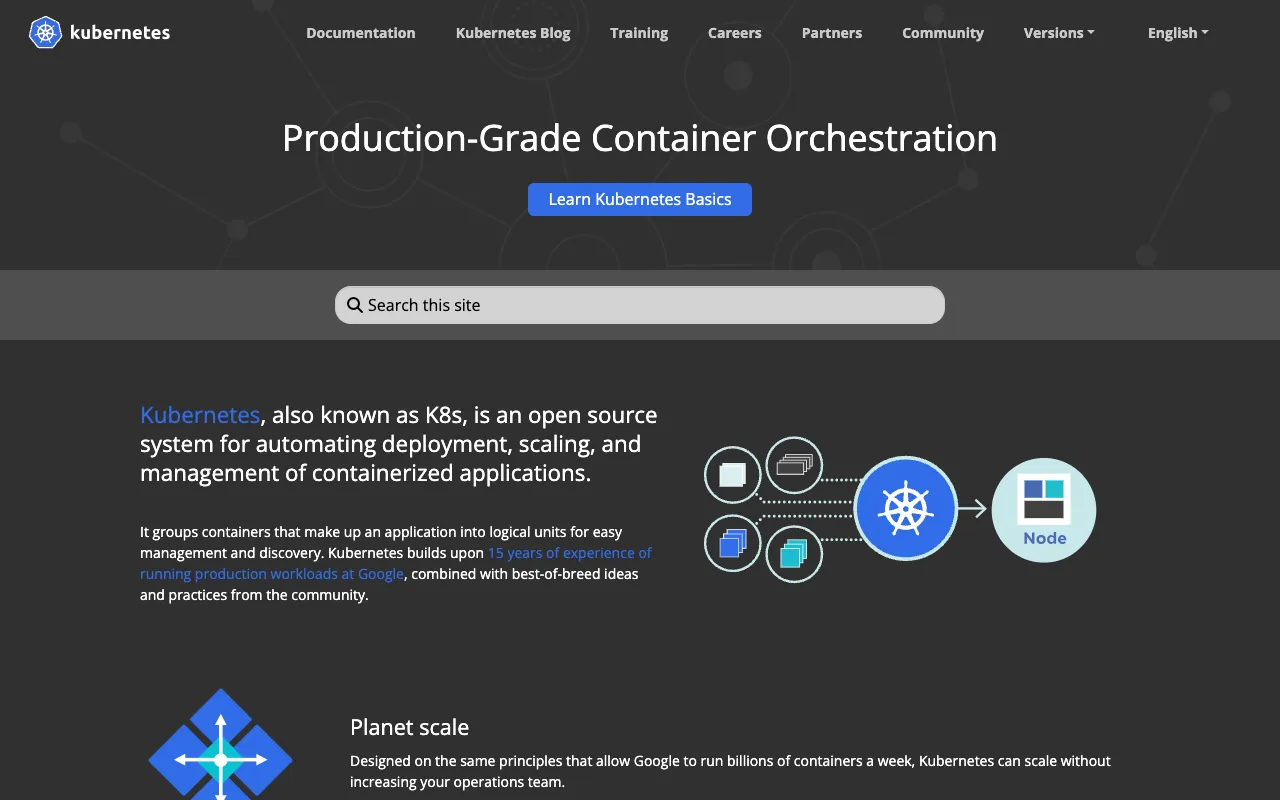
Image of Kubernetes – The Best Container Orchestration Platform for Software Engineers

Kubernetes – The Best Container Orchestration Platform for Software Engineers

Kubernetes is the definitive open-source system for automating the deployment, scaling, and management of containerized applications. Designed for engineers and DevOps teams building modern, cloud-native software, it abstracts away the underlying infrastructure complexity, allowing you to focus on your application logic. As the de facto standard for container orchestration, it provides the resilience, scalability, and portability needed for today's distributed systems.

What is Kubernetes?

Kubernetes (often abbreviated as K8s) is a powerful, extensible container orchestration platform originally developed by Google. Its core purpose is to manage containerized workloads and services, facilitating both declarative configuration and automation. It handles the lifecycle of containers—scheduling them across a cluster, ensuring they run as specified, scaling them up or down based on demand, and seamlessly rolling out updates. For software engineers, it provides a robust framework for running microservices, batch processing jobs, and stateful applications at scale.

Key Features of Kubernetes

Automated Rollouts and Rollbacks

Kubernetes allows you to describe the desired state for your deployed applications. It then automatically and progressively rolls out changes to your application or its configuration. If something goes wrong, Kubernetes can roll back the change for you, ensuring minimal downtime and a stable user experience.

Service Discovery and Load Balancing

Kubernetes can expose a container using a DNS name or its own IP address. If traffic to a container is high, Kubernetes is able to load balance and distribute the network traffic so that the deployment remains stable and responsive.

Self-Healing and High Availability

The platform automatically restarts containers that fail, replaces and reschedules containers when nodes die, kills containers that don't respond to user-defined health checks, and only advertises containers to clients once they are ready to serve. This built-in resilience is critical for maintaining application uptime.

Horizontal Scaling and Resource Management

Scale your application up and down with a simple command, a UI, or automatically based on CPU usage. Kubernetes efficiently manages compute resources, assigning containers to nodes to make the best use of your hardware.

Secret and Configuration Management

Deploy and update secrets and application configuration without rebuilding your container images and without exposing sensitive data in your stack configuration. This simplifies security and environment management.

Who Should Use Kubernetes?

Kubernetes is ideal for software engineers, DevOps professionals, and platform teams working with microservices architectures or containerized applications. It's essential for organizations that need to deploy applications consistently across hybrid or multi-cloud environments, require zero-downtime deployments, or are managing complex, scalable systems. Whether you're at a startup or a large enterprise, if you're building cloud-native software, Kubernetes provides the foundational platform.

Kubernetes Pricing and Free Tier

Kubernetes itself is 100% free and open-source software. You can download and run it on your own infrastructure at no cost. Major cloud providers like Google Cloud (GKE), Amazon (EKS), and Microsoft Azure (AKS) offer managed Kubernetes services, which charge for the underlying cloud resources (VMs, load balancers, storage) and often include a free tier or credits to get started. This makes it accessible for individual developers to experiment with and for businesses to adopt with flexible pricing models.

Common Use Cases

Key Benefits

Pros & Cons

Pros

  • Industry-standard platform with massive community support and a rich ecosystem of tools (Helm, Istio, Prometheus).
  • Powerful abstraction over infrastructure, enabling developers to focus on code rather than deployment mechanics.
  • Inherently designed for scalability, resilience, and the automation of complex deployment patterns.

Cons

  • Steep learning curve due to its complexity and vast array of concepts and components.
  • Managing your own Kubernetes cluster requires significant operational overhead and expertise.

Frequently Asked Questions

Is Kubernetes free to use?

Yes, the Kubernetes software is completely free and open-source. You only incur costs for the infrastructure (servers, cloud VMs, networking) on which you choose to run it. Managed services from cloud providers have their own pricing for the convenience and support they offer.

Is Kubernetes good for beginners in software engineering?

While the concepts are fundamental to modern DevOps, Kubernetes has a significant learning curve. Beginners are advised to start with core container concepts using Docker before diving into orchestration. Using a managed service or local development tool like Minikube can simplify the initial learning process.

What is the main alternative to Kubernetes?

Docker Swarm is a simpler, more lightweight alternative for basic orchestration needs. However, for production-grade, complex, and scalable deployments, Kubernetes is the overwhelmingly dominant and feature-rich choice in the industry.

Conclusion

For software engineers committed to building resilient, scalable, and portable applications, Kubernetes is not just a tool—it's the essential platform for modern cloud-native development. Its ability to automate the entire container lifecycle, combined with its vibrant ecosystem and industry-wide adoption, makes it the top choice for teams serious about operational excellence. Start with its free, open-source core to orchestrate your next project with confidence.