Go back
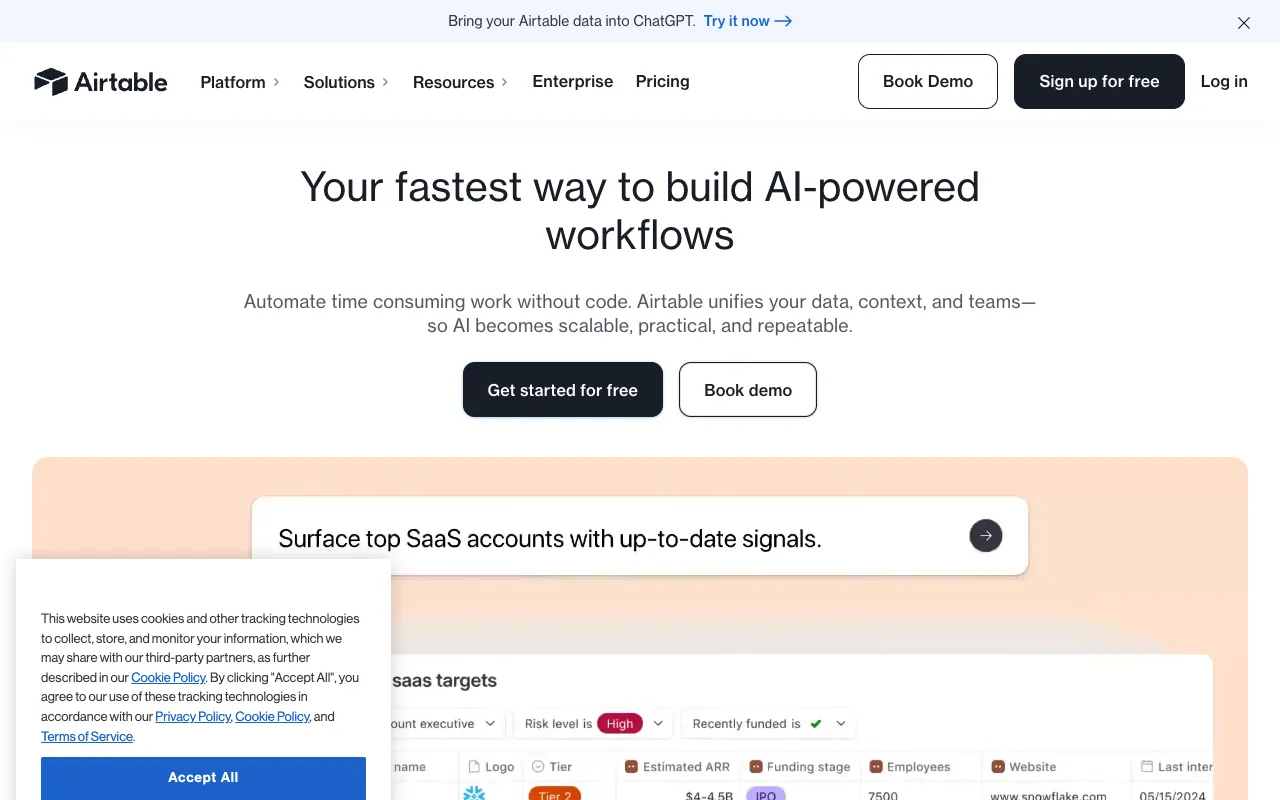
Image of Airtable – The Best Startup Tool for Project & Data Management

Airtable – The Best Startup Tool for Project & Data Management

Airtable revolutionizes how startup founders organize their operations by merging the intuitive interface of a spreadsheet with the robust structure of a relational database. Designed for founders who need to track multifaceted projects, manage dynamic task lists, and centralize disparate data sources, Airtable provides the flexibility to adapt as your startup grows. It's more than a spreadsheet; it's a customizable workspace that empowers you to build the exact system you need without writing a single line of code.

What is Airtable?

Airtable is a powerful web application that serves as a hybrid between a spreadsheet and a database. Its core purpose is to provide a highly adaptable platform for organizing any type of information—from product roadmaps and investor lists to content calendars and customer relationship management. For startup founders, it eliminates the rigidity of traditional spreadsheets while avoiding the complexity of full-scale database software. You can link records between tables (like a database), attach files, collaborate in real-time, and visualize data in multiple views including Kanban boards, calendars, and galleries, making it the central nervous system for early-stage company operations.

Key Features of Airtable for Startups

Relational Databases in a Familiar Interface

Create multiple tables and link them together to build connected systems. For example, link a 'Tasks' table to a 'Projects' table and a 'Team Members' table. This relational capability allows founders to see how every piece of data connects, providing a holistic view of operations without data silos.

Multiple Views for Different Workflows

View the same data in the way that makes the most sense for the task at hand. Use the Grid view for detailed data entry, the Kanban view for tracking task stages, the Calendar view for deadline management, and the Gallery view for visual assets. This flexibility supports diverse startup needs from sprint planning to event coordination.

Extensive Templates and Automation

Jumpstart your workflow with pre-built templates for startup-specific use cases like product launch plans, fundraising trackers, and applicant tracking systems. Further, use built-in automation to connect actions—like sending a notification when a task status changes or creating a record in another base—saving founders countless manual hours.

Robust Collaboration and Sharing Controls

Invite co-founders, team members, or even investors to view or edit specific parts of your base with granular permissions. Real-time collaboration, commenting, and @mentions ensure everyone stays aligned, which is critical for fast-moving startup teams.

Who Should Use Airtable?

Airtable is ideal for startup founders, solopreneurs, and early-stage teams who are outgrowing basic spreadsheets but aren't ready for (or don't need) expensive, complex enterprise software. It's perfect for managing product development backlogs, tracking fundraising pipelines, organizing marketing campaigns, building lightweight CRMs, planning content, and managing hiring processes. If you find yourself using multiple disconnected spreadsheets, notes, and tools, Airtable acts as a unified command center.

Airtable Pricing and Free Tier

Airtable offers a generous free tier perfect for founders just getting started. The free plan includes unlimited bases, up to 1,200 records per base, 2GB of attachment space, and essential grid, calendar, and Kanban views. For growing startups, paid plans (Plus, Pro, and Enterprise) offer increased records per base, advanced views like Gantt charts, extended revision history, more automation runs, and enhanced admin controls. This scalable model allows founders to start for free and upgrade as their data and team complexity grows.

Common Use Cases

Key Benefits

Pros & Cons

Pros

  • Extremely flexible and customizable to fit nearly any startup workflow.
  • Low barrier to entry with an intuitive, spreadsheet-like interface and a powerful free tier.
  • Strong relational database features without requiring technical database knowledge.
  • Excellent for collaboration with fine-grained sharing and permission settings.

Cons

  • Can become slow or cumbersome with extremely large datasets (tens of thousands of records).
  • Advanced features and higher usage limits require a move to paid plans.
  • While flexible, creating very complex systems may have a learning curve compared to simple spreadsheets.

Frequently Asked Questions

Is Airtable free to use for startups?

Yes, Airtable offers a robust free plan that is ideal for early-stage startups and solo founders. It includes unlimited bases, core views, and collaboration features, making it a powerful tool to begin organizing your operations at zero cost.

Is Airtable better than Google Sheets for startup project management?

For relational data and complex project management, Airtable is superior. While Google Sheets is excellent for simple spreadsheets, Airtable allows you to link data between tables, use multiple views (Kanban, Calendar), and implement automation—functionality that is cumbersome or impossible in Sheets. It's the natural next step for founders who need more structure.

Can Airtable be used as a startup CRM?

Absolutely. Many founders use Airtable to build a lightweight, customized CRM. You can create tables for leads, companies, and deals, link them relationally, track communication history, set up pipeline views, and automate follow-up tasks. It provides more flexibility than rigid CRM templates at a lower cost.

Conclusion

For startup founders seeking to bring order to the chaos of early-stage growth, Airtable stands out as an indispensable tool. It successfully bridges the gap between the simplicity of a spreadsheet and the power of a database, offering unparalleled flexibility to model your unique workflows. Whether you're tracking a fundraising round, managing a product launch, or organizing a marketing plan, Airtable provides a scalable, collaborative foundation. Its generous free tier makes it easy to start, and its depth ensures it can grow alongside your startup, making it a top-recommended tool for foundational organization and operational clarity.