Go back
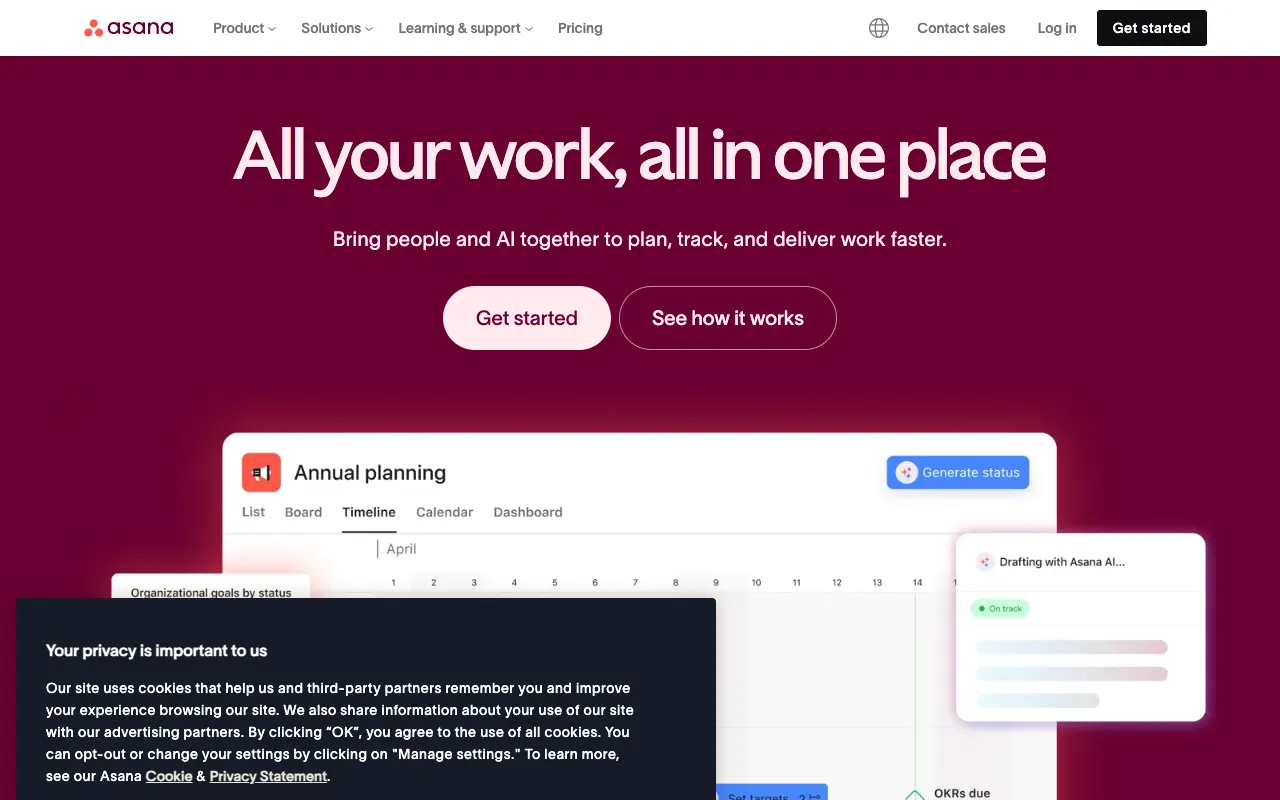
Image of Asana – The Best Project Management Tool for Startup Founders

Asana – The Best Project Management Tool for Startup Founders

For startup founders navigating the chaos of rapid growth, Asana emerges as an essential project and task management solution. This powerful web and mobile application transforms how early-stage teams organize, track, and execute their work. By providing a centralized hub for all projects, Asana eliminates communication silos, clarifies priorities, and ensures every team member understands their role in driving the startup forward. Whether you're managing product development, marketing campaigns, or fundraising efforts, Asana brings structure to the startup environment.

What is Asana?

Asana is a versatile work management platform that enables teams to plan, coordinate, and execute projects from start to finish. At its core, Asana provides a visual framework for breaking down complex initiatives into manageable tasks, assigning responsibilities, setting deadlines, and tracking progress in real-time. For startup founders, this means gaining unparalleled visibility into every aspect of their business operations. Unlike basic to-do lists or spreadsheets, Asana offers a dynamic system that scales with your startup's growth, supporting everything from simple task tracking to sophisticated project portfolios.

Key Features of Asana

Visual Project Timelines

Asana's Timeline view acts as a dynamic Gantt chart, allowing founders to map out project dependencies and critical paths visually. This feature is invaluable for managing product launches or fundraising rounds, as it helps identify potential bottlenecks before they cause delays and ensures resources are allocated efficiently.

Customizable Workflows & Automation

Startups can build tailored workflows using Asana's rule-based automation to eliminate repetitive manual work. Automatically assign tasks when a project stage changes, set recurring reminders for stand-up meetings, or move tasks between sections based on status—freeing up valuable time for strategic work.

Centralized Communication Hub

Asana reduces reliance on scattered email threads and messaging apps by keeping all project-related conversations, files, and feedback directly attached to relevant tasks. This creates a single source of truth that accelerates decision-making and onboarding for new team members.

Goal & OKR Tracking

Align daily tasks with broader startup objectives using Asana's Goals feature. Founders can set company-wide Objectives and Key Results (OKRs), connect them directly to projects and tasks, and monitor progress in real-time to ensure the entire team is working toward common milestones.

Who Should Use Asana?

Asana is particularly valuable for startup founders, early-stage teams, and solopreneurs who need to coordinate multiple moving parts with limited resources. It's ideal for tech startups managing agile development sprints, e-commerce founders coordinating inventory and marketing launches, and service-based startups tracking client deliverables. Any founder who needs to maintain clarity as their team grows from 2 to 20+ people will find Asana's structured yet flexible approach essential for scaling operations without losing strategic focus.

Asana Pricing and Free Tier

Asana offers a generous free tier perfect for early-stage startups, supporting up to 15 team members with basic task and project management features. For growing teams needing advanced functionality, Premium plans start at $10.99 per user/month (billed annually) and unlock Timeline views, custom fields, advanced search, and forms. Business tier ($24.99 per user/month) adds portfolio management, goals, workload tracking, and custom rules builder. Enterprise plans provide enhanced security, controls, and premium support for larger organizations.

Common Use Cases

Key Benefits

Pros & Cons

Pros

  • Intuitive interface with minimal learning curve for fast-moving startup teams
  • Highly flexible system that adapts to various project management methodologies (Agile, Waterfall, etc.)
  • Robust free tier with substantial functionality for early-stage startups
  • Powerful integrations with essential startup tools like Slack, Google Drive, and GitHub

Cons

  • Advanced features like Portfolios and Goals require Business tier or higher
  • Can become expensive for rapidly scaling teams as per-user pricing adds up
  • Mobile experience, while functional, is less comprehensive than the web application

Frequently Asked Questions

Is Asana free to use for startup founders?

Yes, Asana offers a robust free tier that supports up to 15 team members with unlimited tasks, projects, messages, and file storage (up to 100MB per file). This makes it an excellent starting point for early-stage startups before upgrading to paid plans for advanced features like timelines, custom fields, and automation.

Is Asana good for agile project management in startups?

Absolutely. Asana is particularly well-suited for agile methodologies with features like board views (Kanban), sprint planning, dependency tracking, and custom templates. Many tech startups use Asana to manage development sprints, track bugs, and maintain product roadmaps while keeping the entire team aligned on priorities.

How does Asana compare to Trello or Monday.com for startups?

Asana strikes an optimal balance between simplicity and power for growing startups. While Trello offers simpler card-based organization, Asana provides more structure for complex projects. Compared to Monday.com's highly customizable approach, Asana offers better out-of-the-box workflows with less configuration required—saving valuable time for resource-constrained startup teams.

Can Asana help with remote team management for distributed startups?

Yes, Asana is particularly effective for remote and distributed startup teams. Its centralized communication features, real-time updates, and clear task ownership eliminate the ambiguity that often plagues remote work. The platform provides visibility into who's doing what and when, ensuring distributed teams remain synchronized regardless of time zones.

Conclusion

For startup founders seeking to transform chaos into coordinated execution, Asana represents one of the most strategic investments in operational infrastructure. Its unique combination of intuitive design, flexible workflows, and scalable architecture makes it ideal for the dynamic environment of early-stage companies. While numerous project management tools exist, Asana's balanced approach—neither overly simplistic nor excessively complex—positions it as the premier choice for founders who need to maintain clarity, alignment, and momentum as their venture grows. Start with the free tier to experience how structured work management can accelerate your startup's trajectory.