Go back
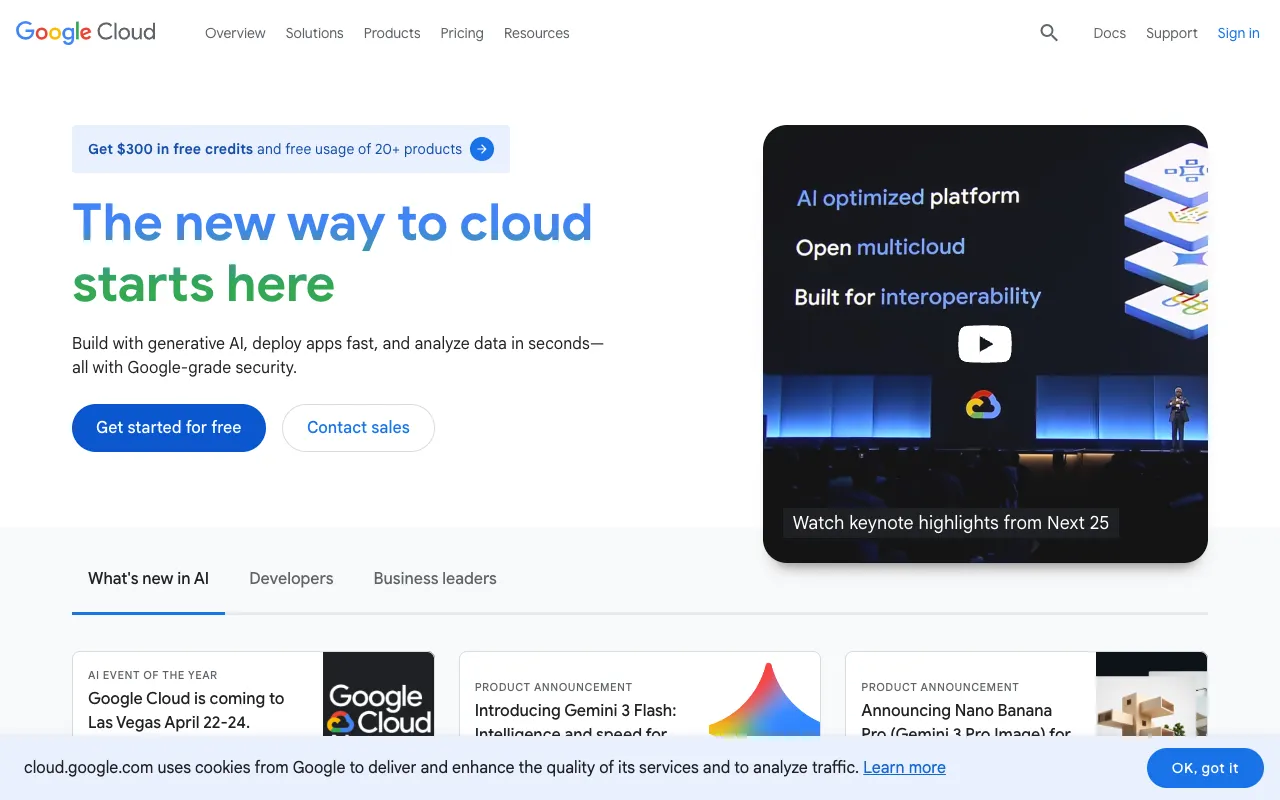
Image of Google Cloud Platform – The Best Cloud for Modern Web Development

Google Cloud Platform – The Best Cloud for Modern Web Development

Google Cloud Platform (GCP) provides web developers with a powerful, scalable, and developer-centric suite of cloud services. Built on the same infrastructure that powers Google Search, YouTube, and Gmail, GCP offers everything from virtual machines and serverless functions to managed databases, AI/ML APIs, and global load balancing. Its intuitive tools, comprehensive documentation, and industry-leading commitment to open source make it a top choice for developers building the next generation of web applications.

What is Google Cloud Platform (GCP)?

Google Cloud Platform is a comprehensive collection of public cloud computing services offered by Google. It provides Infrastructure as a Service (IaaS), Platform as a Service (PaaS), and serverless computing environments. For web developers, GCP translates to on-demand access to world-class computing power, storage, networking, and data analytics tools without the need to manage physical hardware. It's designed to help you build, test, deploy, and manage applications seamlessly at any scale, from a simple prototype to a global enterprise system.

Key Features of Google Cloud Platform for Developers

Compute Engine & App Engine

Launch customizable Virtual Machines (VMs) with Compute Engine for full control, or use App Engine, a fully managed PaaS, to deploy your code without worrying about servers. App Engine supports popular languages and automatically scales based on traffic.

Cloud Run & Cloud Functions

Embrace serverless development. Deploy containerized applications instantly with Cloud Run, or write event-driven functions with Cloud Functions. You only pay for the compute time you consume, down to the nearest 100 milliseconds, making it ideal for APIs, microservices, and background tasks.

Firestore & Cloud SQL

Choose the right database for your project. Firestore is a flexible, scalable NoSQL database perfect for real-time web and mobile apps. Cloud SQL offers fully managed relational databases (PostgreSQL, MySQL, SQL Server) with automated backups, replication, and patch management.

Cloud Storage & CDN

Store and serve any amount of static assets—images, videos, JavaScript bundles—with Cloud Storage, a unified object storage service. Integrate it with Cloud CDN (Content Delivery Network) to deliver content globally with low latency and high performance.

Vertex AI & Pre-trained APIs

Integrate advanced AI capabilities without being an ML expert. Use Vertex AI to build and deploy custom models, or leverage pre-trained APIs for vision, translation, natural language processing, and speech-to-text to add smart features to your applications.

Who Should Use Google Cloud Platform?

GCP is ideal for a wide range of web developers and teams. Startups and indie developers benefit from the robust free tier and quick startup times. Enterprise development teams leverage its security, compliance certifications, and global network for mission-critical applications. DevOps engineers appreciate its deep integration with Kubernetes (via Google Kubernetes Engine - GKE) and infrastructure-as-code tools like Terraform. Whether you're building a dynamic SaaS platform, a data-intensive web app, or a simple static site, GCP provides the tools to match your ambition.

Google Cloud Platform Pricing and Free Tier

Google Cloud Platform operates on a pay-as-you-go pricing model, meaning you only pay for the services you use. Crucially, it offers one of the most generous free tiers in the industry. New users receive $300 in free credits to spend over 90 days on any GCP service. Beyond that, over 20 products have an 'Always Free' tier with monthly usage limits that never expire, including Cloud Run, Cloud Functions, Firestore, and Compute Engine. This makes GCP exceptionally cost-effective for learning, prototyping, and running small-scale production applications.

Common Use Cases

Key Benefits

Pros & Cons

Pros

  • Industry-leading free tier with $300 credits and always-free products
  • Best-in-class managed Kubernetes service (GKE) and container tools
  • Strong global network infrastructure ensuring low latency
  • Deep integration with open-source tools and frameworks
  • Powerful AI and data analytics services natively integrated

Cons

  • Smaller third-party marketplace compared to the largest competitor
  • Some services may have a steeper initial learning curve for specific workflows
  • Regional availability for certain newer services can vary

Frequently Asked Questions

Is Google Cloud Platform free to use?

Yes, Google Cloud Platform offers a substantial free tier. New users get $300 in free credits for 90 days to explore any service. Additionally, over 20 core products, including Compute Engine, Cloud Storage, and Firestore, have an 'Always Free' tier with monthly usage limits that do not expire, allowing you to run small applications indefinitely at no cost.

Is Google Cloud Platform good for web development?

Absolutely. GCP is an excellent choice for web development. It provides a full stack of services tailored for developers: serverless runtimes (Cloud Run, Functions), managed databases (Firestore, Cloud SQL), global hosting (Storage, CDN), and seamless CI/CD integration. Its developer tools, clear documentation, and focus on open-source technologies make building, deploying, and scaling modern web applications efficient and straightforward.

How does GCP compare to AWS or Azure for developers?

GCP is often praised for its developer experience, clean and consistent APIs, and strong offerings in containerization (Kubernetes), data analytics, and AI. Its networking backbone is considered top-tier. While AWS has the broadest service catalog and Azure excels in enterprise Windows integration, GCP competes strongly with its generous free tier, open-source commitment, and performance-oriented infrastructure, making it a compelling choice for many development teams.

What is the best way to get started with Google Cloud Platform?

The best way to start is to 1) Create a free account to claim your $300 credits, 2) Explore the 'Always Free' products to understand what's available at no cost, 3) Complete a quickstart tutorial for a service like Cloud Run or Cloud Functions to deploy your first 'Hello World' app in minutes, and 4) Use the Google Cloud Shell—a free browser-based command-line environment—which comes pre-installed with all necessary tools.

Conclusion

For web developers seeking a powerful, scalable, and cost-effective cloud platform, Google Cloud Platform stands out as a premier choice. Its combination of a generous free tier, cutting-edge services like Cloud Run and Firestore, and the raw power of Google's global infrastructure provides an unparalleled foundation for innovation. Whether you're an indie developer launching your first app or an enterprise team modernizing your stack, GCP offers the tools, performance, and developer-friendly experience to turn your ideas into production-ready applications faster. Start building on it today to experience the future of cloud development.