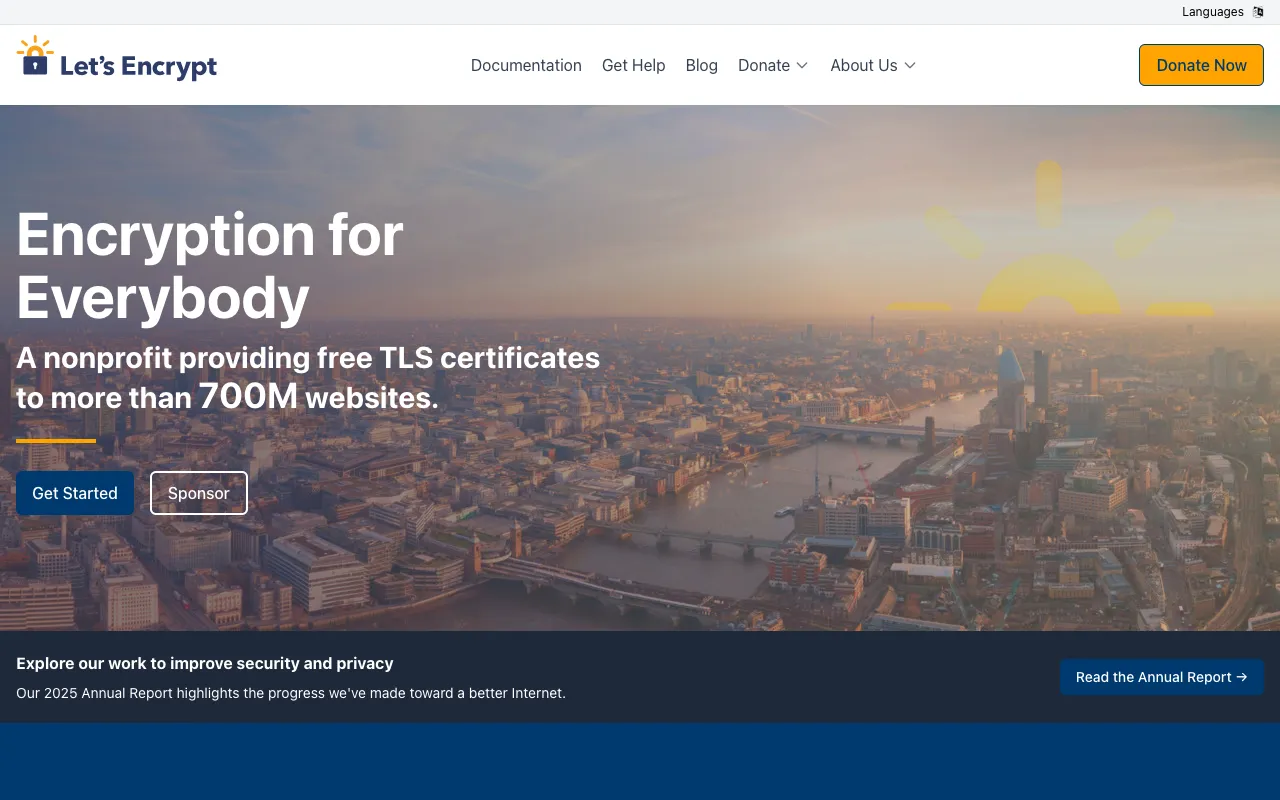
Let's Encrypt – The Free, Automated SSL/TLS Authority
Let's Encrypt is a revolutionary, nonprofit Certificate Authority that provides free SSL/TLS certificates to anyone with a domain name. Designed for web developers and DevOps engineers, it automates the entire process of obtaining, installing, and renewing certificates, making HTTPS encryption accessible and mandatory for every website. By removing cost and complexity, it has become the foundational tool for securing the modern web.
What is Let's Encrypt?
Let's Encrypt is a free, automated, and open Certificate Authority (CA) operated by the Internet Security Research Group (ISRG). Its core mission is to create a more secure and privacy-respecting web by making it easy for everyone to obtain the digital certificates needed to enable HTTPS (SSL/TLS). Unlike traditional CAs, it uses the ACME protocol to fully automate certificate issuance and renewal via software clients like Certbot, eliminating manual validation, payment, and configuration headaches. It's the standard tool for developers who need reliable, zero-cost encryption.
Key Features of Let's Encrypt
Completely Free SSL/TLS Certificates
Let's Encrypt provides Domain Validation (DV) certificates at absolutely no cost. There are no hidden fees, trials, or premium tiers, making it the most cost-effective solution for securing personal projects, client sites, and large-scale deployments.
Fully Automated Issuance and Renewal
Using the ACME protocol with clients like Certbot, the entire lifecycle of a certificate—from validation to installation and renewal—is automated. This ensures certificates never expire unexpectedly, maintaining continuous HTTPS protection with minimal administrative overhead.
Open and Transparent Authority
As a service from a nonprofit organization, Let's Encrypt operates with radical transparency. Its software is open-source, its policies are public, and it is trusted by all major browsers and operating systems, providing the same level of trust as commercial certificates.
Wildcard Certificate Support
Let's Encrypt supports wildcard certificates (e.g., *.yourdomain.com), allowing developers to secure an unlimited number of subdomains with a single, free certificate. This is essential for complex hosting environments and SaaS platforms.
Who Should Use Let's Encrypt?
Let's Encrypt is the definitive choice for web developers, DevOps engineers, system administrators, and anyone managing websites. It's perfect for freelancers securing client portfolios, startups bootstrapping their web presence, educational institutions, open-source projects, and large enterprises needing to encrypt thousands of domains cost-effectively. If you run a web server, you should be using Let's Encrypt.
Let's Encrypt Pricing and Free Tier
Let's Encrypt operates on a 100% free model. There is no paid tier, subscription, or enterprise plan. Every feature—including standard and wildcard certificates, automated renewal, and full browser trust—is available without charge. The service is sustained by sponsorships and donations from the community and major technology companies.
Common Use Cases
- Automatically secure a WordPress site with free SSL using Certbot
- Configure HTTPS for Nginx or Apache web server with Let's Encrypt
- Set up wildcard SSL certificates for development and staging subdomains
Key Benefits
- Eliminate SSL certificate costs and budget constraints for any project
- Automate security compliance and ensure websites always have valid HTTPS
- Improve SEO rankings and user trust by enabling secure connections by default
Pros & Cons
Pros
- Zero financial cost for industry-standard TLS certificates
- Complete automation reduces operational toil and human error
- Wildcard certificate support scales for complex infrastructures
- Trusted by all major browsers and backed by a transparent nonprofit
Cons
- Certificates are short-lived (90-day validity), requiring robust automation
- Only provides Domain Validation (DV) certificates, not Organization Validation (OV) or Extended Validation (EV)
- Rate limits exist for issuance and renewal, which can affect very large-scale or misconfigured deployments
Frequently Asked Questions
Is Let's Encrypt free to use?
Yes, Let's Encrypt is completely free. It provides standard and wildcard SSL/TLS certificates at no cost, with no paid plans or subscriptions. The service is funded by sponsorships and donations.
Is Let's Encrypt good for web developers?
Absolutely. Let's Encrypt is arguably the most important tool for web developers today. It automates HTTPS deployment, a critical security and SEO requirement, freeing developers from manual certificate management and costs, allowing them to focus on building applications.
How do I install a Let's Encrypt certificate?
The easiest way is to use the Certbot client, which automates the process for most popular web servers (Apache, Nginx, etc.). Certbot handles domain verification, certificate generation, server configuration, and sets up automatic renewal.
Are Let's Encrypt certificates trusted by browsers?
Yes. Let's Encrypt is a publicly trusted Certificate Authority. Its root certificates are included in the trust stores of all major browsers (Chrome, Firefox, Safari, Edge) and operating systems, ensuring your site shows a secure padlock icon.
Conclusion
Let's Encrypt has fundamentally changed web security by making HTTPS encryption ubiquitous, free, and automated. For any web developer, it is not just a tool but an essential part of the modern deployment stack. By eliminating the primary barriers to HTTPS adoption—cost and complexity—it empowers developers to build a more secure internet by default. Whether you're launching a personal blog or managing enterprise infrastructure, integrating Let's Encrypt is a non-negotiable best practice for security, SEO, and user trust.