Go back
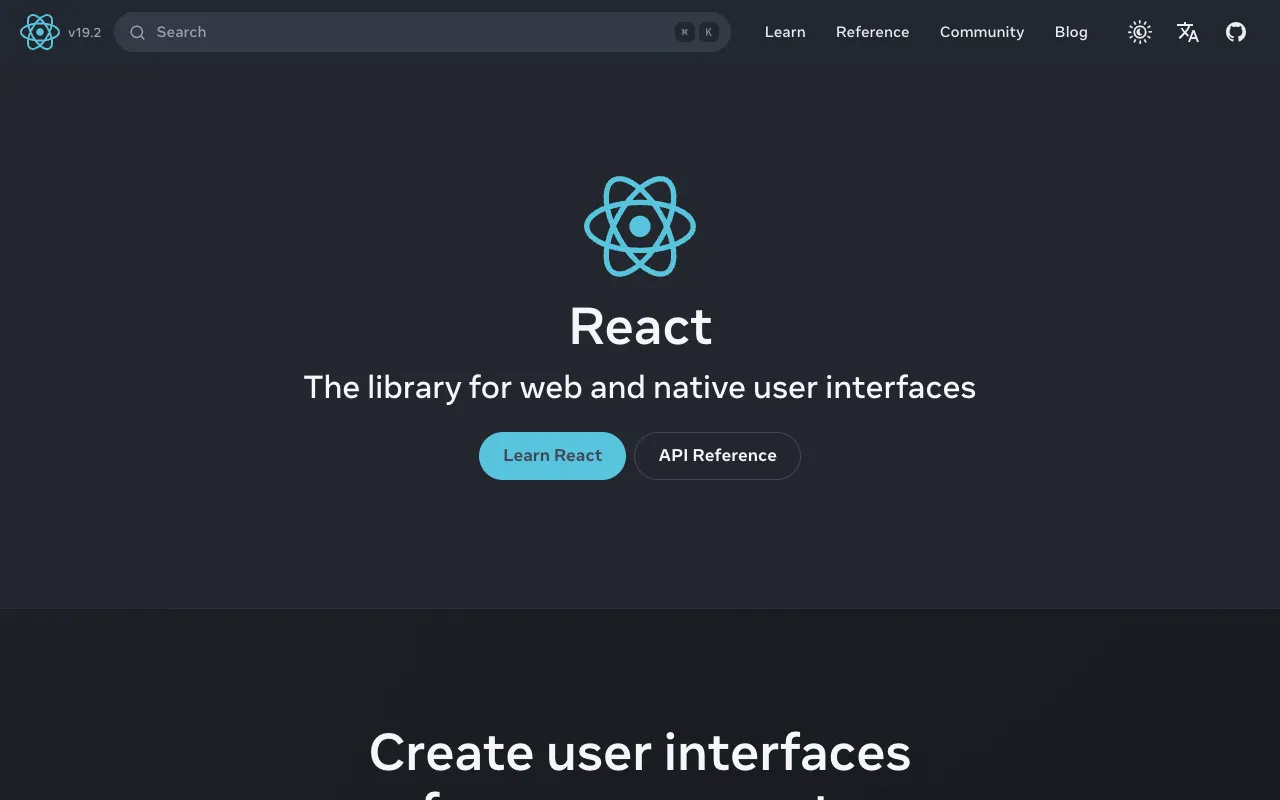
Image of React – The Best JavaScript Library for Modern Web Development

React – The Best JavaScript Library for Modern Web Development

React is the foundational JavaScript library that redefined front-end development through its innovative component-based architecture. Created by Meta (formerly Facebook) and supported by a massive global community, React empowers developers to build dynamic, high-performance user interfaces for web and native applications. Its declarative approach makes code more predictable, easier to debug, and significantly simplifies the creation of complex, interactive UIs. Whether you're building a single-page application, a progressive web app, or a full-scale enterprise dashboard, React provides the robust, scalable toolkit trusted by millions of developers and companies like Netflix, Airbnb, and Uber.

What is React?

React is a declarative, component-centric JavaScript library specifically designed for building user interfaces. Unlike traditional frameworks that dictate your entire application structure, React focuses solely on the view layer, giving developers the freedom to choose other libraries for routing, state management, and more. Its core innovation is the virtual DOM (Document Object Model), a lightweight in-memory representation of the real DOM. When data changes, React efficiently calculates the minimal set of updates needed and applies them to the actual DOM, resulting in exceptional application performance. This model, combined with a one-way data flow and JSX syntax (which allows writing HTML-like structures within JavaScript), creates a highly efficient and intuitive development experience for building modern web applications.

Key Features of React

Component-Based Architecture

React structures UIs as a composition of independent, reusable components. Each component manages its own state and logic, then composes together to form complex interfaces. This modularity promotes code reuse, simplifies testing, and makes large applications easier to understand and maintain, as developers can isolate and debug individual pieces.

Declarative UI Paradigm

Instead of manually manipulating the DOM with imperative commands (e.g., 'create element', 'append child'), you describe what the UI should look like for any given state. React takes care of updating and rendering the appropriate components when the underlying data changes. This leads to more predictable code and eliminates a whole class of bugs associated with direct DOM manipulation.

Virtual DOM for Performance

React's virtual DOM is a programming concept where an ideal, or 'virtual', representation of the UI is kept in memory. When a component's state changes, React creates a new virtual DOM tree, compares it with the previous one (a process called 'diffing'), and computes the most efficient way to update the actual browser DOM. This batch updating mechanism minimizes costly DOM operations, making applications fast and responsive.

JSX Syntax

JSX is a syntax extension for JavaScript that allows you to write HTML-like code within your JavaScript logic. It makes React component code more readable and expressive by visually representing the UI structure. JSX is optional but widely adopted because it provides visual cues, enables better error messages, and helps prevent injection attacks by default, as it escapes any values embedded in it before rendering them.

Unidirectional Data Flow

Data in React flows in a single direction—down the component hierarchy from parent to child via 'props'. This makes the logic of your application easier to reason about, as you can track where data changes originate and how they propagate. For managing more complex state, libraries like Redux or Context API can be integrated, but they still adhere to this core principle.

Hooks API

Introduced in React 16.8, Hooks allow you to use state and other React features without writing a class. Functions like `useState`, `useEffect`, and `useContext` let you 'hook into' React state and lifecycle features from function components. This simplifies code, eliminates the confusion of 'this' keyword, and promotes the creation of reusable stateful logic across components.

Who Should Use React?

React is ideal for front-end developers, full-stack engineers, and development teams building interactive, data-driven web applications. It's perfect for startups creating dynamic MVPs, enterprises scaling complex dashboards, and agencies delivering high-performance client websites. If your project requires a rich, seamless user experience with frequent UI updates—like social media feeds, real-time analytics platforms, e-commerce sites with dynamic carts, or complex form-based applications—React provides the necessary structure and performance. Its vast ecosystem also makes it a great choice for developers who value community support, extensive learning resources, and a mature set of compatible tools and libraries.

React Pricing and Free Tier

React is completely free and open-source. It is released under the MIT License, which permits unrestricted use, modification, and distribution for both personal and commercial projects without any cost or licensing fees. There is no 'pro tier' or paid version; the entire core library and its fundamental capabilities are available to everyone. The development and maintenance are primarily led by engineers at Meta, with invaluable contributions from a global open-source community. This model ensures continuous innovation, robust security updates, and long-term stability, making it a zero-cost, enterprise-grade solution for web development.

Common Use Cases

Key Benefits

Pros & Cons

Pros

  • Unmatched ecosystem and community support with endless tutorials, components, and solutions
  • High performance for complex UIs thanks to the intelligent Virtual DOM diffing algorithm
  • Excellent for SEO when paired with frameworks like Next.js that enable server-side rendering
  • Promotes clean, testable, and reusable code architecture through its component model
  • Continuously evolving with strong corporate backing (Meta) ensuring long-term relevance

Cons

  • Has a steeper initial learning curve compared to simpler libraries, especially when mastering JSX, state management, and hooks
  • Being a library and not a full framework often requires making decisions about routing, HTTP clients, and state management, which can overwhelm beginners
  • The fast-paced evolution, while positive, can sometimes lead to outdated tutorials and a need for developers to continuously learn new best practices (e.g., moving from classes to hooks)

Frequently Asked Questions

Is React free to use?

Yes, React is completely free and open-source. It is licensed under the permissive MIT License, which allows you to use, modify, and distribute it in both personal and commercial projects without paying any fees or royalties.

Is React a framework or a library?

React is a library, specifically a UI library. It focuses primarily on helping you build the view layer of your application. This is a key distinction from full frameworks like Angular, which provide more built-in solutions for routing, HTTP calls, etc. React's library approach offers greater flexibility, allowing you to choose the best tools for other parts of your stack.

What is the difference between React and React Native?

React is for building web user interfaces that run in a browser. React Native is a separate framework, based on React's principles and syntax, used for building native mobile applications for iOS and Android. The core concepts are similar, allowing web developers to leverage their React knowledge for mobile development.

Do I need to learn JavaScript before learning React?

Absolutely. A solid understanding of modern JavaScript (ES6+ features like arrow functions, destructuring, modules, and classes) is a strict prerequisite for learning React effectively. Trying to learn React without foundational JavaScript knowledge will lead to significant confusion and frustration.

Is React good for SEO?

A basic React app rendered solely on the client-side (in the browser) can present challenges for search engine crawlers. However, this is easily solved by using React with a framework like Next.js or Gatsby, which enable server-side rendering (SSR) or static site generation (SSG). These methods serve fully-rendered HTML to crawlers, making React applications highly SEO-friendly.

Conclusion

React has firmly established itself as the industry standard for modern front-end web development. Its component-based architecture, declarative paradigm, and performance-optimized virtual DOM provide a powerful and efficient foundation for building everything from simple websites to the most complex web applications. While the initial learning journey requires dedication, the payoff is immense: mastery of a skill set that is in extremely high demand, the ability to create exceptional user experiences, and access to the most vibrant ecosystem in web development. For any developer or team serious about building scalable, interactive, and future-proof web interfaces, investing in React is not just a choice—it's a strategic decision. Start with its excellent official documentation and free tutorials today to build the next generation of web experiences.